
An Austrian start-up consisting of three passionate pilots is claiming to have designed the world’s smallest and lightest vario. The Nano Vario UL measures 23mm × 23mm × 11mm and weighs just 9.3g including battery – about the same weight as five Pringle crisps or two US nickels.
It’s an audio-only device aimed at hike-and-fly and cross country pilots for whom weight is of paramount importance and who only want something to detect lift without any of the other features found in an instrument. It can also be used as a lightweight backup.
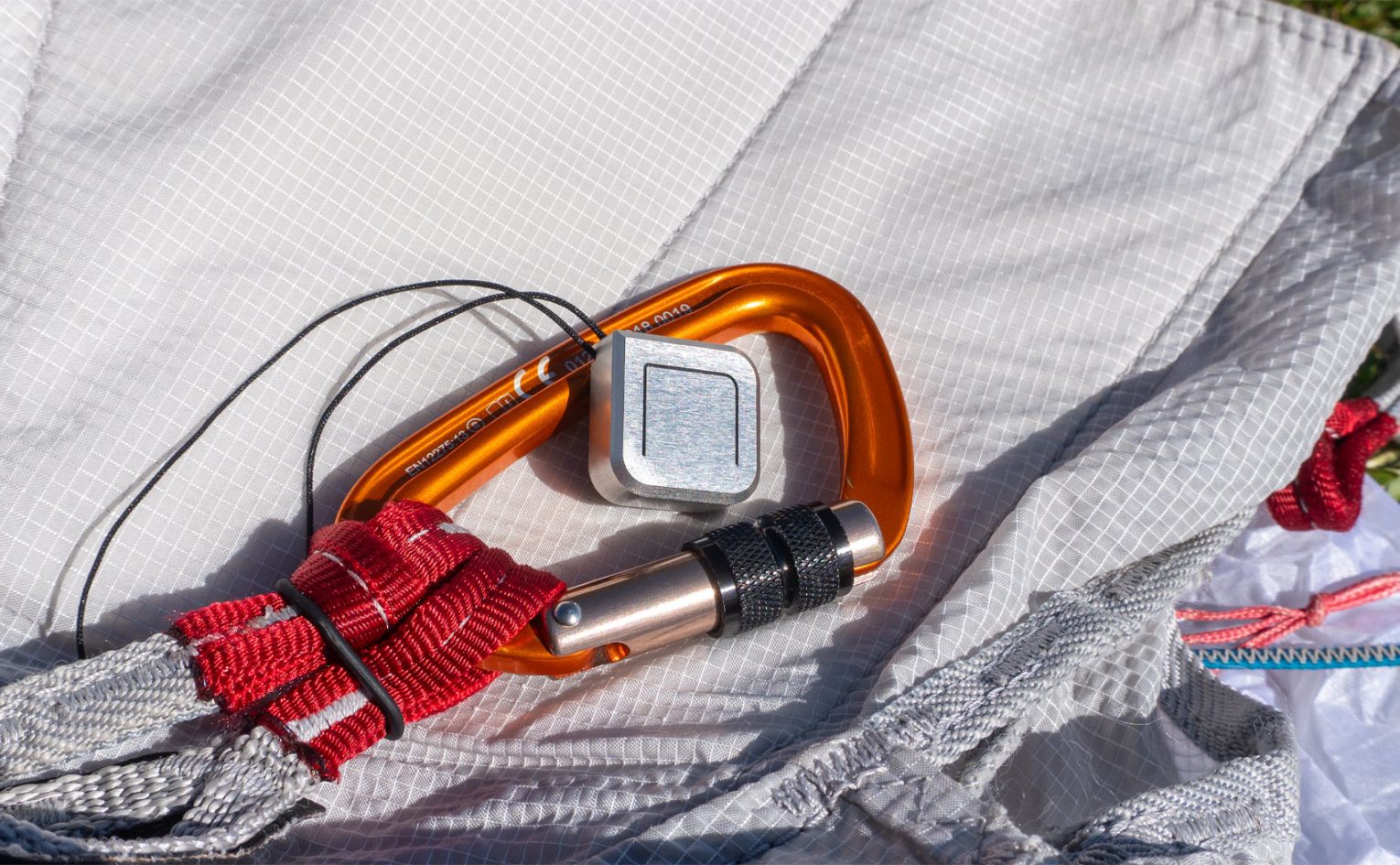
“It’s a new type of variometer that focuses on what many pilots value most in the air – simplicity, immediacy, and reliability,” says Paul Doppler. “The Nano Vario UL is a is the world’s lightest and smallest acoustic variometer, deliberately designed without a screen to provide direct, distraction-free feedback while flying.
“Its strength lies in its clarity: fast, precise thermal indication with over 16 pressure updates per second, allowing pilots to react instantly to even subtle changes in lift. At the same time, its ultra-compact form makes it almost unnoticeable in use, whether mounted on a helmet, riser or cockpit.”
The goal was to achieve the most “direct yet stable response possible” say Nano. “Height changes of approximately 10cm can be detected. At the same time, the device achieves a runtime of up to 600 hours with a standard CR2032 battery. It’s extremely small on the outside but technically highly optimised on the inside,” they add.

The company is made up of three friends, Daniel Klingersberger, Manuel Brückl, and Paul Doppler who used to travel around Europe together as “Team Freestyle”. Today they remain passionate hike-and-fly and cross country pilots. They developed their first vario prototype in 2021 and have been working on this model for the past year.
They tested over 40 different speakers to get the sound right. Pilots can choose whether the vario reacts very directly and dynamically or sounds deliberately calmer. The Nano Vario is manufactured from ultra-hard aluminium alloy in Salzburg while the subsequent anodizing process takes place in Bavaria.