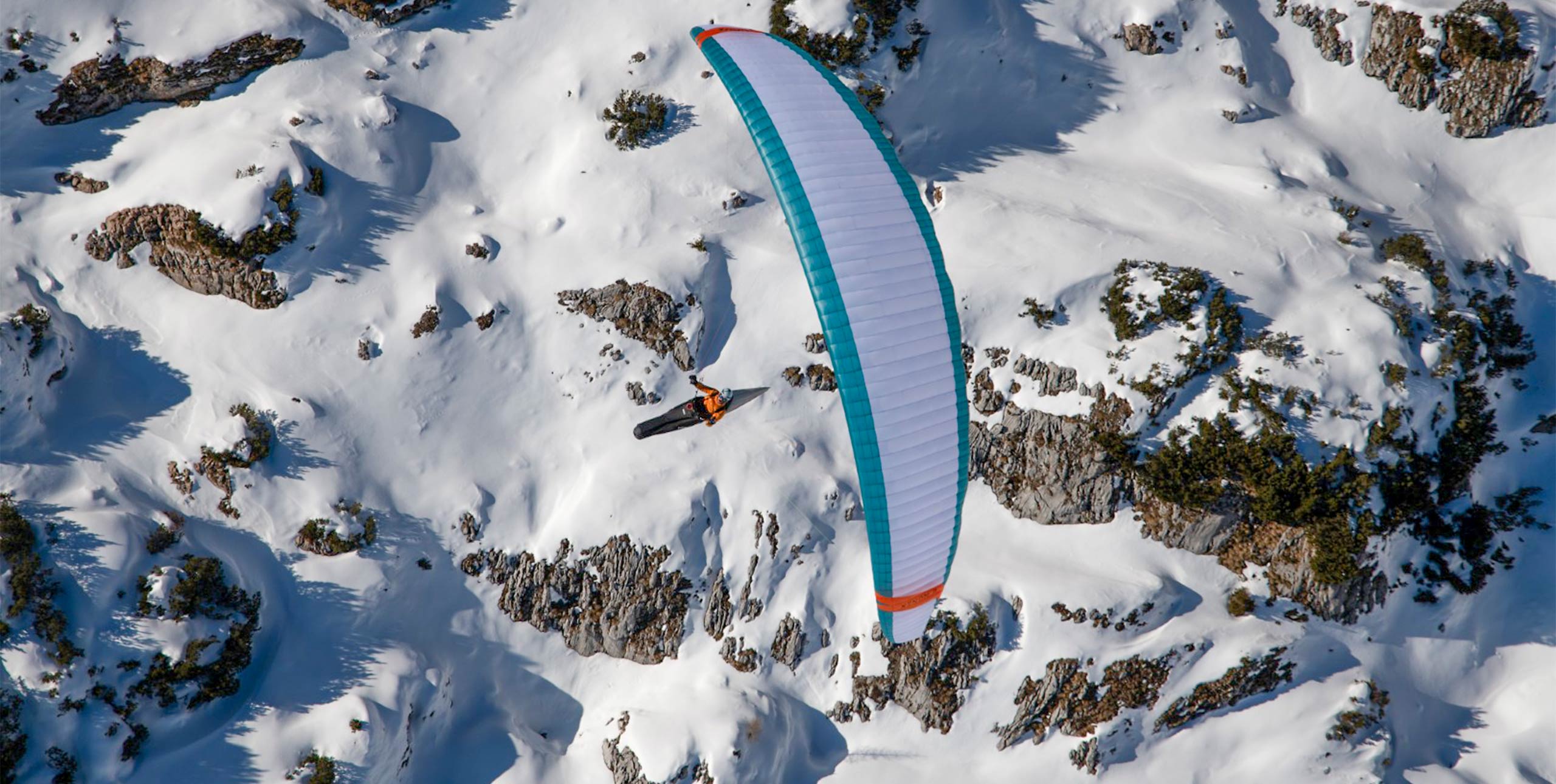
The Xenon 2 was developed as a high-performance glider for the Red Bull X-Alps 2025 and flown to victory by Aaron Durogati, but it was not released to the public. The design team were faced with the dilemma of rushing out a wing or taking their time to integrate feedback from Aaron and producing something better.
The result, nine months on, is the newly released Xenon 3, an EN-D racing machine designed for competitive hike-and-fly pilots seeking maximum performance and the lightest weight.
“The final glider is basically a polished version of Aaron’s glider, without any dramatic changes, but with a couple of small improvements that add up to something significant in terms of performance and handling,” said Philipp Medicus, part of Nova’s R&D team in reply to a thread on Paragliding Forum in November last year.
The Xenon 3 is not a completely new glider, state Nova on the website. The canopy itself remains unchanged. “The aerodynamic concept that won the world’s toughest hike-and-fly race did not need reinvention,” they say. Instead, they focused on “precision improvements”. These include a more precise guidance of the Nitinol rods, optimised finishing in the leading edge and a more fine-tuned 3D shaping.
“The result is even more power, especially in full acceleration flight, and noticeably improved filling behaviour,” say Nova.

One area that has been redesigned is the brake system. “Each size now features a specifically tuned brake geometry that delivers direct, precise handling, clearly defined brake pressure, immediate feedback and maximum control,” they say.
“If your goal is to go far, go light and stay competitive, the Xenon 3 is your tool,” they add. The Xenon 3 weighs 3.5kg in size M. Nova say it’s light “where it matters; strong where it counts”. It has 73 cells and an aspect ratio of 6.8.

It is available in four sizes (covering 60-110kg) with two colour combinations. The largest size (90-110kg) is rated EN-C while the three smaller sizes are certified EN-D.