Ten things you need to know about Valley Winds
Bob Drury's top ten tips to help you understand valley winds
1 May, 2026, by Bob Drury | Main photo: Marcus KingHere are Bob Drury’s top ten tips to help you understand valley winds, how to use them and how to fly in the mountains safely:
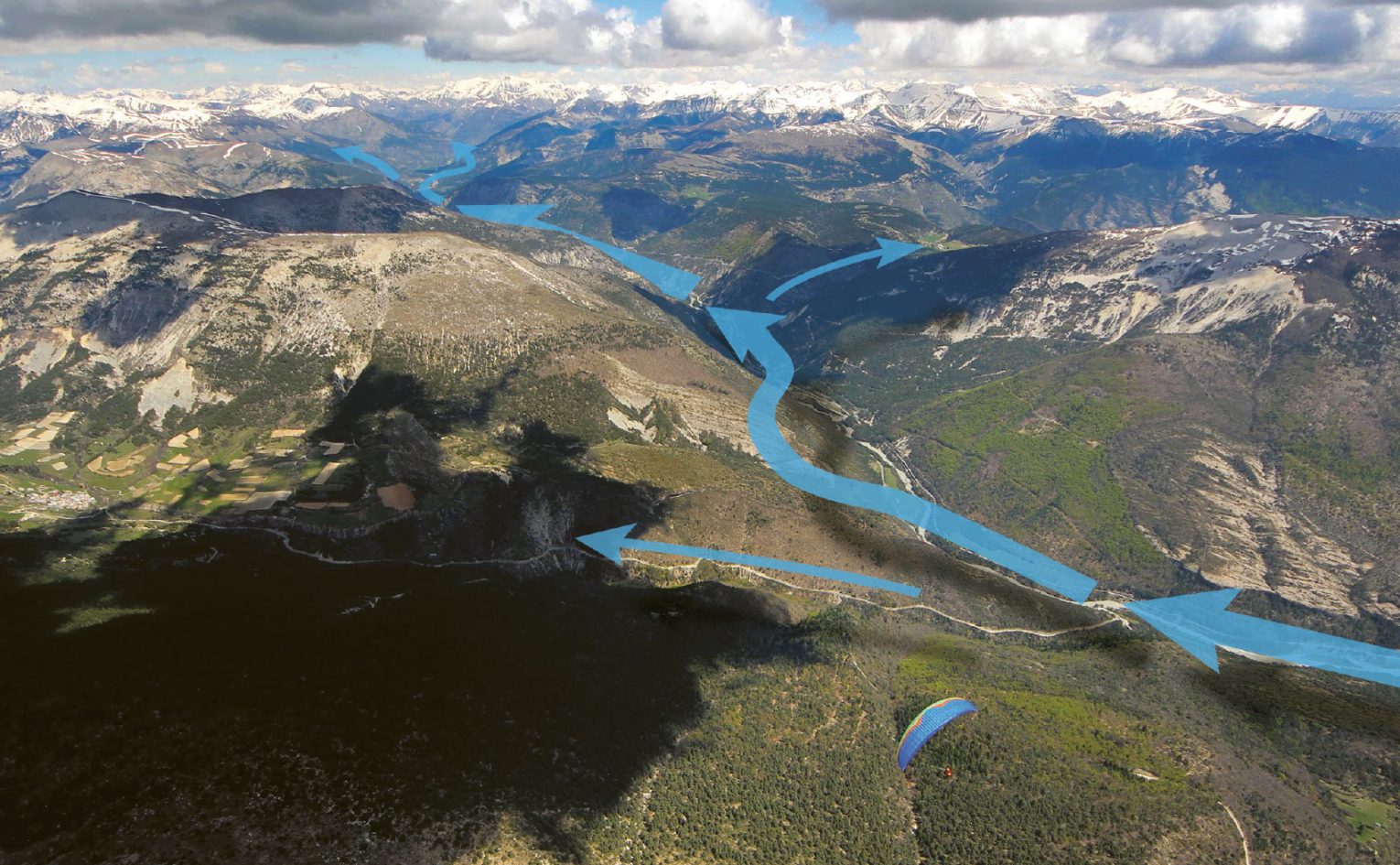
- Valley winds don’t go downhill. If they reach a col they release.
- Valley winds generally run up the valley, the opposite direction from the way the rivers run down.
- Valley winds are made of denser air, so they only fill the bottom few hundred metres of the valley.
- Valley winds make spines that stick out into the valley soarable. They also create rotor and turbulence behind those spines.
- Valley winds move like water, sloshing around corners and oscillating once the valley straightens up for a while. This sloshing motion creates patches of lift and sink along the valley sides.
- Valley winds can cancel out rotor from meteo winds as they wash it away with their horizontal motion.
- Valley winds accelerate and decelerate as the valley narrows and opens out again.
- Valley winds are often strongest on stable days as a heavy inversion will squeeze the air downwards and accelerate it as if in a venturi.
- Where two valleys meet you get valley wind convergence.
- Valley wind convergence is formed by two continuous rivers of air meeting and being forced upwards. Consequently, on days where storms are predicted, the valley wind convergence points are first to blow.
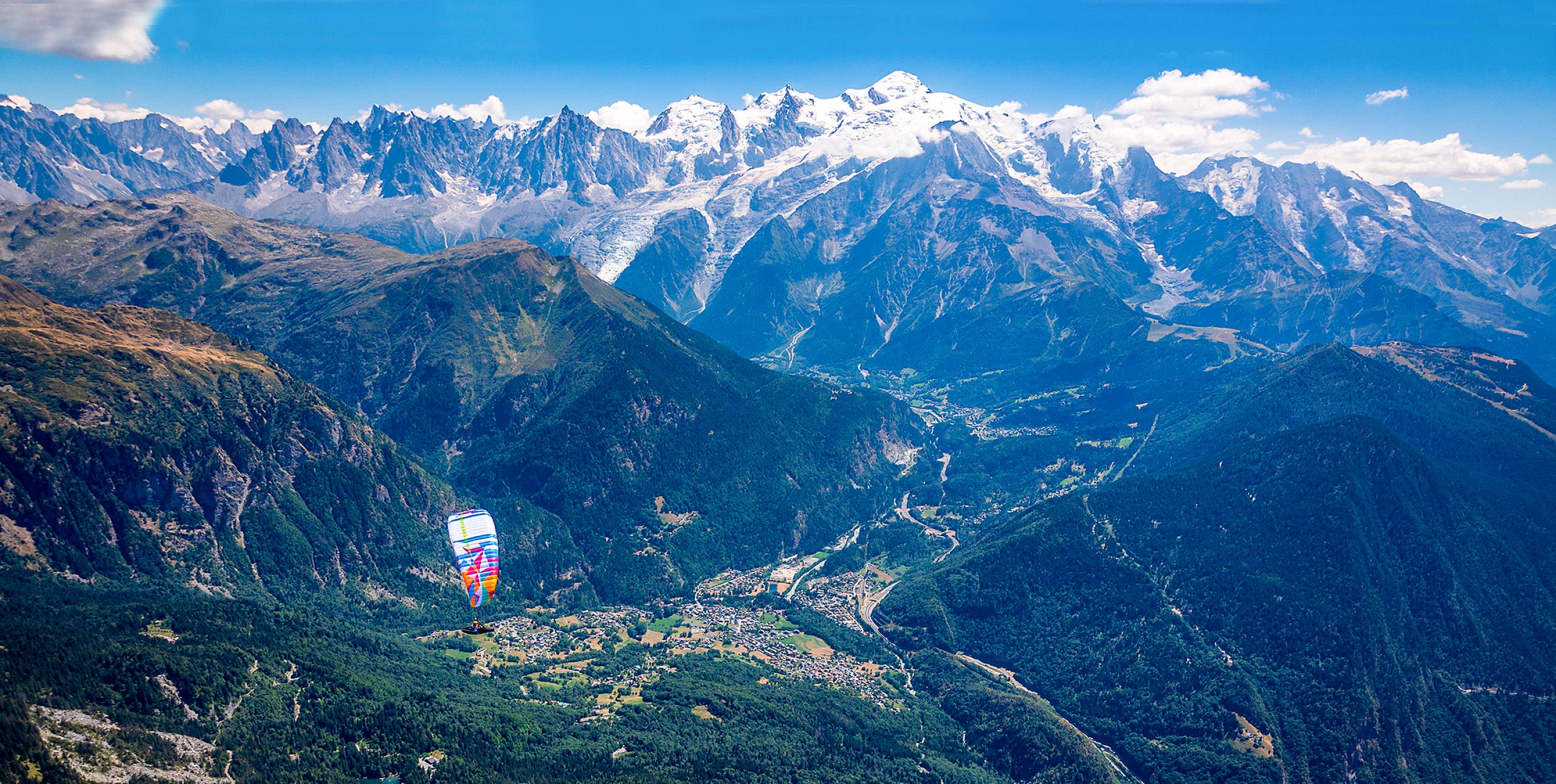
The main image shows complex mountain terrain near Mont Blanc, Chamonix, France. The valley wind here will be faster as it flows through the tighter valleys, there will also be areas of strong turbulence in the lee of the spurs Photo: Marcus King
Read more on mountain flying and valley winds from Bob Drury in Paragliding: 101 Ways to Fly Better
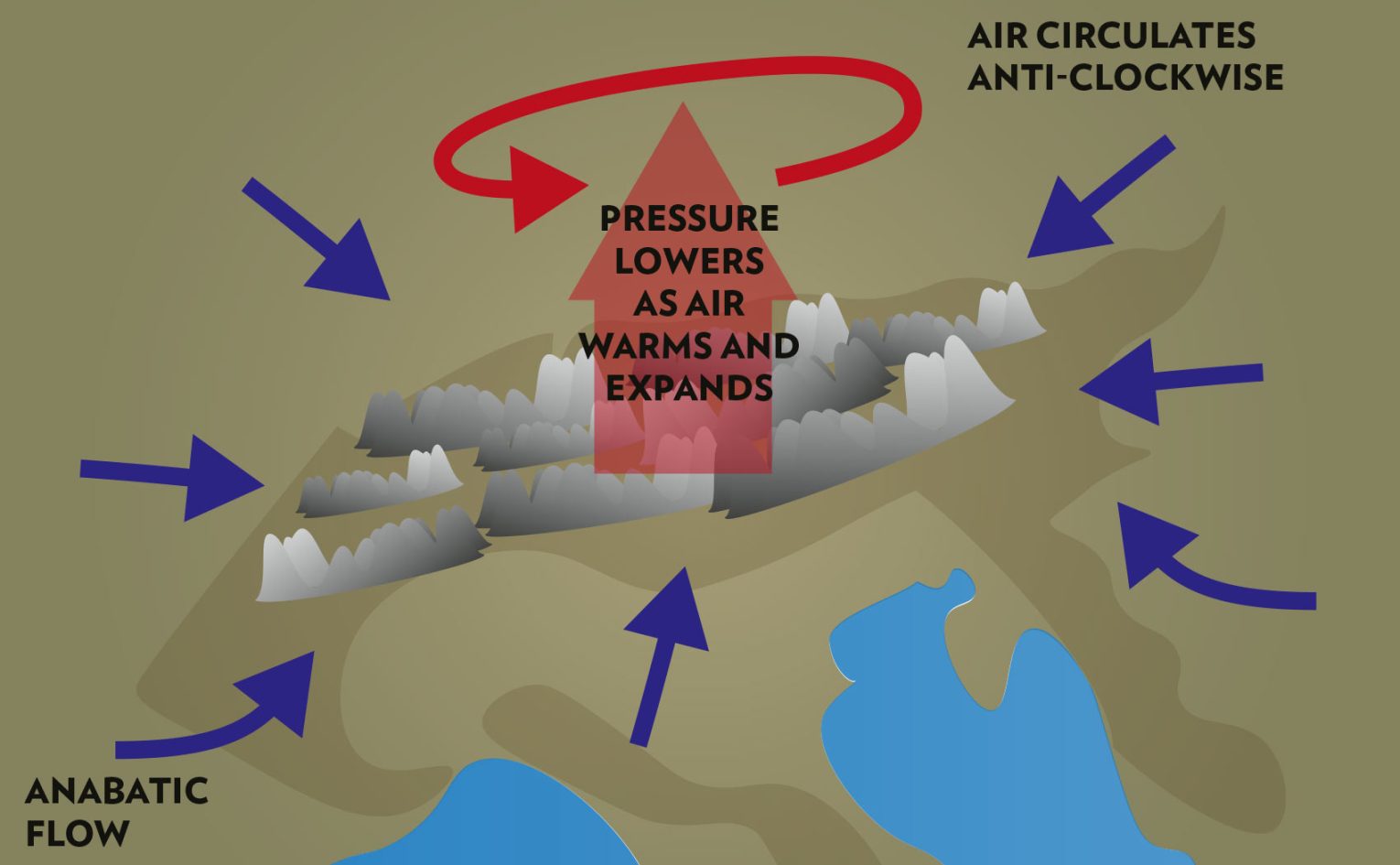
WHAT CAUSES VALLEY WINDS?
In Mastering Paragliding, Kelly Farina describes how valley winds are created.
Valley winds are caused by what is called a ‘heat low’. Each day, as the mountains warm up, a low pressure system sets up that pulls air in from all around. In the Alps the air flows in from the surrounding plains. The air takes the path of least resistance through the mountains – along the valleys. In general valley winds build during the day and are at their strongest late afternoon. You can expect strong valley winds in large, wide valleys – they speed up where the valleys start to get tighter. Kelly Farina’s Mastering Paragliding is a good place to read more about valley winds.