Paragliding Valle de Bravo Nicole Holmes 3

Learning to fly in Temascaltepec

Every year pilots from North America and Europe migrate to Valle de Bravo in Mexico to fly one of the best and most consistent sites in the world. Hanna Klingbeil Canale explains how free-flight has transformed the community

19 January, 2026, by Hanna Klingbeil Canale | Top photo: Nicole Holmes

When I set out to create this piece, I thought I would be writing about the development of air sports in a small region in the southern State of Mexico. Only after I started talking with the pilots and locals did I realise I was actually writing a love story.

In El Peñón, a mountainous site located in a hidden nook in the southern municipality of the State of Mexico called Temascaltepec, free-flight is a way of life: one with distinct values and perspectives, one that shapes identity, and even one that forges new paths in both professional and personal spheres.

Pilots and locals of El Peñón described free-flight as a journey of discovery and unconditional surrender; an account of tragedy and fear; a chronicle of thrilling moments; a tale marked by trust, and, most importantly, transformation.

Originally from Argentina, Alejo Idoyaga Molina visited Valle de Bravo, a town next to Temascaltepec and a popular tourist destination and vacation spot for Mexico City residents, after moving to Mexico as an expat. Fourteen years ago, he took paragliding lessons out of curiosity and a desire for adventure, but his life changed after his first solo flight. Later, his 12-year-old son also learned to fly. “I don’t know how to live without flying,” he told me.

His son, Benjamin, echoed the same feeling, describing his relationship with paragliding as one that has allowed him to connect with his new community and the environment while giving him an acute sense of responsibility.

Alejandra Canale Lebrija, a resident of Mexico City, started paragliding 15 years ago. The sport, she said, has become an integral part of her identity, elevating her self-esteem and giving her a sense of belonging. When I asked her what paragliding meant to her, she responded with a smile, “Feeling like you’re in control of your decisions and emotions, but at the same time having to let go of that control and trust that everything will be okay.”

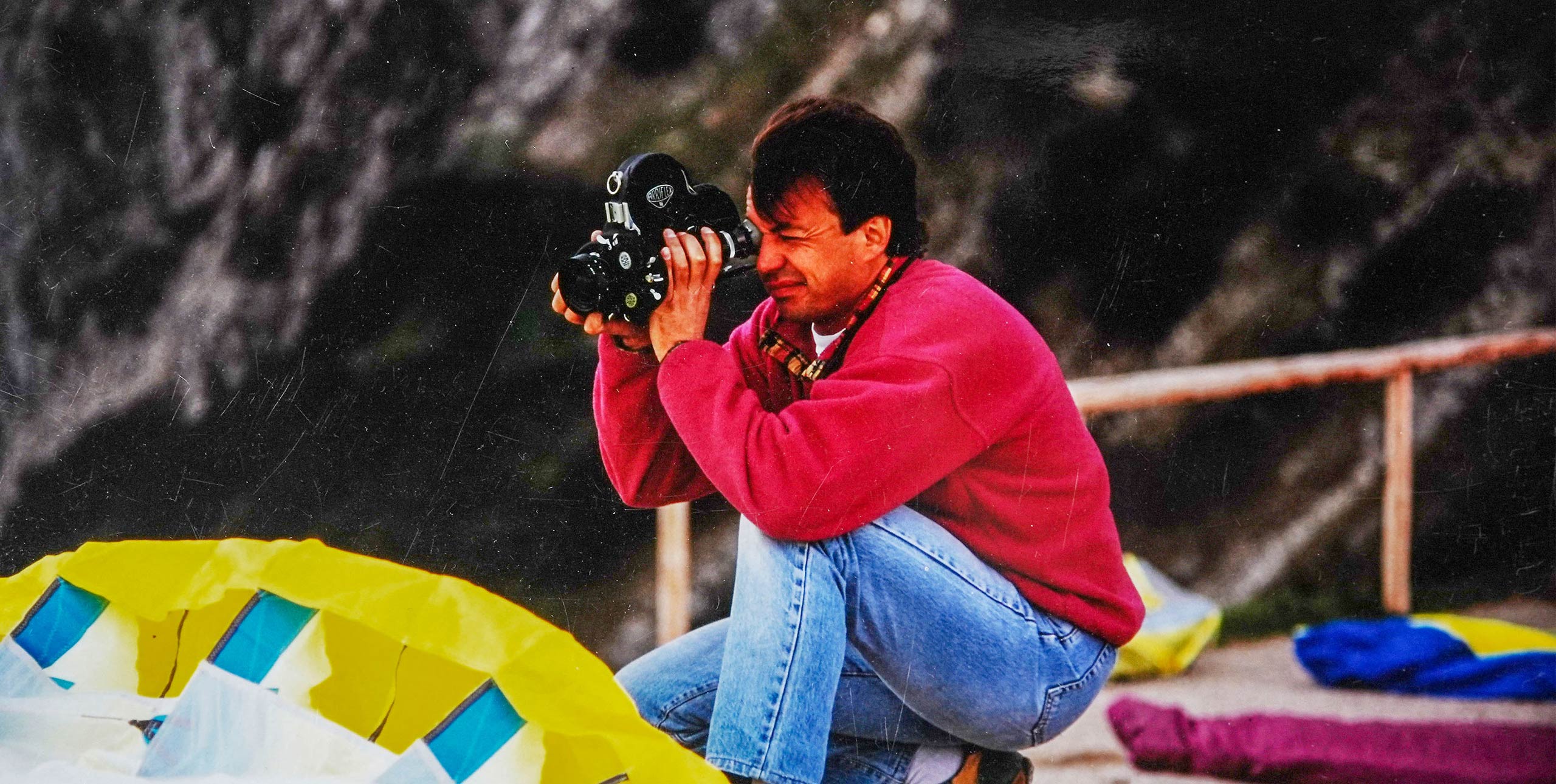
Miguel Gutiérrez. Photo: Nicole Holmes

Miguel Gutiérrez, co-founder of Alas del Hombre, a flight school and business offering tandem flights for tourists, and co-director of the Monarca Paragliding Open, the annual competition in Valle de Bravo, comes from a family of pilots. Dreaming of being able to free-fly in his home country, Gutiérrez brought the hang glider to Mexico in 1987 from California – the birthplace of the modern hang glider – where he began fabricating them as a teen. Paragliding followed.

Free-flight is also practised in the hills surrounding Valle de Bravo, such as Monte Alto, which overlooks the beautiful lake and valleys. However, El Peñón, a rock formation nestled in a small corner of Temascaltepec, is the true free-flight heaven. Alejandro Blázquez de Nicolás, a seasoned paraglider pilot, researched and directed his own movie in 2022, Caballero Águila, inspired by the flying community of El Peñón and the triumphs of local pilots Paty García and José Luis Jaramillo. “El Peñón in Temascaltepec is a free-flight site as well as an agricultural and mining community,” he explained.

“Thanks to its orography, the area offers ideal meteorological conditions for air sports, with winds that blow consistently – primarily from the south – almost 365 days a year. This unique condition makes it a paradise for those who practise the sport.”

According to Blázquez, a group of flight pioneers prepared the launch site 40 years ago, and, since then, the sport’s presence has grown steadily. Gutiérrez explained that every winter, over 300 pilots from Canada, the United States, and Europe visit Temascaltepec due to the ideal and consistent flying conditions the site offers.

Wolfi gets a classic view of El Peñón, the large rock inselberg that dominates the flying site in Valle de Bravo. Photo: Wolfgang Siess

The people of El Peñón

The Club Peñón is the paragliding and hang gliding club that regulates free-flight in El Peñón. It establishes rules to ensure the safety of the pilots and charges fees to fund its operation. To fly in El Peñón, seasonal or membership passes need to be bought through the club.

Maxime Legaignoux, the director of The Club Peñón, explained that the organisation rents the take-off and landing strips from the ejidos (local communities of Temascaltepec) that are part of the park. The Club Peñón also helps support the maintenance of the park and access roads. Most of their employees are Temascaltepec locals.

The community of El Peñón, Temascaltepec, is primarily rural and agrarian, and the surrounding mining excavations are home to a population of likely Matlatzinca indigenous origin. “The Matlatzinca people are very interesting because they are a hardworking and fierce community – warriors who were never conquered, neither by the Spaniards nor by the Aztecs,” Blázquez said.

“In fact, the Aztecs used them as mercenaries in their own conquests. Because of these cultural traits, they are a proud people – strong-willed, combative, reserved – yet with a good heart. Most importantly, they were born from the dream of flight and the universal human desire to live fully.”

The living conditions of Temascaltepec make life challenging for its inhabitants: Temascaltepec and the greater southern Mexico state region face widespread poverty. The Mexican government reported that in 2020, 49% of the population was living in moderate poverty, and 13.4% was living in extreme poverty. Only 15% of the population has achieved a high-school diploma. Blázquez explained that the region has been susceptible to the influences of organised crime and drug trafficking.

Kids from Valle de Bravo in the landing field packing paragliders. Photo: Fabian Gremion
Having fun in the landing field packing paragliders. Photo: Fabian Gremion

Over the past 40 years, free-flight has helped transform the community of El Peñón in Temascaltepec – shaping its cultural landscape, redefining its social fabric, and contributing meaningfully to both human and economic development. “Children from the community gradually began approaching the pilots and their sport, forming relationships of friendship and trust,” Blázquez explained. “After 40 years of building this bond, the extended community now includes instructors, pilots, entrepreneurs, restaurant owners and service providers who live, work, and grow together in this environment.”

The Monarca Paragliding Open is organised by flight school director Miguel Gutiérrez and his wife, Claudia. An iconic competition, it attracts around 150 pilots each January, stimulating the local economy. Gutiérrez explained the competition helps local businesses like hotels, taxis and restaurants for the entire winter season as pilots stay to train and fly. Many locals also offer services independently, such as transportation, as well as medical and logistical aid. Due to the event’s importance, the Mexican state government also supports the event by providing security.

Los Niños del Peñón

Rudy Gotes, a former hang gliding world champion who learned to fly at the age of 11, comes from a family of pioneering pilots. As a world-renowned pilot, he turned the heads of the executives at Wills Wing, one of the four major international hang glider production companies. Wills Wing, based in California, offered Rudy the opportunity to keep the brand while shifting hang glider production to Mexico. He chose to bring the company to Valle de Bravo. Wills Wing has created new economic opportunities for the local community and further solidified air sports in Temascaltepec and Valle de Bravo.

“Everything is produced in Mexico. We try to bring Mexican colours and as much young energy as possible,” Gotes told me. He explained that the same local youth whom he taught to fly in El Peñón years ago now works at Wills Wing.

Air sports not only attract foreigners and support the local economy but also create opportunities for cultural exchange between international pilots and locals. Gustavo Lozano, who learned to paraglide at the age of 52, is a proud member of El Peñón’s pilot community. He said that these meaningful interactions have empowered the local youth to learn English and pursue activities surrounding air sports, as it has provided a lucrative industry full of opportunities.

The benefits of air sports in the region extend far beyond the winter season. Local women sell food and drinks at the El Peñón hangar daily, and the four flight schools and tourist experience providers that operate in El Peñón’s park also employ members of the local community of Temascaltepec.

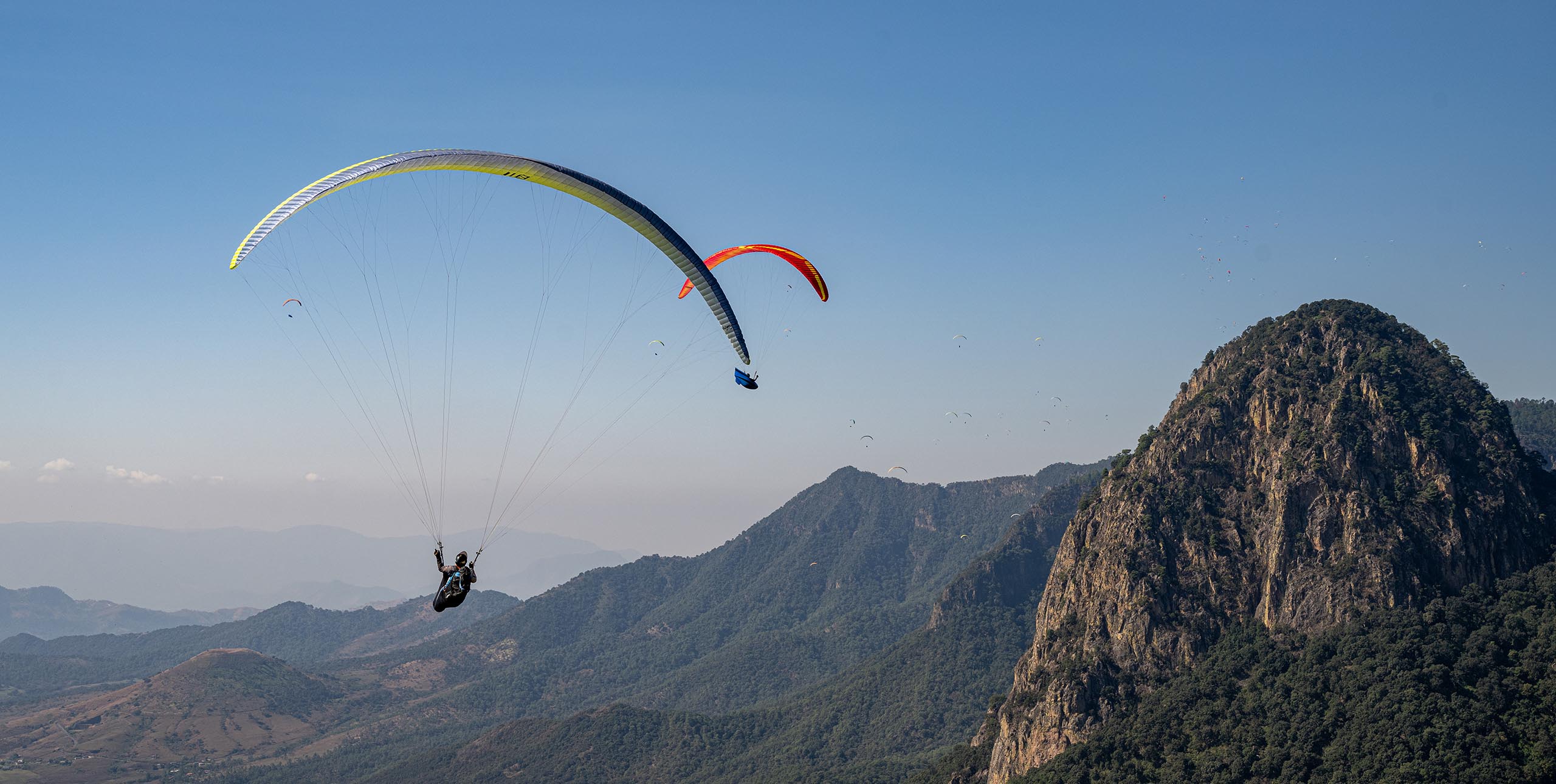
Flying out from launch at El Peñón. Photo: Nicole Holmes

According to Andrés Pérez, a pilot with over 22 years of experience and a member of the community, more than 50 people operate tandem flights with clients in Valle de Bravo’s Monte Alto tower, and around 20 do so in El Peñón. This has improved their quality of life by helping them earn extra income.

Ricardo Gómez Palacio, another passionate pilot and founder of the Club Peñón, stated, “Valle de Bravo is known as a hub for free-flight. If you went to Valle as a tourist, the first thing people will ask when you get back is whether you went paragliding.”

Additionally, the social cohesion that has developed between the pilots and the Temascaltepec youth, known as Los Niños del Peñón, has had transformative effects. The opportunities that air sports offer for the community have galvanised the young locals to seek college degrees, many studying geology, agriculture, and other general fields of study, such as engineering. Many pilots, including Eduardo Canale Lebrija from Mexico City, have supported the community by sponsoring college tuition, transportation to school, and even job placement.

I sat down with a group of young pilots, all taught by free-flight Valle de Bravo local instructor and legend Alfredo ‘Potro’ Tello, and asked them about their free-flight experiences.

Fifteen-year-old Aldo Geovanni Hernández Cruz has lived in El Peñón all his life and was introduced to the free-flight world through his mother, who worked in the restaurant at El Peñón’s landing strip. When Aldo was ten years old, Potro taught him how to fly.

Misael Plata Jaramillo had a similar experience: as a young child, he liked packing the equipment and gradually became close with the pilots, ultimately learning to fly under the guidance of Potro. Misael detailed the positive effects that free-flight has brought to his community: “There are new employment opportunities as more pilots come to work here … El Peñón is the most important tourist point of all of Temascaltepec.” Although paragliding does not provide him and his family with complete economic support, he does gain a profit from flying tandem and commercial flights.

Twenty-one-year-old Oliverio Jaramillo meanwhile is a deaf yet skilled pilot. Oliverio first took to the skies at 14 under the guidance of Potro. For him, flying is, as he expressed, “pure joy.” He flies tandem, which entails mastering piloting without conventional spoken communication. These commercial flights have helped him earn a living. The pilot community has rallied around him as well, supporting his journey by offering him specialised pilot training and hearing aids.

Pilots from the local community of El Peñón who learned to fly from an early age have also reached international success, becoming masters of the air. José Luis “Cloch” Jaramillo, born and raised in Temascaltepec, won the sports class hang gliding world championship in 2015.

“It has become hereditary,” Benjamin Idoyaga Molina, one of the young pilots, joked. He’s right – the children of pilots of El Peñón learn to fly as early as ten years old.

Transformed economy

Still, the community faces other challenges: uncontrolled logging and annual wildfires in Valle de Bravo and Temascaltepec are raising concerns about the safety and environmental conditions of El Peñón. The effects of climate change and pollution have impacted all of the State of Mexico, putting entire livelihoods at risk, especially in communities like those of Temascaltepec.

The pilots who fly in El Peñón also feel a sense of responsibility for preserving the place that allows them to fly. They tend to be ecologically conscious – perhaps due to the nature of their sport – as they seek to protect green zones, report wildfires, and reduce their waste. However, Gustavo Lozano believes that this “ecological consciousness” has not been fully translated into better and more proactive care and use of natural resources. “We need to find more ways to protect our natural resources,” Canale said. Carlos Umaña, another local pilot, agreed. He said, “There are good intentions with little action.”

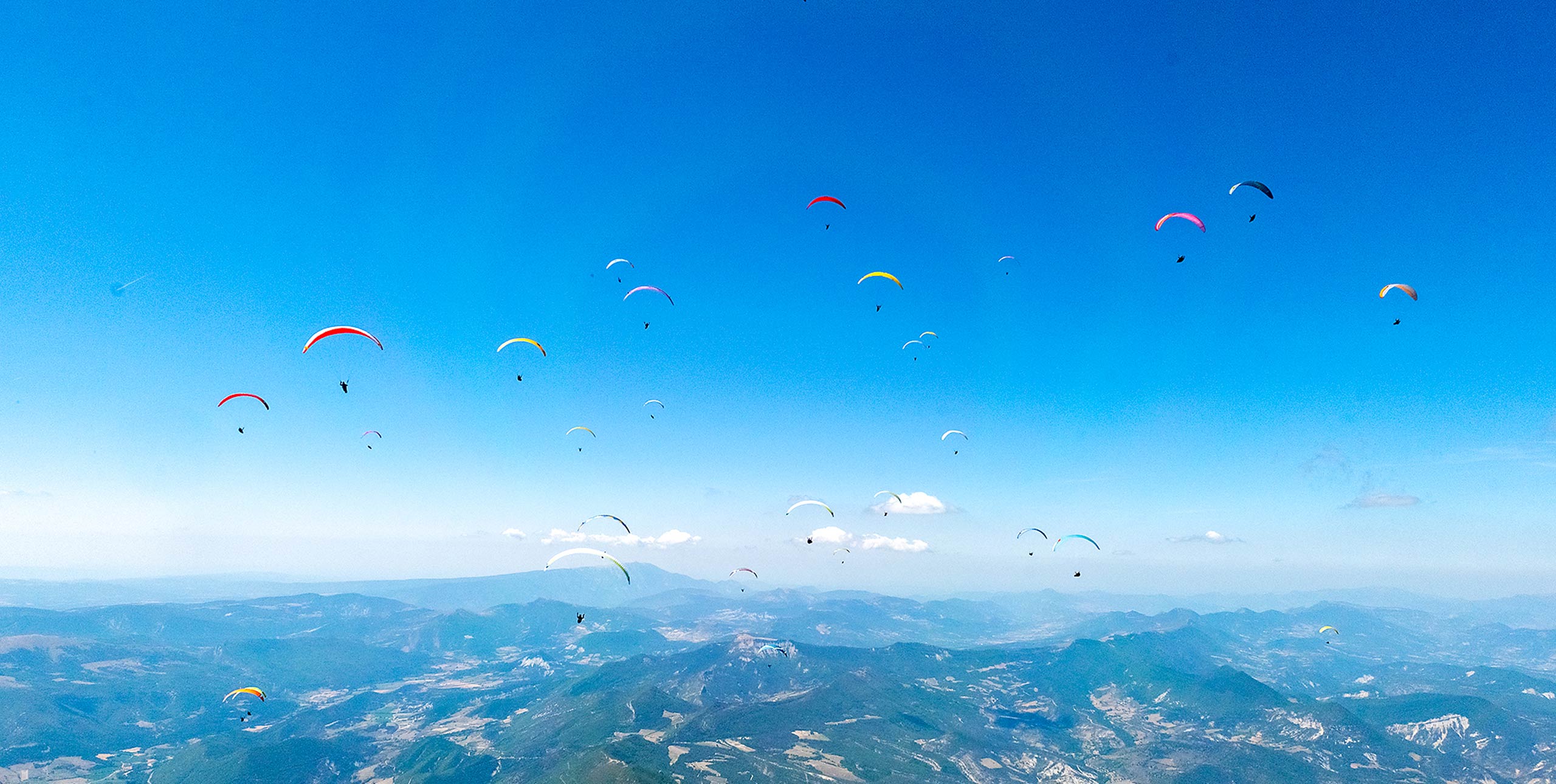
Competition paragliding in Valle de Bravo. Photo: Nicole Holmes
Competition flying. Photo: Nicole Holmes

Still, there are some who are mobilising around this issue. To combat these environmental issues, Legaignoux explained that the Club Peñón works closely with ProBosque, a government agency, pursuing reforestation projects and other initiatives that protect the park. The Monarca Paragliding Open has also shifted to more environmentally friendly practices, according to Gutiérrez. They have worked to create firewalls, ban plastic water bottles, and also partner with ProBosque.

Overall, air sports tourism has transformed the economy and culture of Temascaltepec, while raising important questions surrounding environmental conservation and eco-friendly practices. At the same time, these changes have left the community susceptible to other arising problems. Gentrification – the rise of land and home prices due to an influx of wealthier foreigners moving and operating in the area – has been a recent development.

“Four companies are operating at the Peñón take-off site as schools and tourist-experience providers … It is also true that this relationship has generated a gentrification effect, impacting local land values. Territorial development is affected by these changes,” Blázquez explained.

Enrique Cuevas elaborated on the negative effects that surface from the competition between free-flight providers, “The businesses that have proliferated are the pilots who offer tandem flights, but there are so many that they end up cannibalising each other’s clients and lowering their prices. The number of flight schools has also increased, but graduates do not have much continuity with the sport.”

Free-flight as an industry seems like a double-edged sword: perhaps these current challenges are signs of the economic potential of Temascaltepec on the aggregate level; Cuevas describes what many consider as inevitable economic processes within growing markets.

Another significant yet overlooked obstacle is the affordability of flying, limiting entry to the growing industry. For the Temascaltepec youth, flying equipment and lessons are extremely expensive. Legaignoux, the president of The Club Peñón, hopes that in the future the club can provide financial assistance to train local pilots by pursuing different fundraising plans.

Overall, the Temascaltepec community, despite facing persistent problems, embodies a fighting spirit. In a community centred around flying, adversity is perceived not just as a surmountable obstacle, but a path that leads to a whole world of opportunities in places where human limits are usually encountered. In El Peñón, scaling a mountain is not a torturous and gruelling feat; rather, it is a rewarding climb, one that is certainly not done alone.

Thriving ecosystem

When I visited the club hangar, I noticed a sweet current of air passing through, rustling the yellow fields and guiding the pilots safely to the ground. I could hear the excited cheers of Los Niños del Peñón as they raced to pack the equipment.

As an outsider looking in, I always believed this community knew something that I could never comprehend. Every smiling glance, every bellowing fit of laughter, every clink of beers suggested a secret understanding only privy to them. Perhaps, I thought, being part of the small percentage of human beings capable of flying opened up a world of sensations and knowledge, one that could only be truly understood so far from the ground, with a singular piece of cloth separating the two earthly realms.

The landing beside the lake in Valle de Bravo. Photo: Nicole Holmes

Now, I realise that this secret understanding was not solely limited to the pilots. Whether you were up in the clouds, packing up the equipment, driving gear up and down the mountain, or selling quesadillas, you understood it. Every interaction surged with energy, and every person held an indispensable role. This was not just a community but rather a thriving ecosystem.

Places like this remind us about the spirit of synergy and the importance of community. Achieving this does not necessarily require jumping off mountains – rather, it involves a commitment to the people who surround us, and an understanding that the joy we derive from places, individuals, and activities can be shared and even multiplied through acts of benevolence, friendship, and respect. This is the true love story.

It’s one thing to be able to fly. It’s another to tell someone else that they can too – that you believe in them and that you can help them learn. That nothing is impossible. And sometimes, that act alone is what lifts us most of all.

Discover more about flying in Valle de Bravo at alas.com.mx and monarcaopen.com. This article was originally published by The Politic, Yale University’s undergraduate journal of politics and culture. The writer, Hanna Klingbeil Canale, is a student at Yale with family ties to Temascaltepec and Valle de Bravo in Mexico


This article was first published in Cross Country Issue 263


You may also like