‘I’m astonished!’ says Andy Tallia after Superfinal win
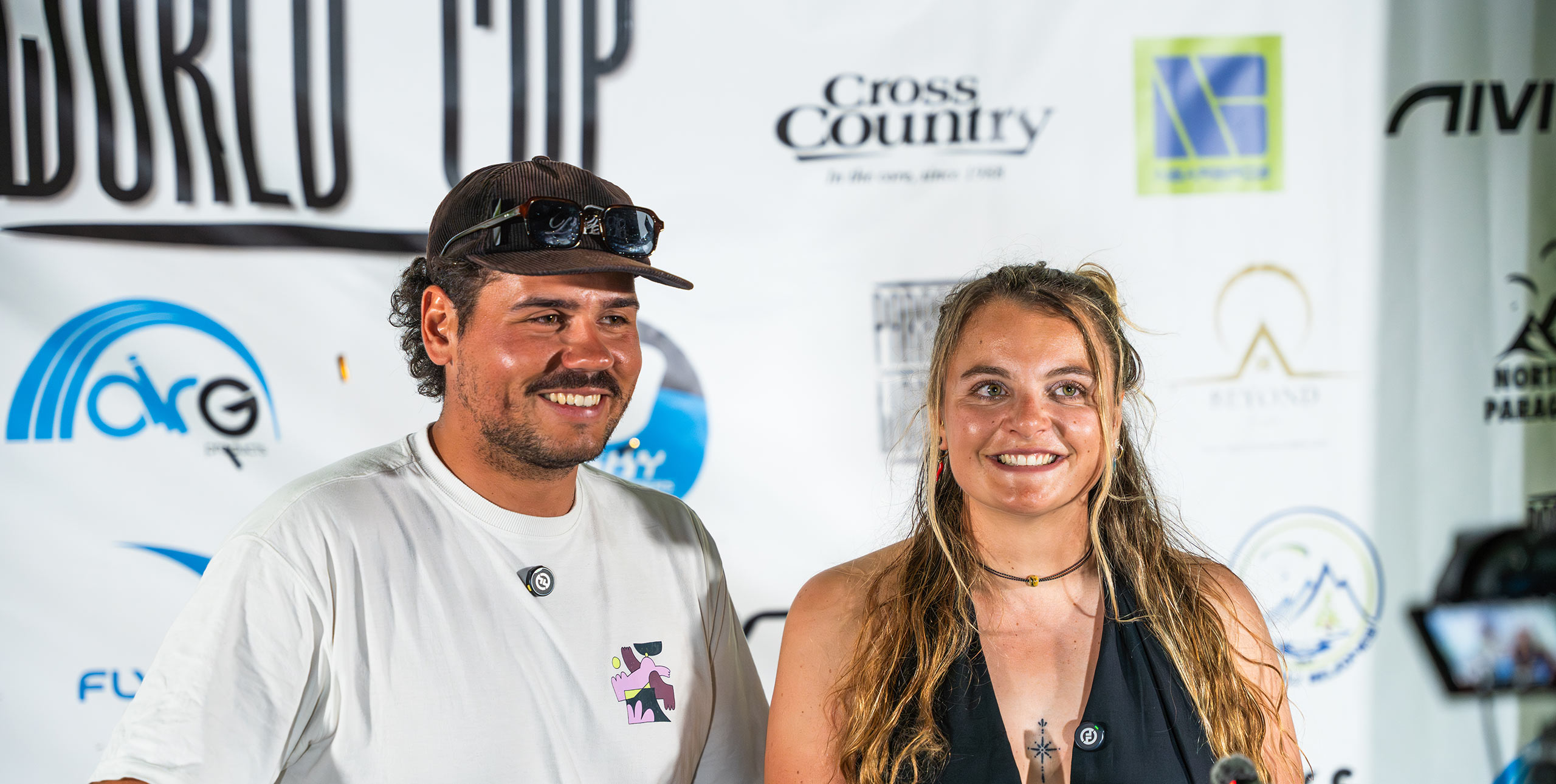
Andy Tallia and Constance Mettetal win the PWCA Superfinal in Pegalajar
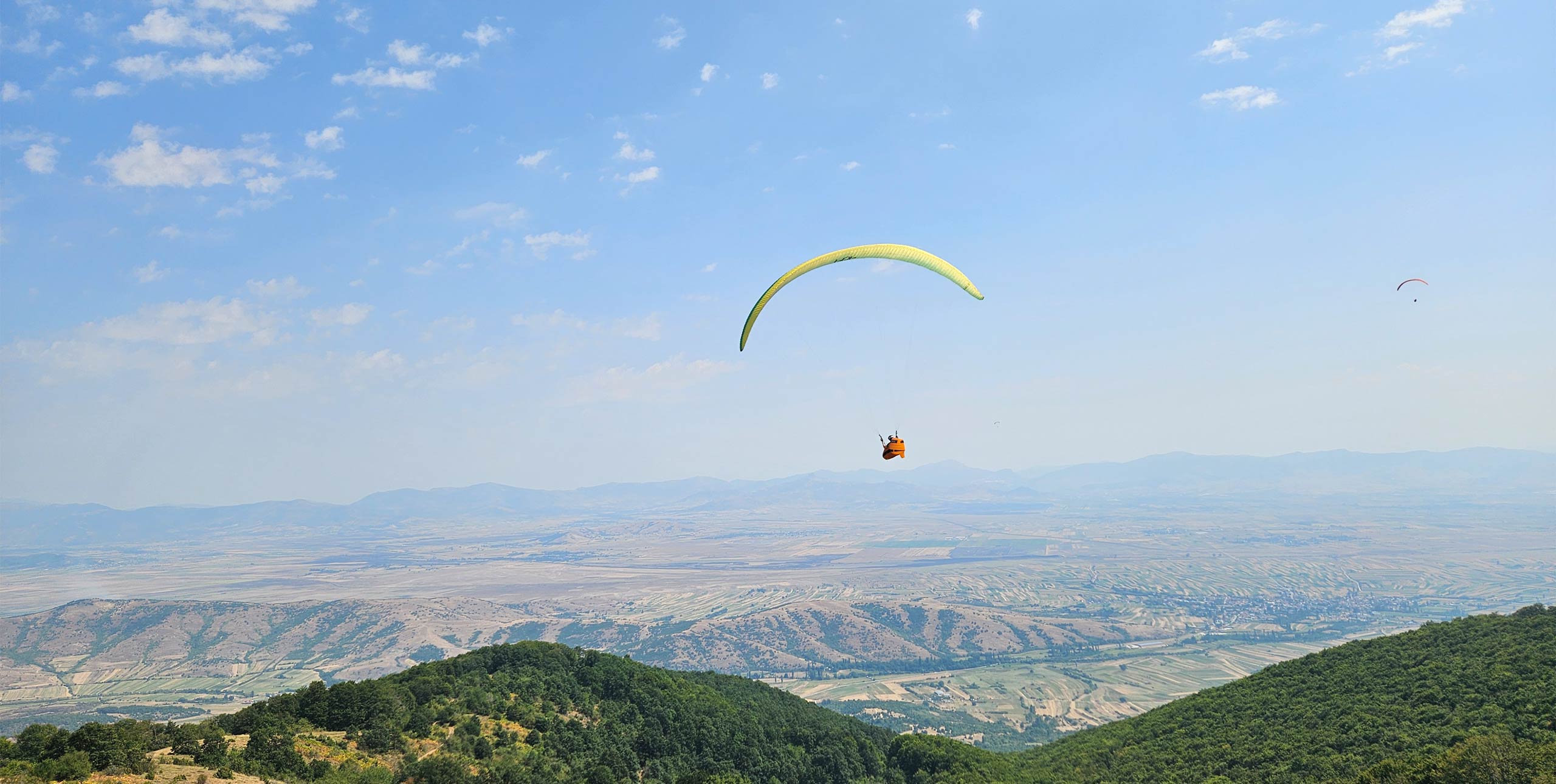
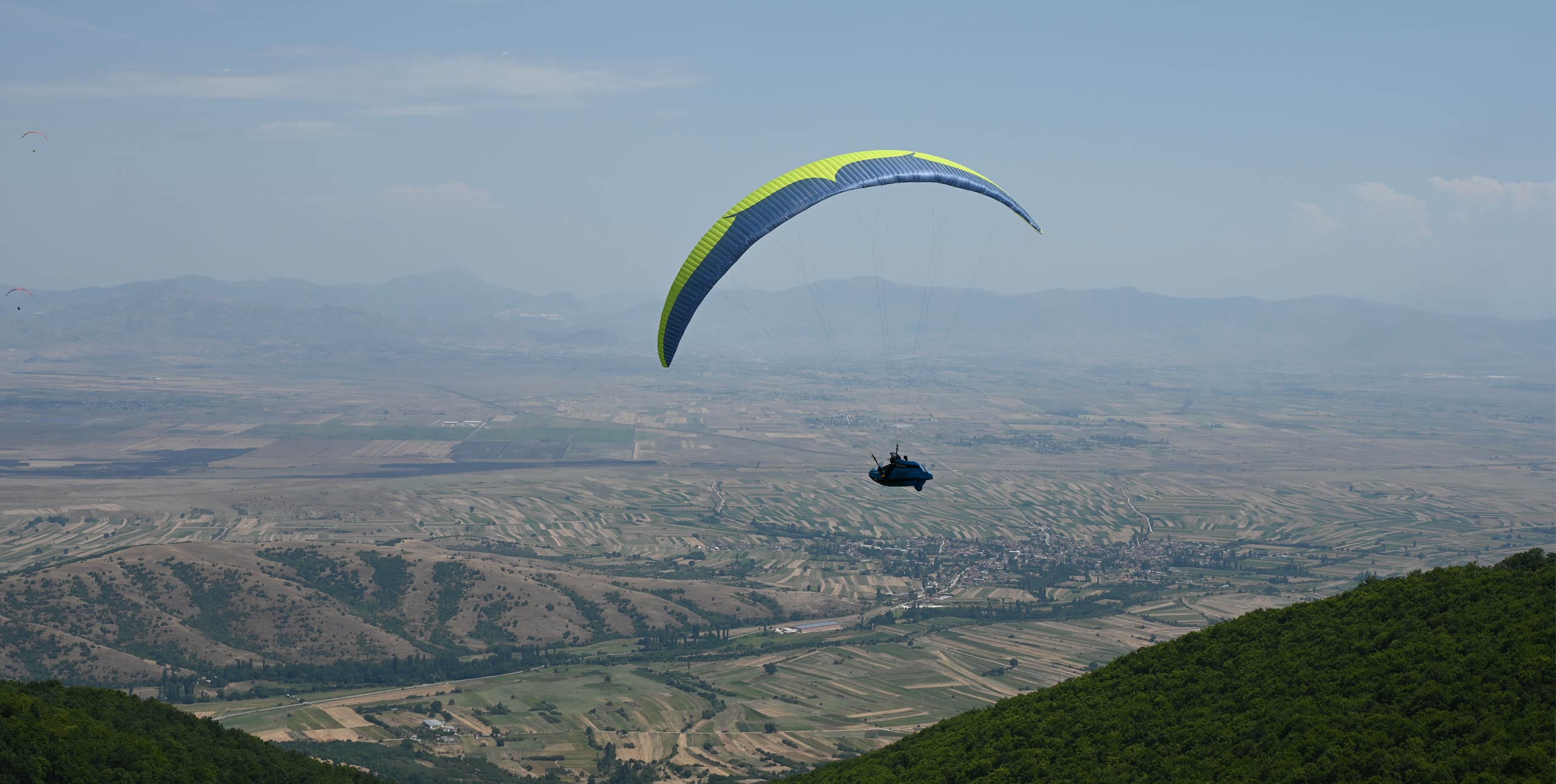
27 May, 2026, by Jack Sheard | Photos: Henry George and Martin ScheelThe world-renowned Pegalajar site in Andalusia, southern Spain, was home to the 15th Paragliding World Cup Superfinal between 13 and 23 May 2026. One hundred and ten of the world’s best pilots competed across eight long tasks (86km, 132km, 124km, 72km, 128km, 126km, 138km, 119km), in what proved to be one of the most dramatic editions of the competition in recent memory.
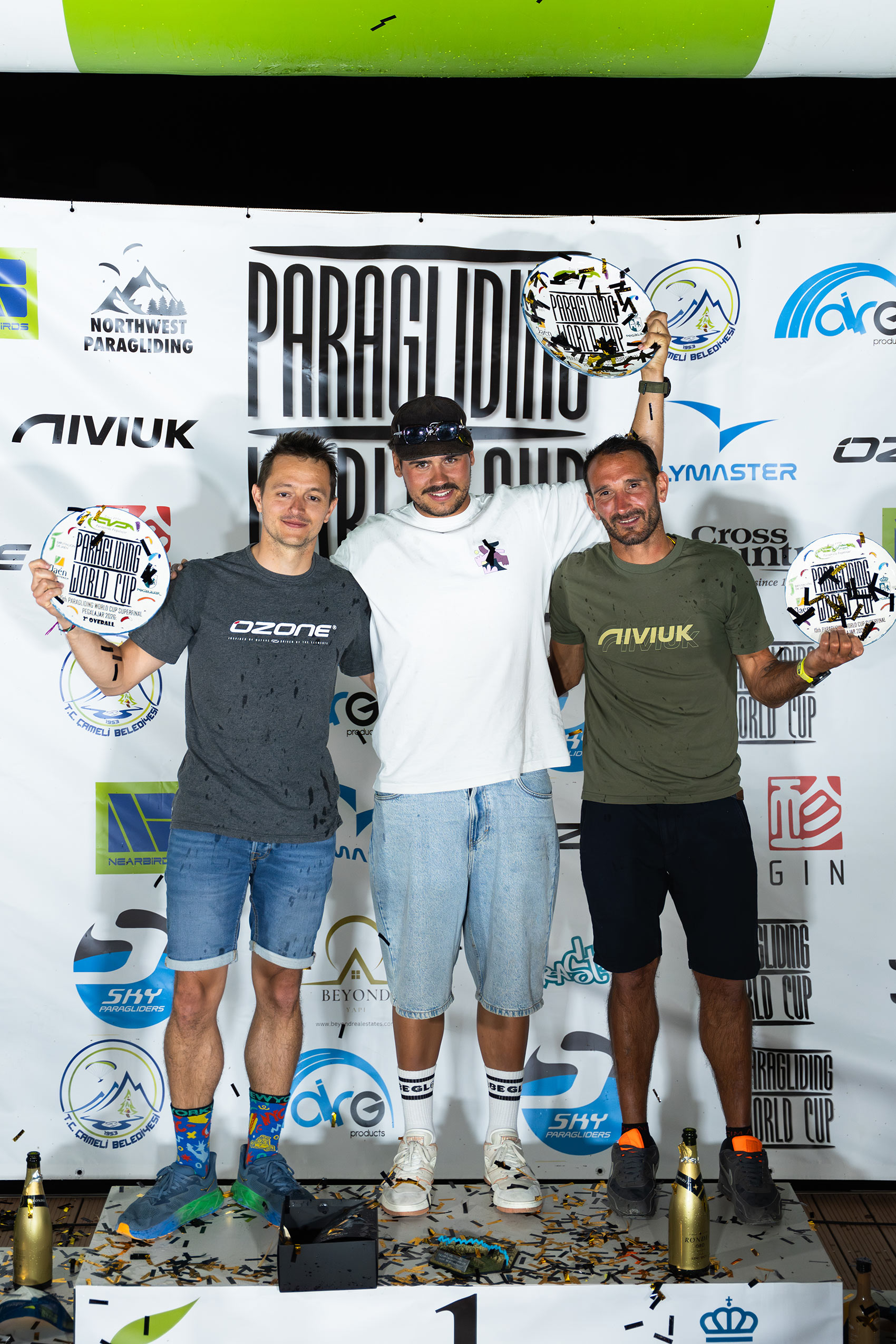
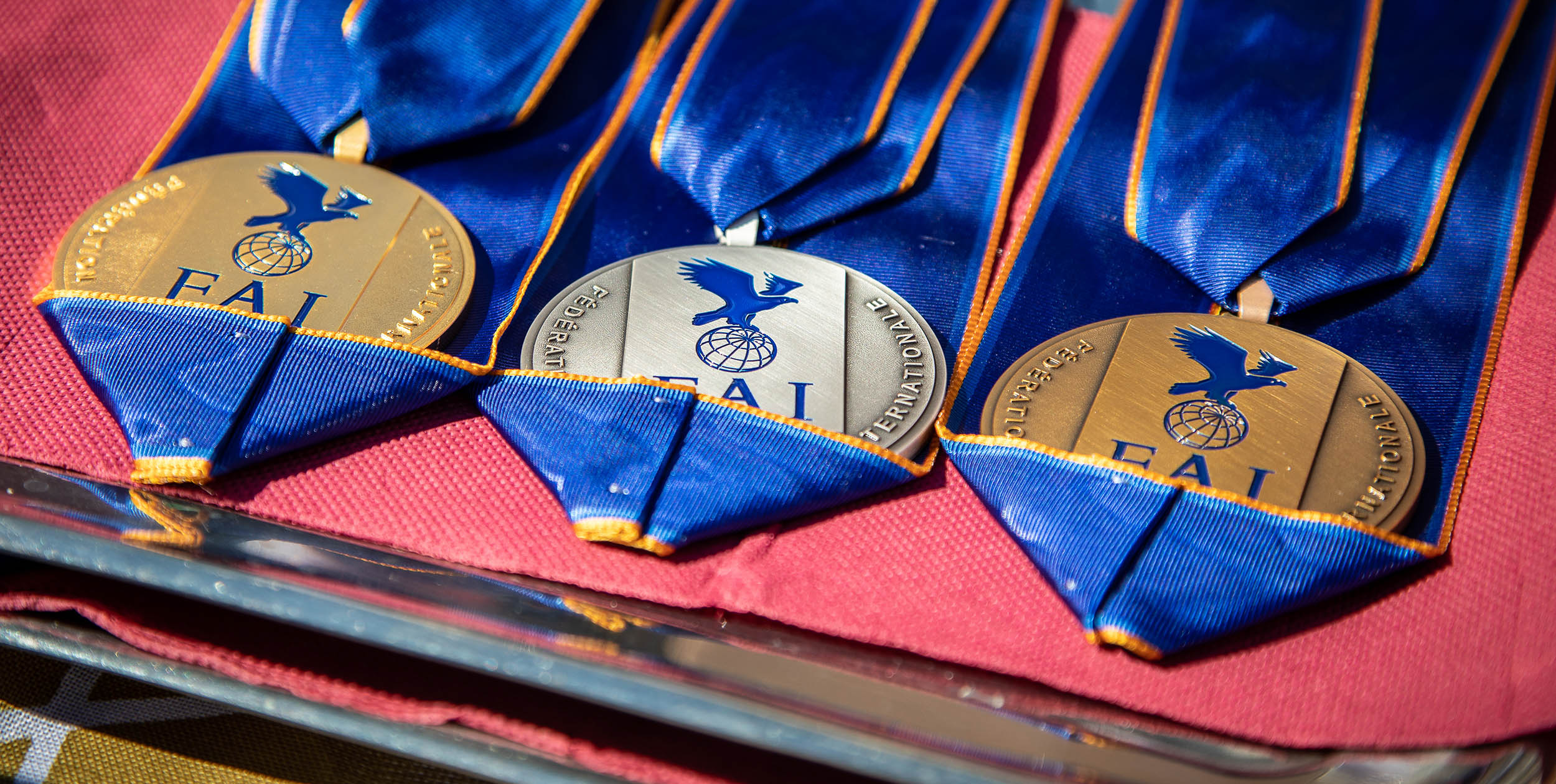
Andy Tallia (FRA) took the overall title with 5,830.5 points, finishing a mere 10.2 points ahead of current FAI World Champion Baptiste Lambert (FRA) in second, with Pierre Remy (FRA) third.
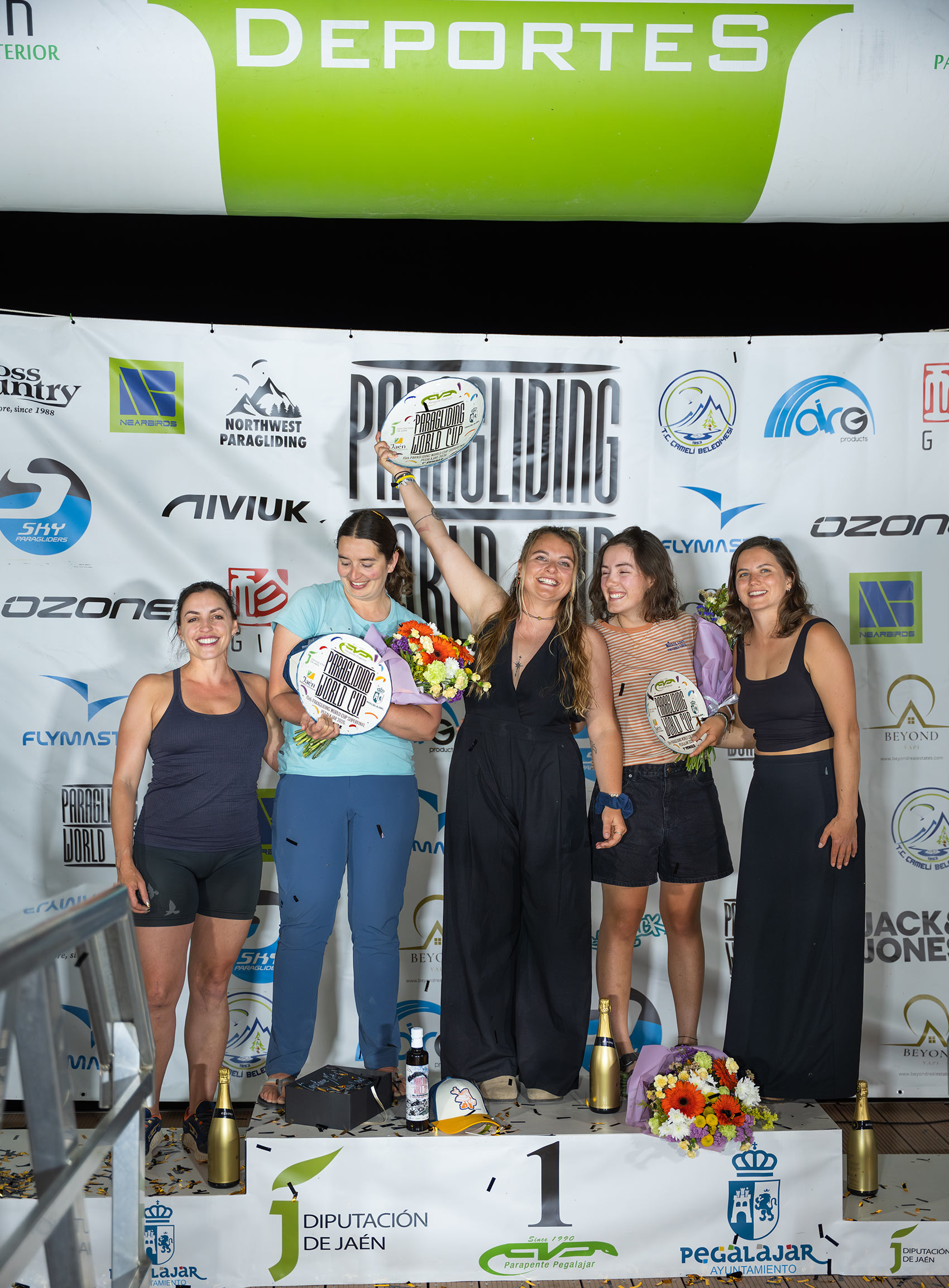
In the women’s competition, France’s Constance Mettetal claimed the title for an unprecedented third time with 5,753.2 points, ahead of Alexia Fischer (USA) in second and Daphnée Ieropoli (FRA) in third.
“I’m astonished and I need a bit of time to consider what I’ve just done,” Andy Tallia said afterwards. Constance said: “I’m so happy. It’s my third Superfinal win, I’m 20th overall, and I finished second in the final task.”
Consistency pays
The competition was defined not by who won tasks, but by who avoided losing them. With eight tasks across the eleven days, the leaderboard was reshaped almost daily.
Going into the penultimate flying day, just 7.1 points separated the top three pilots. Lambert led with 4,433.5 points, Tallia 5.5 points behind and Remy a further 1.6 back. In the women’s standings, Mettetal held a 21-point lead over Daphnée Ieropoli with American Alexia Fischer just 0.2 points behind in third. The title in both categories would not be decided until the final task.
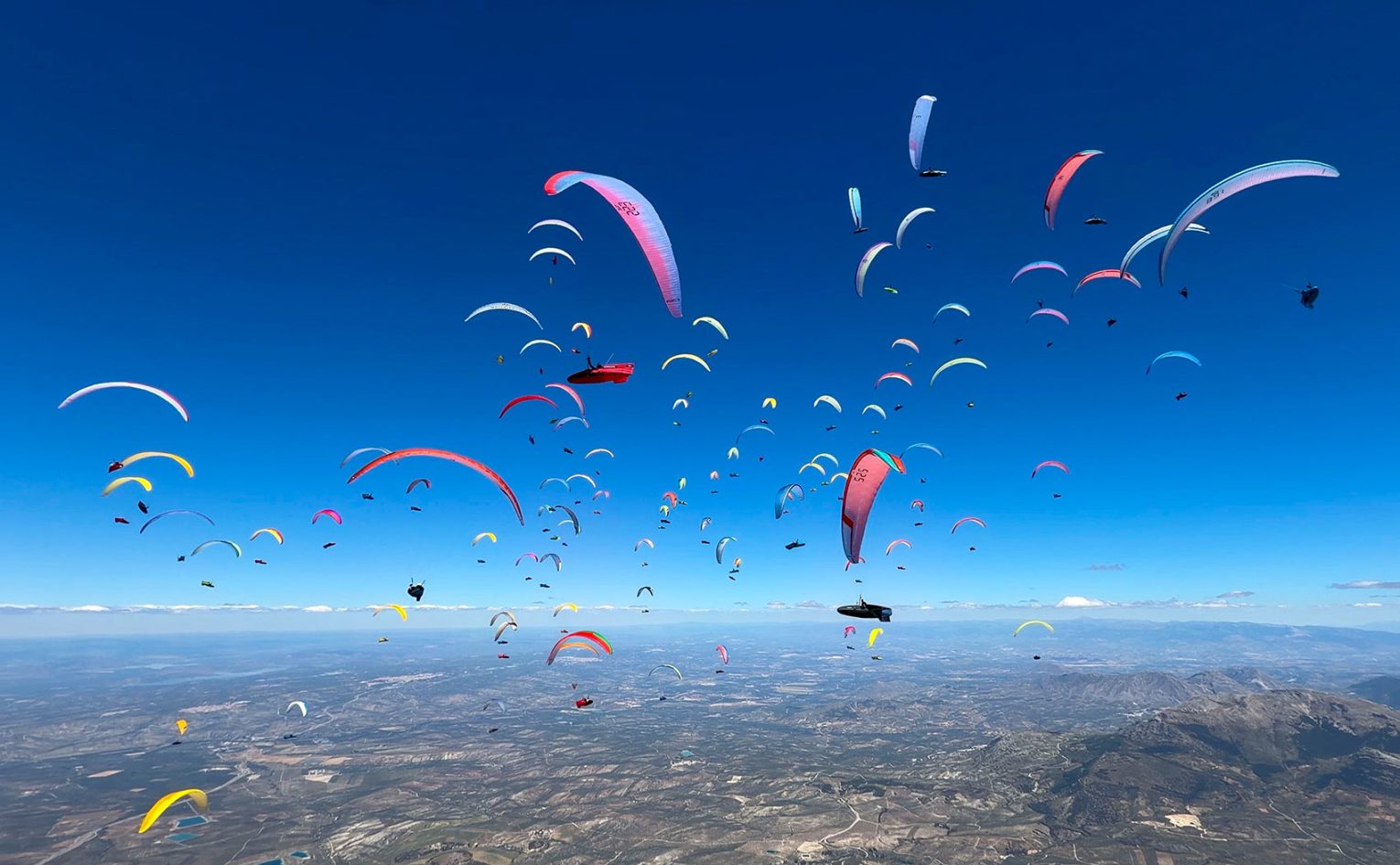
French team leader Julien Garcia explained why the competition proved so unpredictable for the favourites. “We were caught a bit off-guard at the beginning of the competition. The guys who led the most would get washed into big sinks and the group defended too well behind. And so they got destroyed very easily a couple of times.”
Going into the final two tasks, however, Garcia noted that the picture was not yet settled. “With the discard game, a guy like Honorin can still come back and win the comp. It’s not impossible.”
British pilot Dylan Mansley described how razor-thin the competition margins had become. “All the results have been really tight,” he said. “It’s so easy to drop from 20 to 60 here. And even to come back from 60 to 20.” He partly attributed the volatility to the unforgiving conditions. “We’ve had a few days which were very hit-or-miss. It’s gone from quite weak to really strong and then you’re going alongside and find nothing. It’s a tricky comp for sure.”
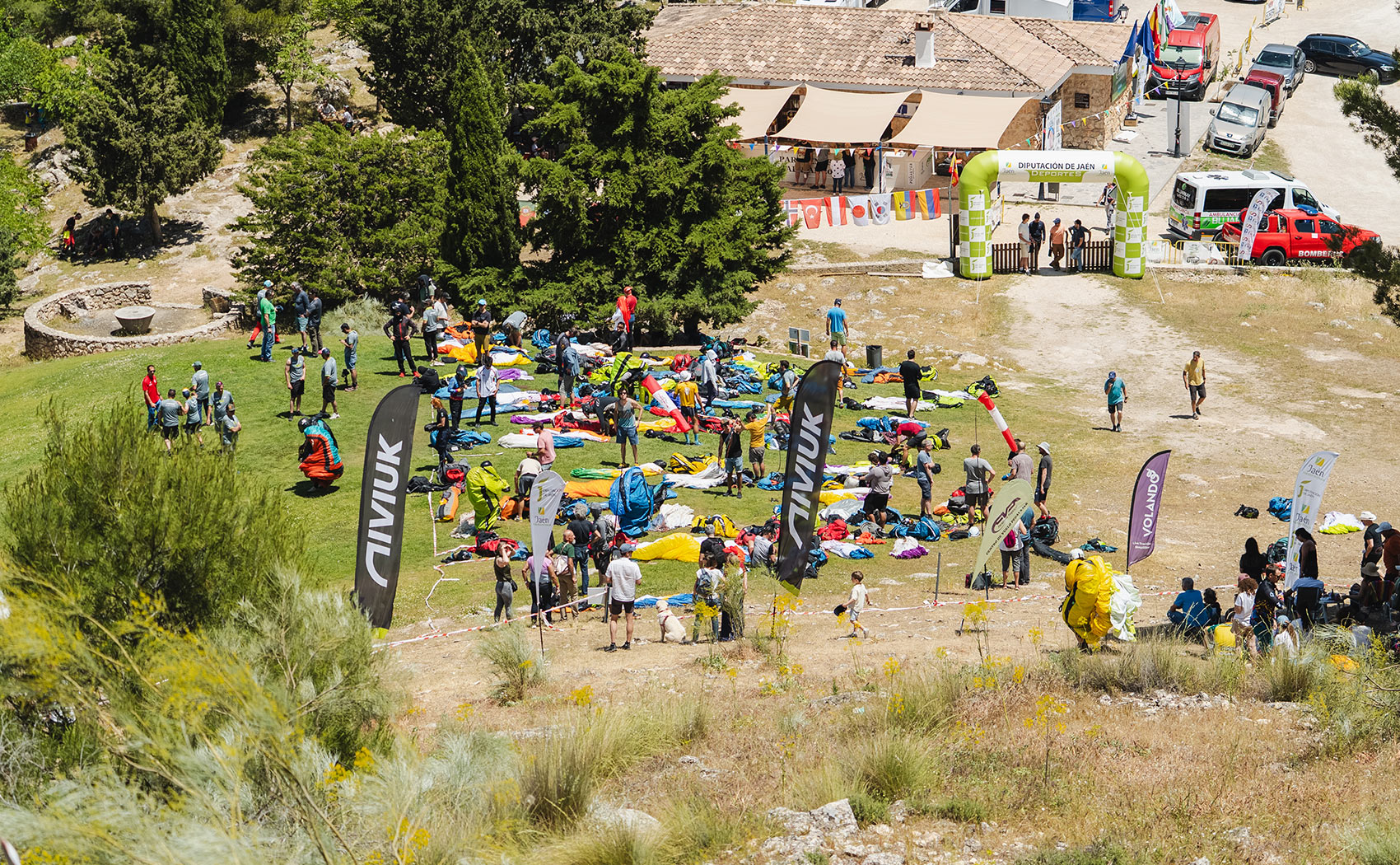
From all the chaos, it was Tallia’s skill and consistency which won him the Superfinal title. The young Frenchman placed no lower than 23rd across all eight tasks, with his worst result coming on Task 4, a short, compressed day on which nearly the entire field made goal. He was consistently inside the top ten.
Going into the final task, Tallia held a tiny lead of just 0.1 points over Lambert. “I didn’t want to think too much about what could happen,” he said. “I just had one job: to keep up with Baptiste as much as possible. Most scenarios would let me win. Baptiste had to work to gain anything, so I just wanted to stay in touch with him and be patient.”
For Mettetal, the key was a similar discipline. “I take one task after one task. I separate day by day. Because it’s a long competition; a marathon.”
The story of the competition’s pre-race favourites was strikingly different. Defending champion Maxime Pinot endured a difficult week, finishing 88th on Task 1 and 79th on Task 3, effectively ending his title defence before the halfway point. Two-time Superfinal champion Honorin Hamard won Tasks 1 and 4 but between those victories came a 110th on Task 2 and a 98th on Task 3. These two results left him 93rd overall.
Garcia was candid about the tactical nature of the competition. “I think it’s been three years since I’ve seen such a defensive competition. The defensive game was outrageous and [lasted] for five tasks in a row. Only Task 6 was looking a bit more traditional: someone goes in front, the group has to recentre, the attacker gets the leading points. But the past tasks were really defensive, really slow. We would fly off-bar most of the time. It was a different kind of game and you don’t expect this at a Superfinal.”
Trimming controversy
The competition was not without controversy, specifically with regard to line trimming. In a statement published on the competition’s official Telegram channel half-way through the competition, technical delegate Bill Hughes confirmed officials were suspicious that some gliders had been trimmed faster than allowed by the rules. Hughes described it is as “unsportsmanlike conduct”.
He warned against it and added: “You are harming the large majority of pilots who do not want to cheat.” If caught, penalties could include disqualification and a ban from future PWCA events for a period of time, he said.
Under new rules adopted this season CCC glider lines must be trimmed to within 10mm tolerance of the manufacturer’s specifications. The upset followed a related debate ahead of the competition around “clipping” the internal rods in competition gliders, as reported by Lu-Glidz.
Tallia wins
With a couple of potential flying days cancelled due to conditions later in the competition, meet director Íñigo Redín, along with the task committee, took the unusual decision to relocate the penultimate task to a launch site near Granada.
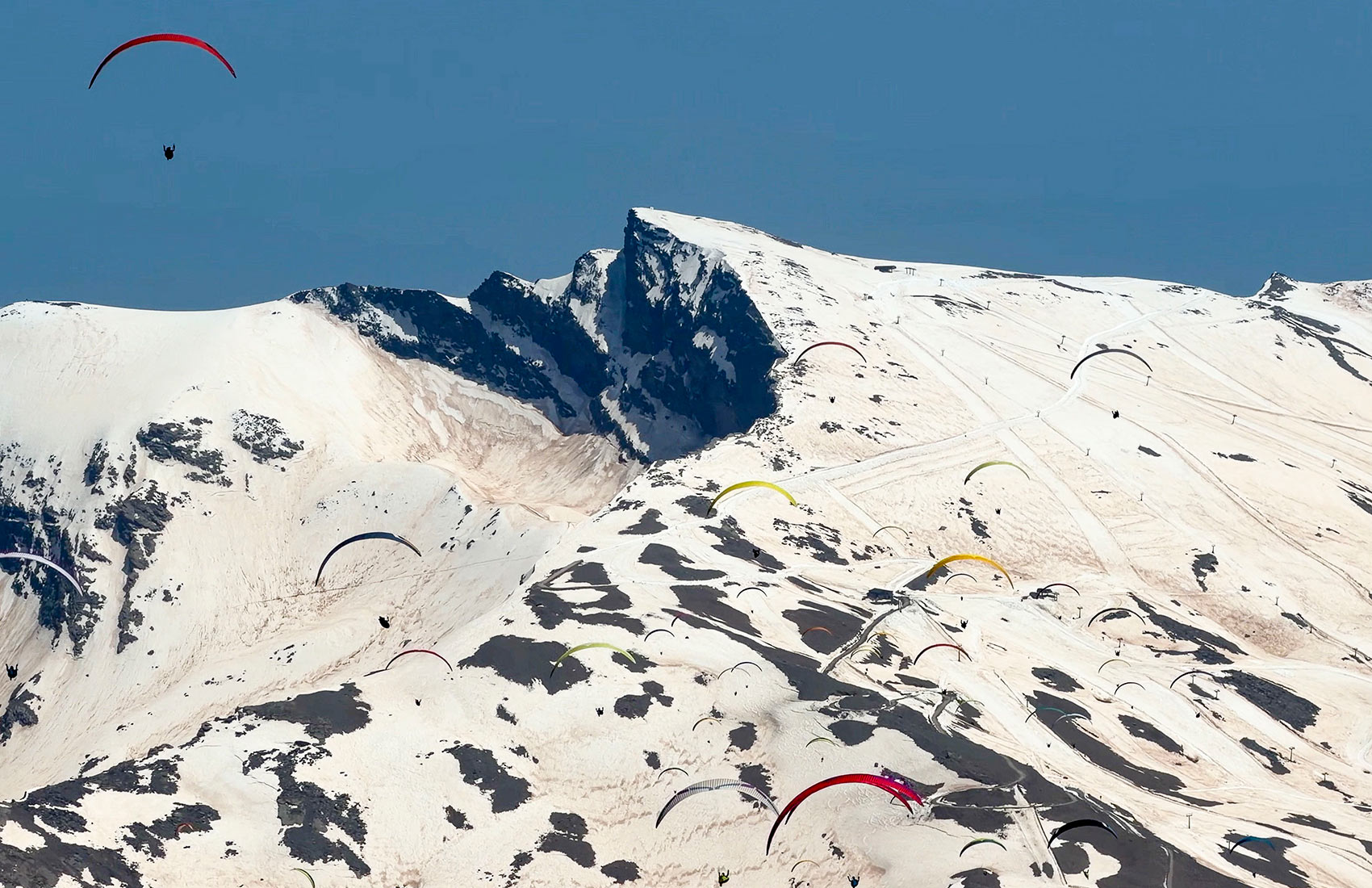
It was a significant logistical undertaking involving multiple van trips to a take-off unreachable by bus. “The easier way was to cancel the day,” Redín said. “But we always try to please the pilots and the competition. It’s not only for the pilots, it’s for the competition itself.”
The approach drew praise from the pilots themselves. “I think it was very cool for the organisation to move a take-off to Sierra Nevada,” Mettetal said. She later described it as a “beautiful task”.
The final task of 119km was from the usual Pegalajar launch and produced one of the Superfinal’s most extraordinary results. It was delayed in anticipation of better conditions but the 4.15pm start gate left pilots racing against fading thermals.
As the sun dropped closer to the horizon around 8pm, only a single pilot arrived into goal. Stéphane Drouin (FRA) had choosen a more westerly line and waited longer in a thermal, gaining extra height, before committing to his final glide. “I was lucky,” he said.
Tallia reflected on a final task that tested every pilot’s nerve. “The day was super long, and was ending with almost no thermals. Although these aren’t conditions I particularly like, I tried to just keep in the air, be patient until the day finished.”
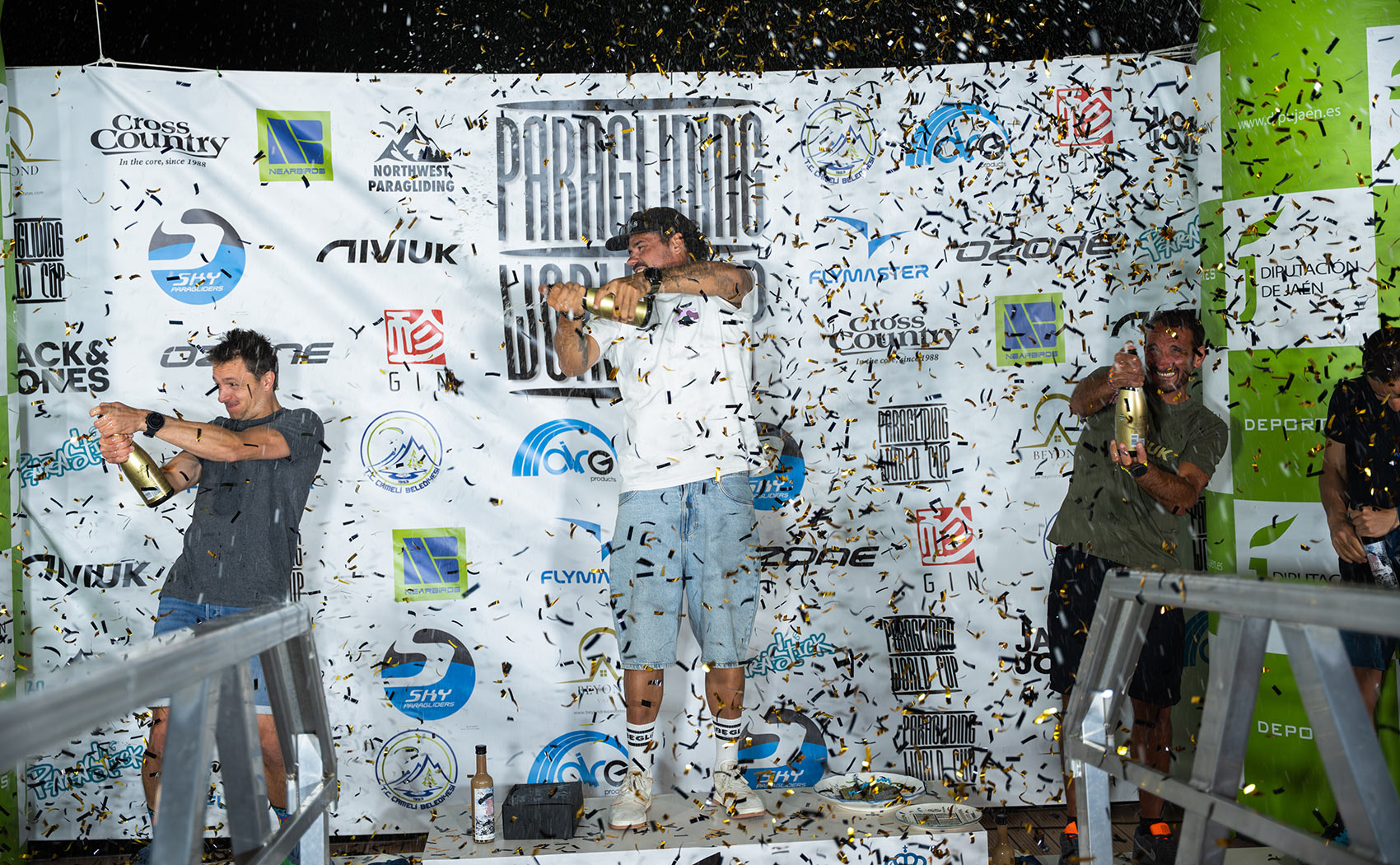
The evening and competition ended with the prize giving and party in Pegalajar’s town square, with the winners crowned worthy Superfinal champions.
The competition brings to a close the 2025/26 Paragliding World Cup season, which saw events in Brazil, India, Turkey, Europe and China. The 2026/27 season kicks off in July in Gemona, Italy, with five events so far scheduled around the world. The next Superfinal is scheduled for May 2027 in Grindelwald-Interlaken, Switzerland.