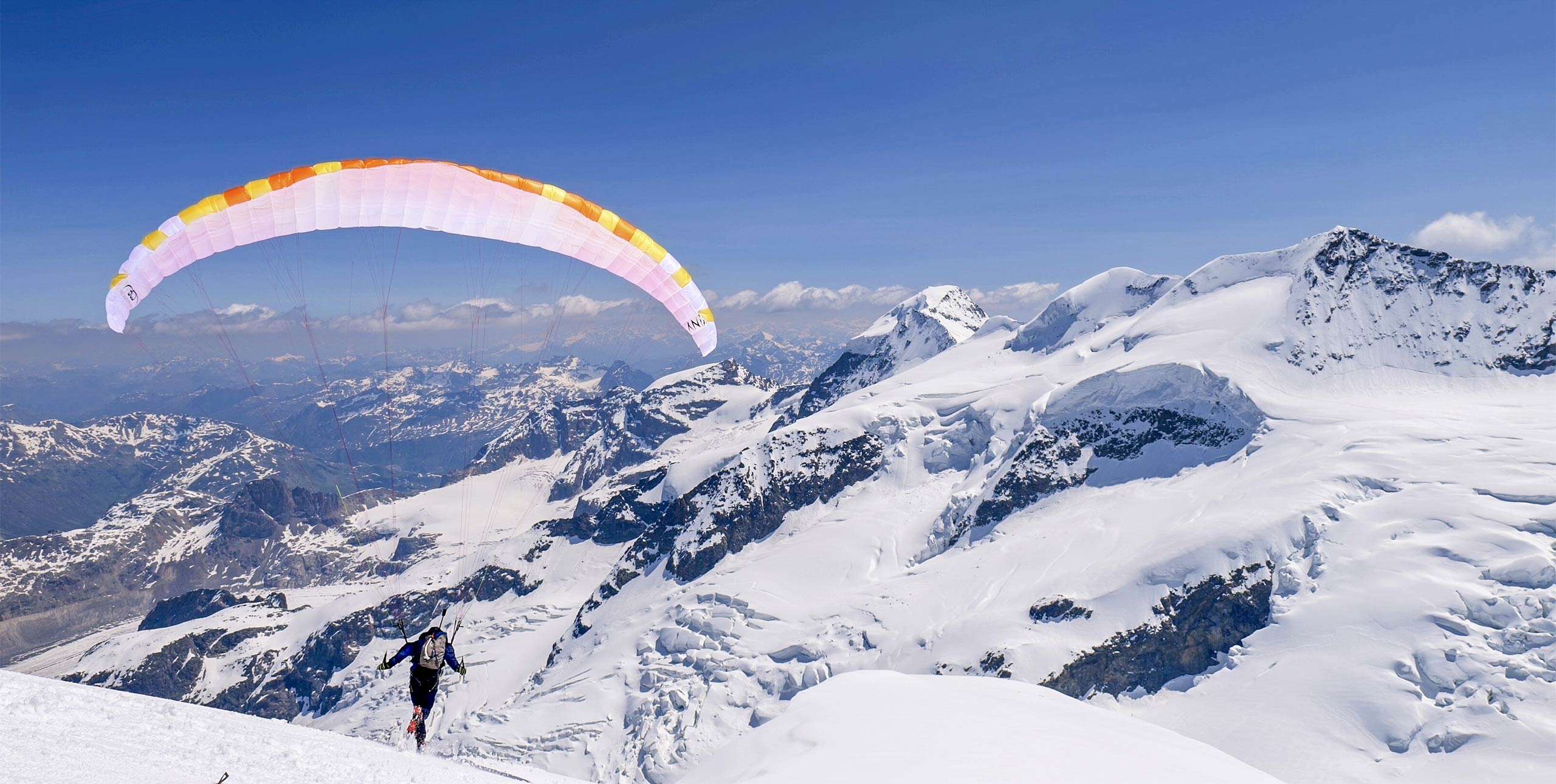
La Paralpine: Exploring the Alps by climb-and-fly
Ed Ewing meets pilot and award-winning filmmaker Guillaume Funck, whose film about his trans-Alpine adventure has been scooping up awards all year
9 June, 2025, by Ed EwingI loaded up my plate with three different salads and something well-cooked from the grill and squeezed myself into a spot on an outdoor bench on a big table with about 10 other pilots. It was the BGD team barbecue at the Coupe Icare last year and I was there as a guest. Around me the buzz was of hike-and-fly that morning, flights flown that season and travel plans for the autumn ahead.
On my right was a young blonde-haired pilot in a yellow hoody. “This is Guillaume Funck”, someone said, “he just won the main prize at the film festival!” It turned out Belgium-born Guillaume, then 26, had flown from Slovenia to Nice in France on his first vol-bivouac, flying an EN-B. Along the way he teamed up with friends to climb six major Alpine routes. And then he made a 52-minute film of it all, which completely won over the jury and audience of the Icare du Cinema film festival that weekend.
After congratulating him I pulled out my phone to record an interview – after all, it is not every day you meet an award-winning first-time filmmaker over the mixed-bean salad. Guillaume, I said…
Tell us about your film
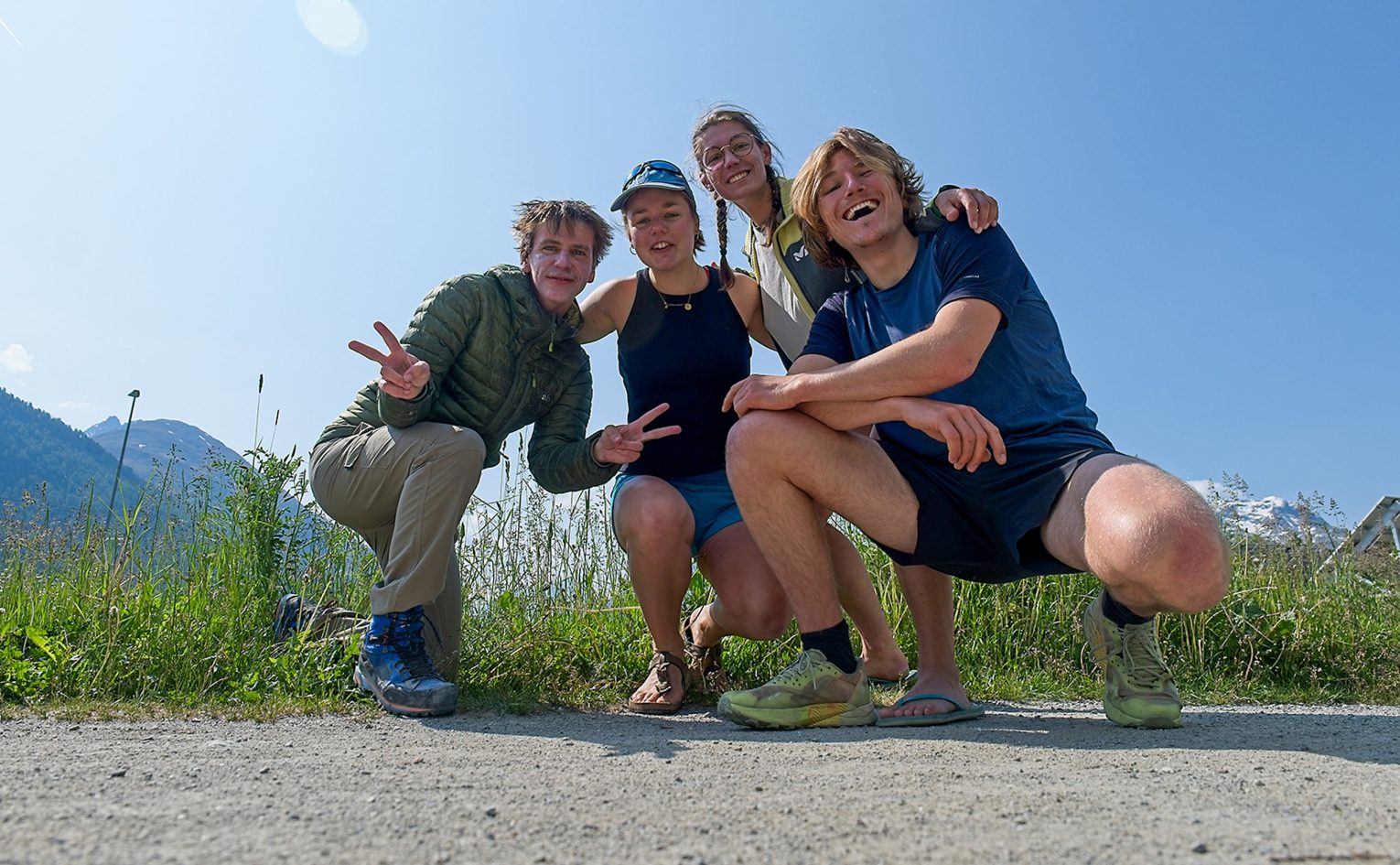
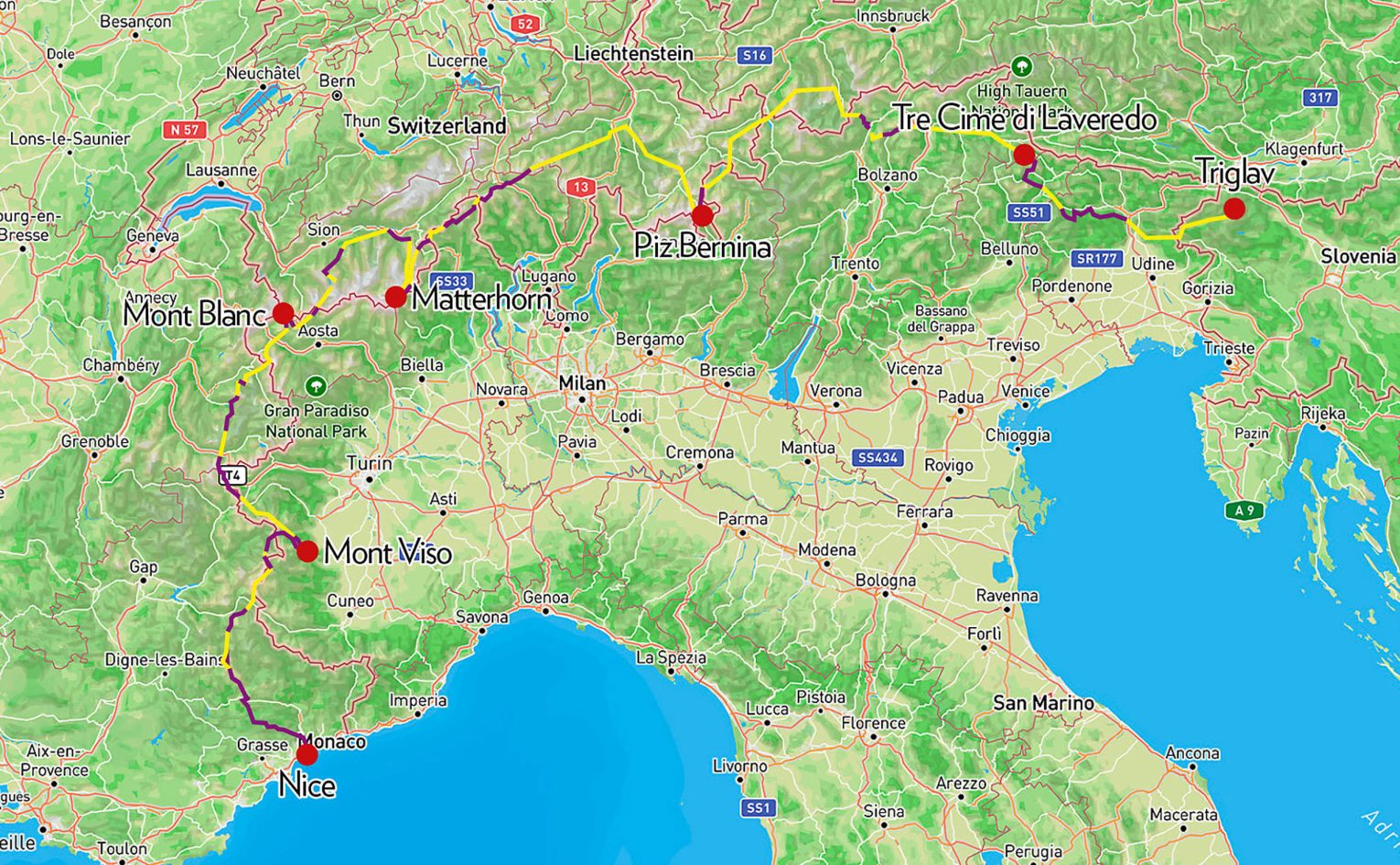
The trip was a month and a half. I started from Slovenia and ended in Nice and I climbed six peaks along the way, the mountains I wanted to do. The idea was to connect them with the paraglider. It was 1,400km in total.
Which mountains did you climb? Why six?
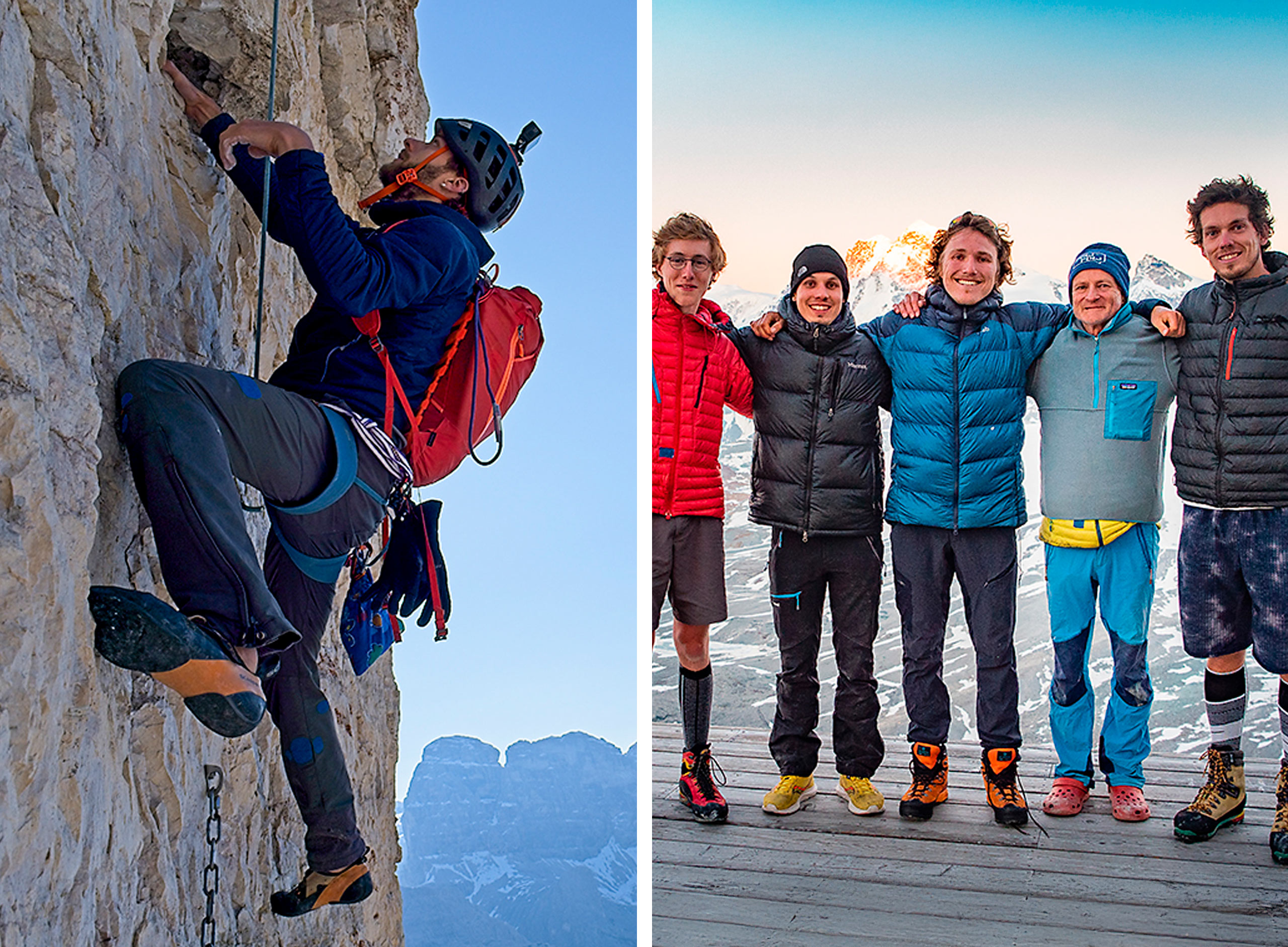
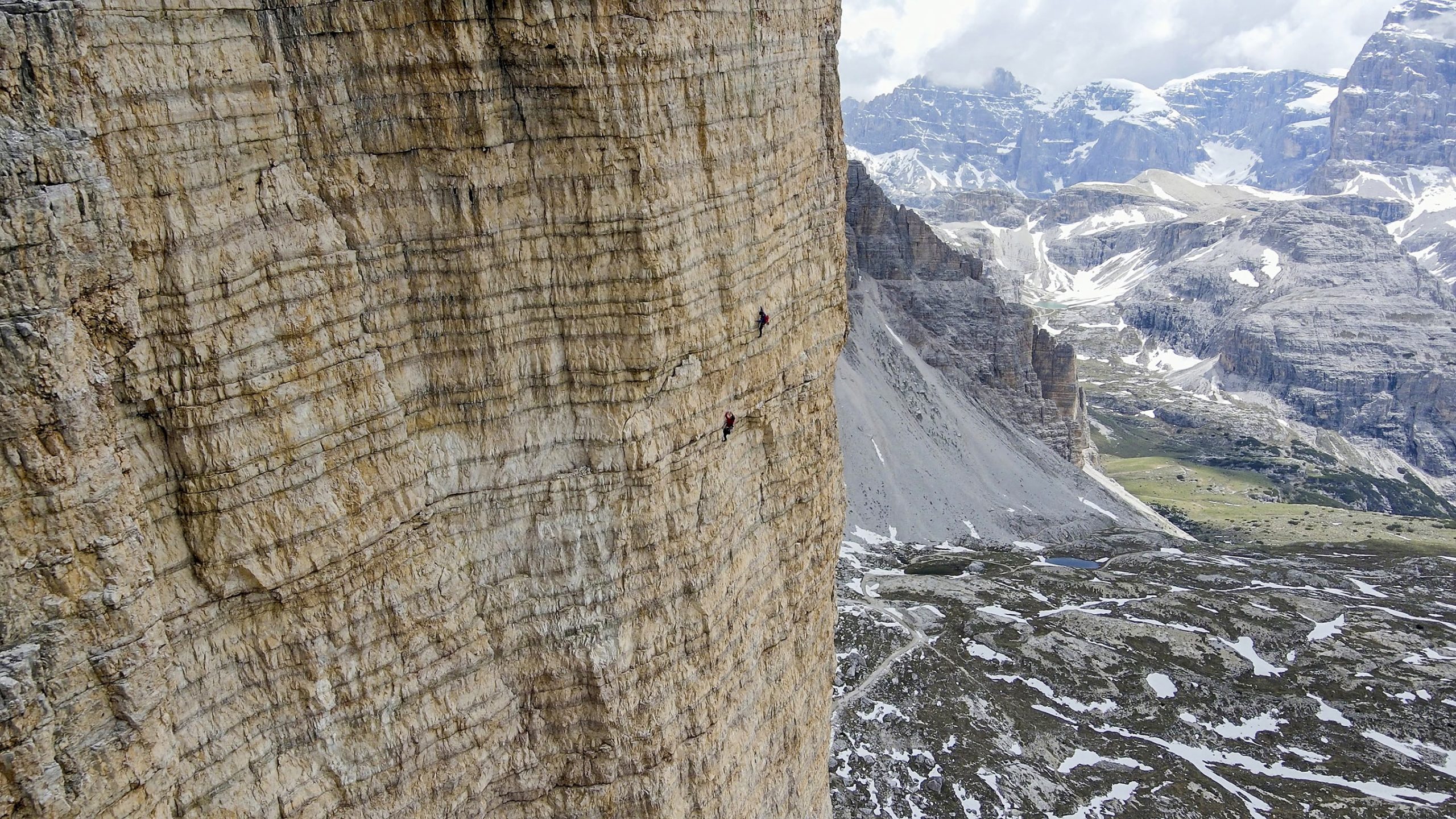
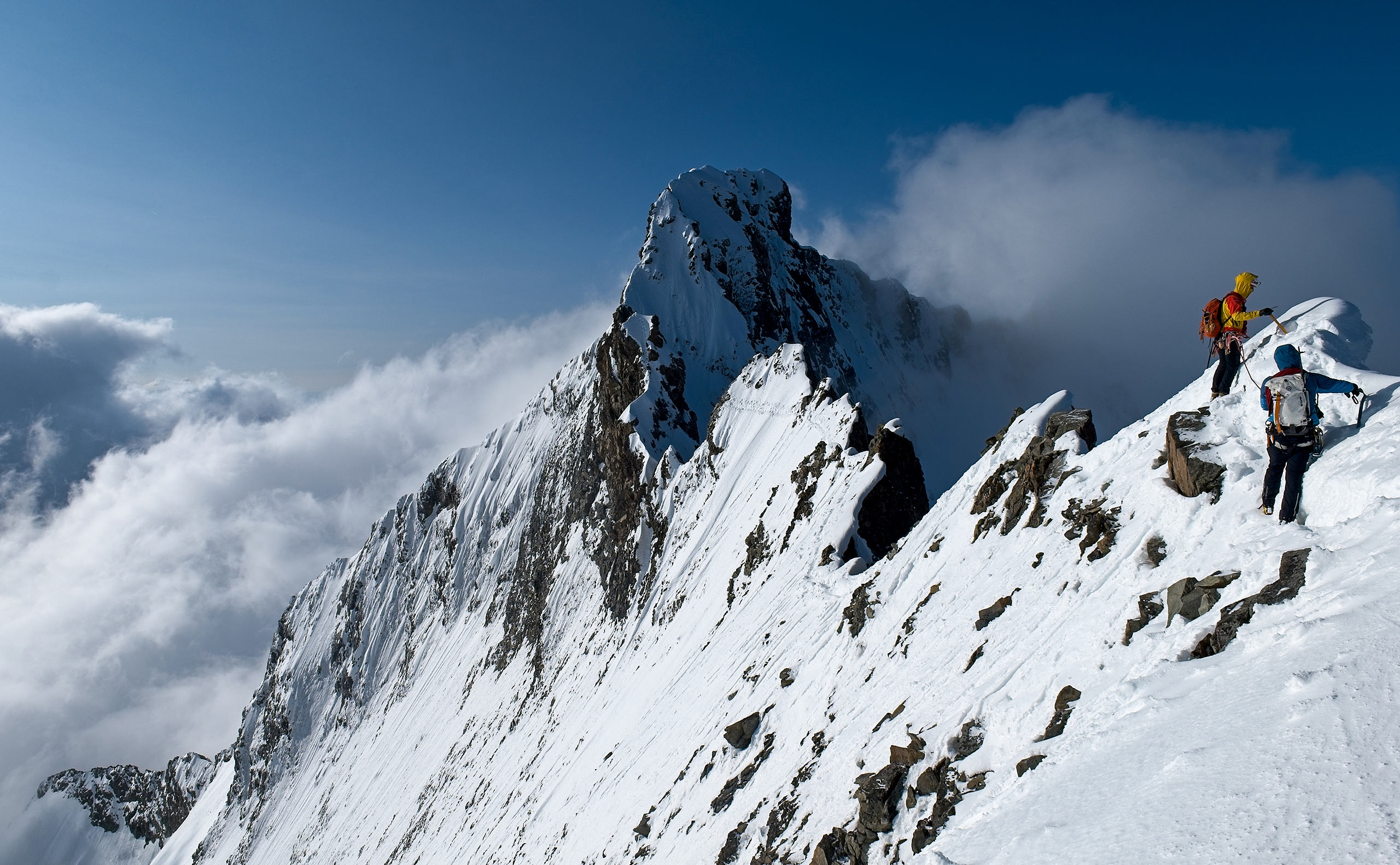
Completely arbitrary! I was on my own but then friends joined me for the climbing. Actually that was the special thing about the movie, it is about friendship more than performance. We climbed Triglav in Slovenia, Tre Cime, Piz Bernina the easternmost 4,000m peak in the Alps, the Matterhorn, the Grand Capucin in the Mont Blanc Massif – that was rock climbing – and then Monte Viso.
Are you a very good climber?
I climb grade 7b. The route on Grand Capucin was 7a and 20 pitches. It was the Bonatti-Ghigo route, a classic. But to be honest on this route I was completely dead! From the start I was wondering if I would make it to the top. From the fifth pitch I was like, “we should go down”. But my friend, she is really strong and motivated, she said she would lead all the way and so I said “Ok! Well if you really want to.” It was one big day, really long. Then the last one was the Berhault Travers on Monte Viso, it’s a big ridge and it was a 13-hour day.
Did you choose the mountains before you went?
Yes. It was a lot of logistics to have the friends arrive at the right place at the right time, and that needed planning. So it was about doing peaks I had not done before and that were exciting to me.
You started in Slovenia, where?
Triglav. We climbed Triglav (2,863m) and launched from just below. Then for the first 10 days I was with a friend, but after that I was on my own. The goal was to do everything by hiking and flying, no cable cars, no hitch hiking, no bikes. The last 100km was forecast 80km/h wind every day so I walked that.
What was your daily routine like?
The weather was not so great, so on the whole traverse I flew for 40 hours, which is not a lot. I did a lot of hiking. On the best days I flew for five hours. Most flying days I flew two hours. I think I did manage to fly most days, even if it was small.
You know when you watch the X-Alps…
No! It was not like that. I was there at the X-Alps in 2023 in the middle of the Alps. I was walking and they went past woosh, woosh, woosh! It was crazy to see how fast they did everything. I am not at the same level.
How heavy was your bag?
15kg. I did not have a stove or tent. I slept under roofs on balconies, under tables. The weirdest place I had to spend the night? There were a lot! Maybe on a bench in a train station, that was a nice one. I also slept on the riverbank in a city. And in a church on a Saturday night so we got woken up early!
We often forget that a lot of the Alps is in fact urban
Definitely. That is why I was so light, because I did not take solar panels or anything like that. I knew I would be passing a boulangerie! It’s not like you spend three days without seeing anyone.
Had you done anything like this before?
No, it was my first vol-biv. I didn’t even do a weekend test. Actually, I only had 300 hours before I set off. I had been flying for five years, but for three of those years I was in Belgium so I only flew 25 hours a year. Then I moved to Grenoble in the Alps and I flew 150 hours a year.
What gave you the idea to do it?
I have been mountaineering for 13 years, so I was confident with that part. My first year in Grenoble I did my first 200km, and that opened my eyes. At the end of the day, if you fly every day at a different spot then that is vol-biv. But when you do set off you find you encounter conditions you would not normally go out to fly in.
Did you find yourself pushing the envelope?
Definitely a bit. I took more risk than on my regular summer of flying. But on the other side I always felt comfortable, I never thought “This is completely out of control.” But yes, lee-side flying, turbulence. I learnt a lot, especially weather analysis. You are out for 50 days, every day looking at the weather and seeing what happens, trying to find every flyable hour. Also I was on my own so had to learn to make good analysis and to trust it. It’s definitely not the safest way to learn, but it is effective.
What gear did you fly?
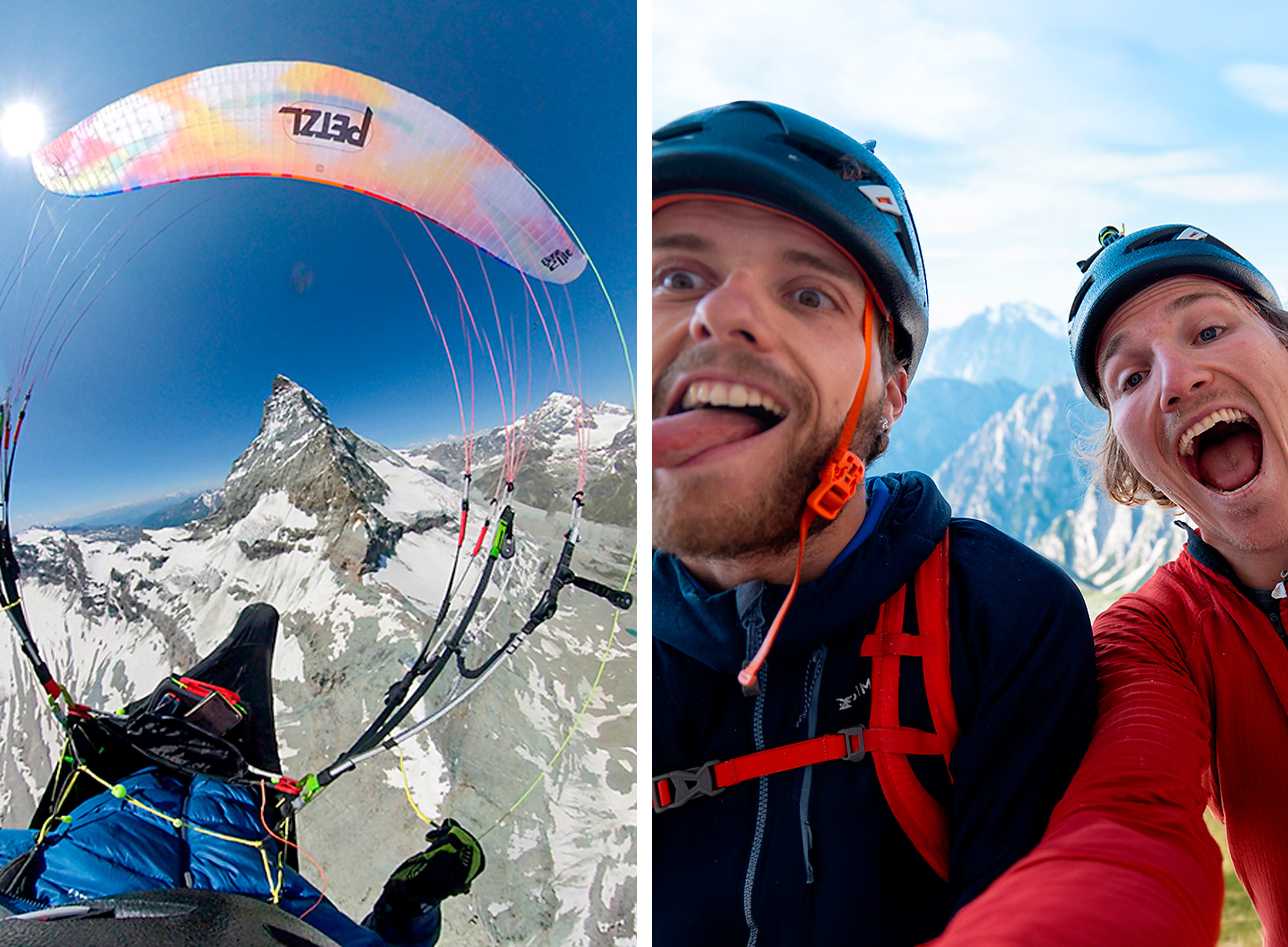
BGD Base 2 Lite, a high EN-B. Before that I was on a low-B. The harness was from BogdanFly. I used an UltraBip, the very small vario. It was pretty cool – I did not charge it for the whole trip! Every day I turned it on and it said Battery: Medium! It never changed! And I had my phone.
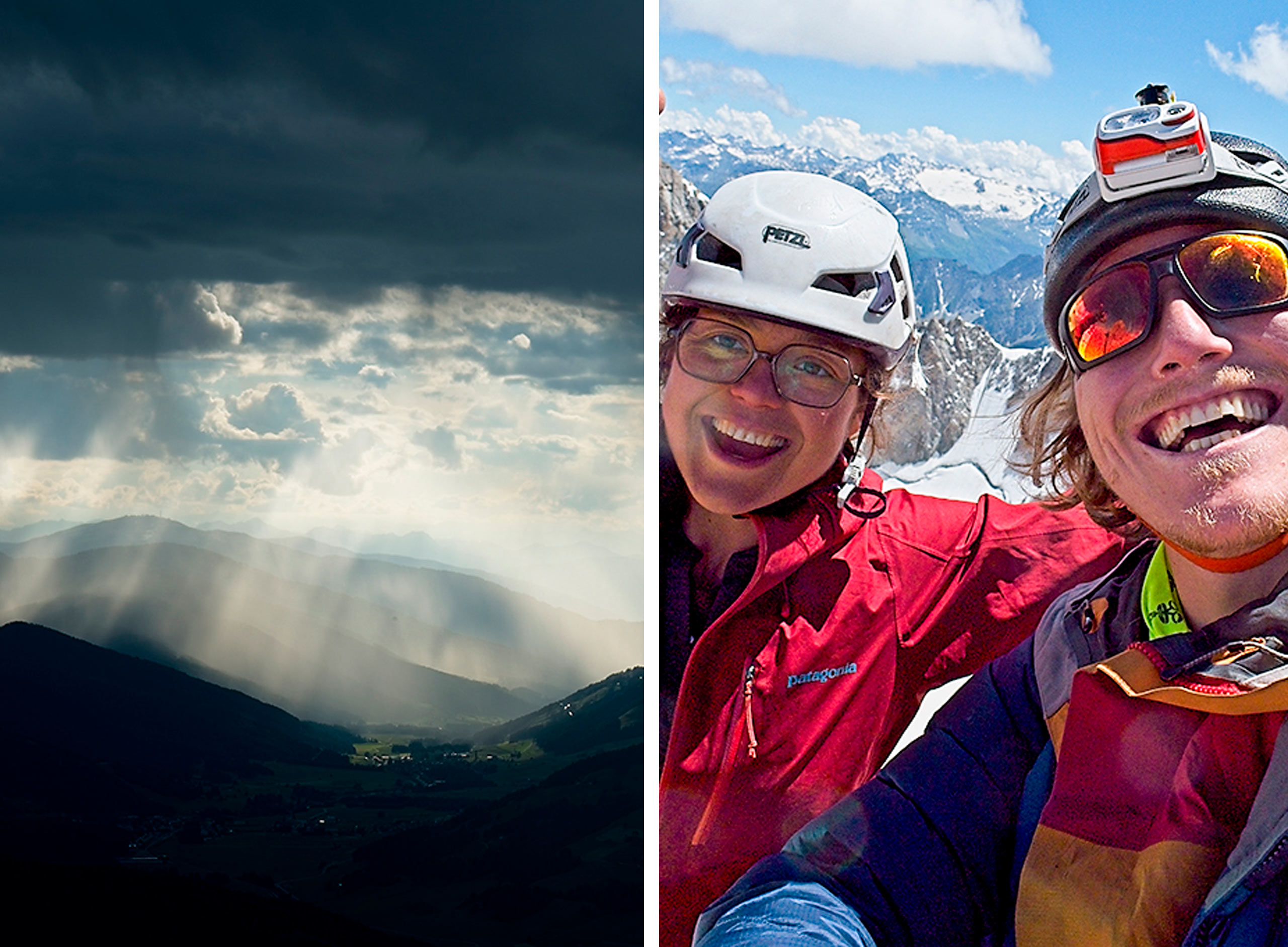
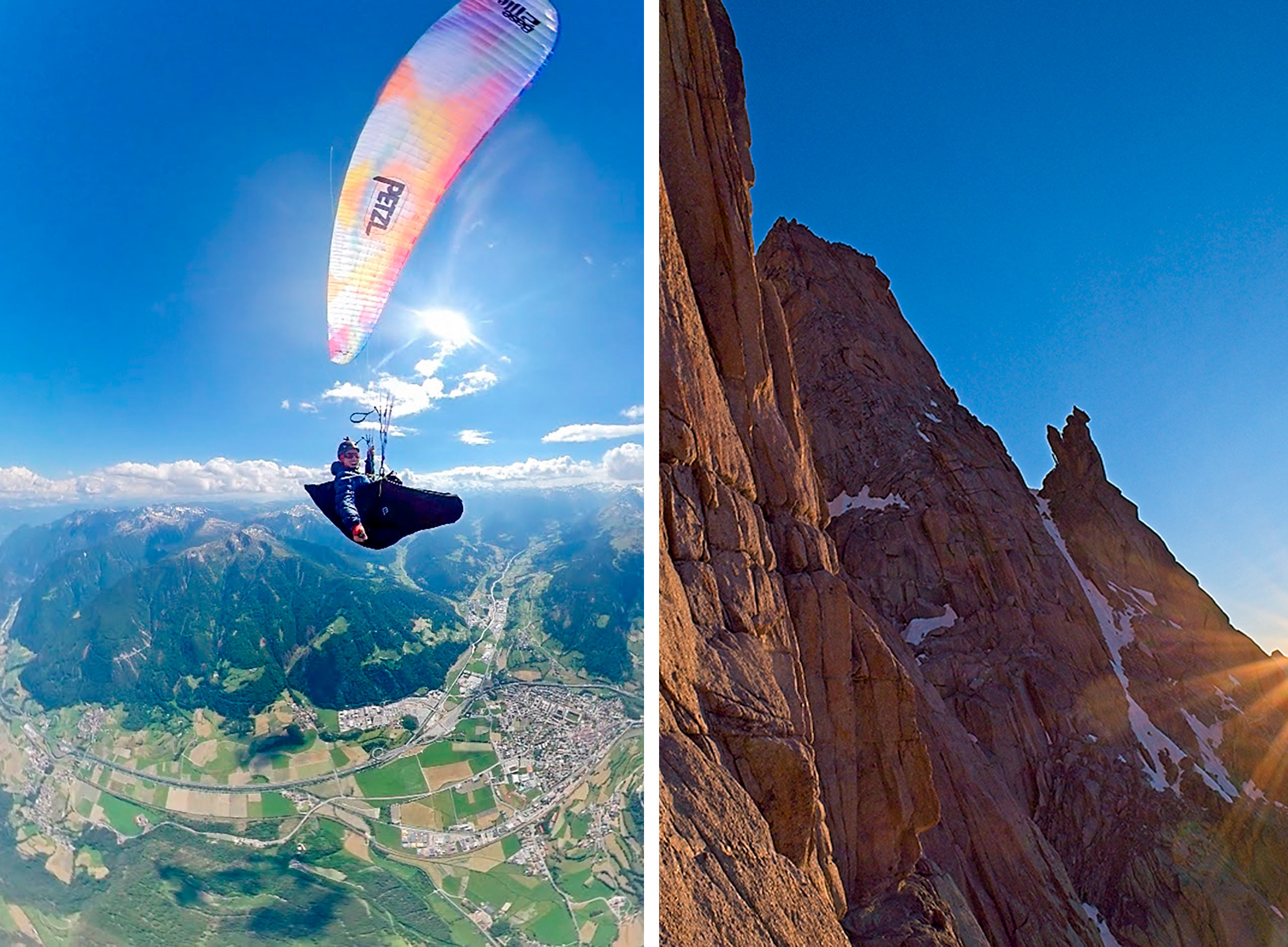
You flew in summer 2023 and made the film that winter. What did you want to say in the film?
I hate the Red Bull style, films only centred around performance. I think there is too much of that in outdoor films. So I wanted it to be a feel-good movie, something that makes you want to do it yourself. And I wanted it to be around friendship and l’esprit de corps, team spirit. One of the things that I am happy about is there are a lot of women that joined me. And every time they appear in the film they are so strong, so badass, and I am completely dead!
Had you made films before?
Small YouTube films yes, but this was my first long one. I used a 360 camera and a DSLR. On every climbing route I had my DSLR around my neck! At Tre Cime in the Dolomites there was someone filming me and using a drone.
How did you put it together? Did you write it down, or just start?
I stopped my engineering work to make the film. At the start you have nothing! I mean you have tonnes of footage – I had 2TB of data. But you have nothing and you need to start somewhere. For three days it was impossible to start. At the end I just started with the first story I knew I wanted to tell, and that is what is still the start of the film. I think if you have stories you want to tell it makes it easier. And I had six of them, so I could write between them and connect the mountain stories into a narrative.
And so with your first film in your first film festival – you won
Yes! I was working at my job as an engineer on the Friday and someone called me two or three times. Eventually I answered and they said, “Oh you have won a prize, you should be there this weekend.” They don’t tell you what category you have won so it was so exciting.
What happened at the prizegiving?
They announced the main prize at the end, and I was given the Media Choice Prize and I thought that was really cool. I was excited and I went outside for some photos. But then I came back into the tent and I didn’t know where they were in the prizegiving, but they called me on stage again but I did not know it was for the main prize. I was like, “OK! I have another one!” I only understood it was the main prize one hour later. I was talking to people on the jury and then it clicked – “Aha! I have won the Prix d’Or!” I was so happy.
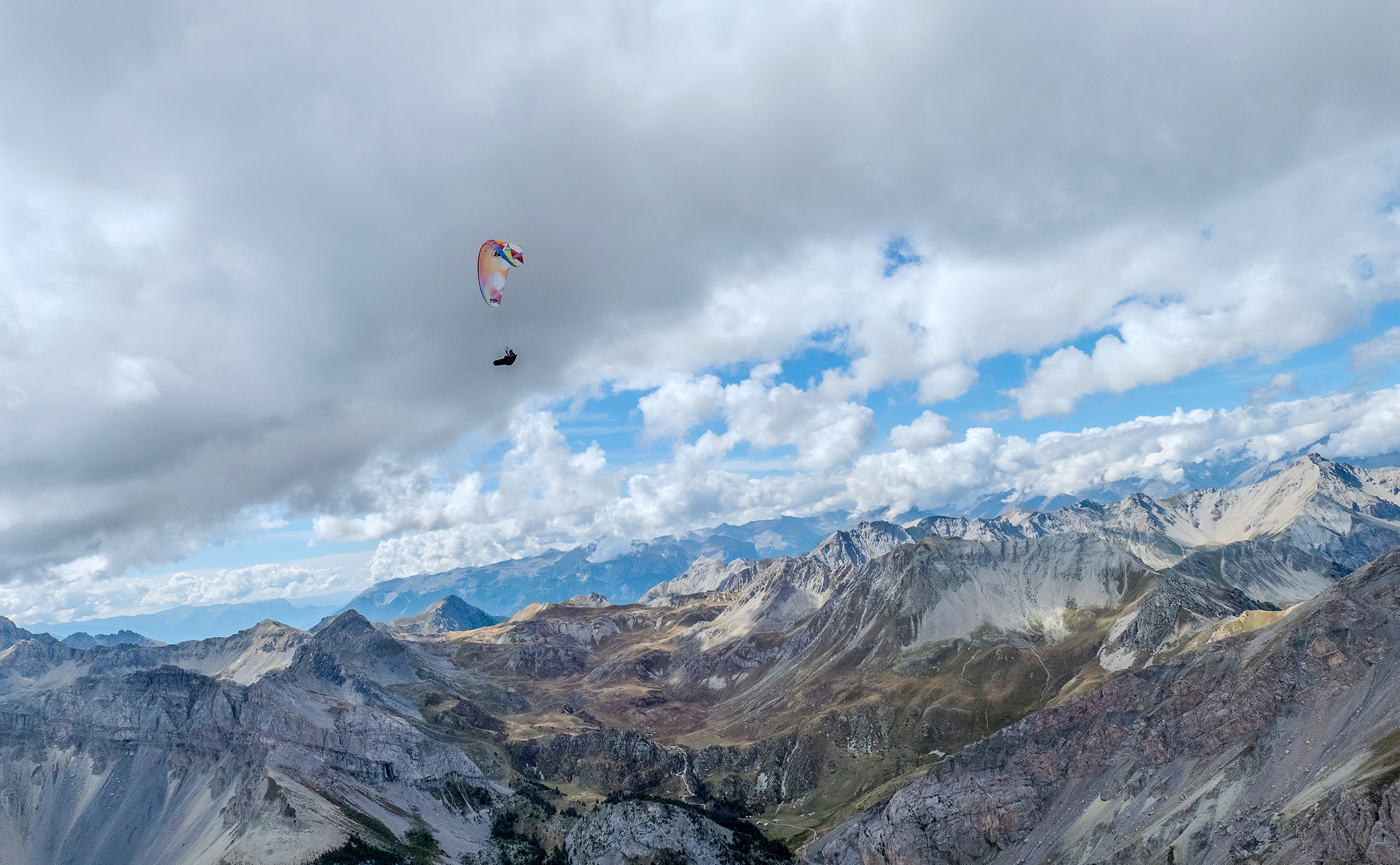
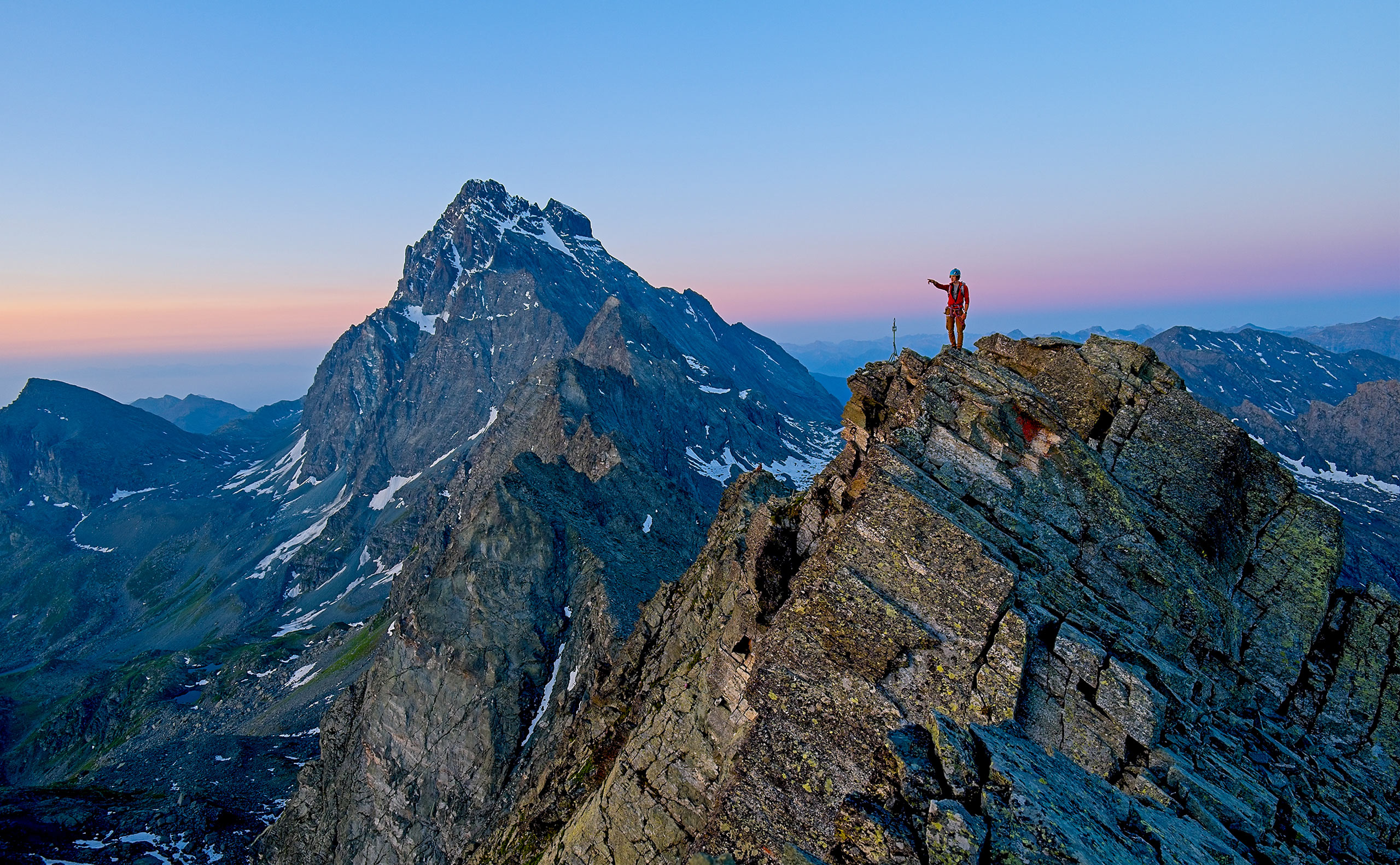
Diary Extract: Across the border into Italy
19 JUNE. The weather’s been with me for the last few days and that’s enabled me to make a 4h40 and almost 100km flight from the Dolomites to Bolzano. It’s great to finally be able to make a big flight and move forward! When you know that one hour in the air is equivalent to a full day’s walk, you’re glad to be flying.
The next day the forecast was bad for where I’d landed, and good for Austria. But I still have two more passes to go. By car it would be 70km. It’s now 5pm. With all my optimism I climb the first pass as fast as I can, hoping to take off and land at the foot of the second. When I get to the top, the wind isn’t in the right direction, so I keep going to get a better position.
I take out my wing, then it starts to rain. Crap! I’m feeling a little blue that Tonio isn’t here at a time like this. I wait, hoping it will pass. At 9pm it stops and I launch just before sunset. An unexpected flight that takes me to the foot of the border pass. After landing, a guy approaches me, intrigued. I ask him if I can sleep at his place, and he welcomes me. They speak German in this part of Italy and his English isn’t perfect, but we still manage to communicate, which is great fun.
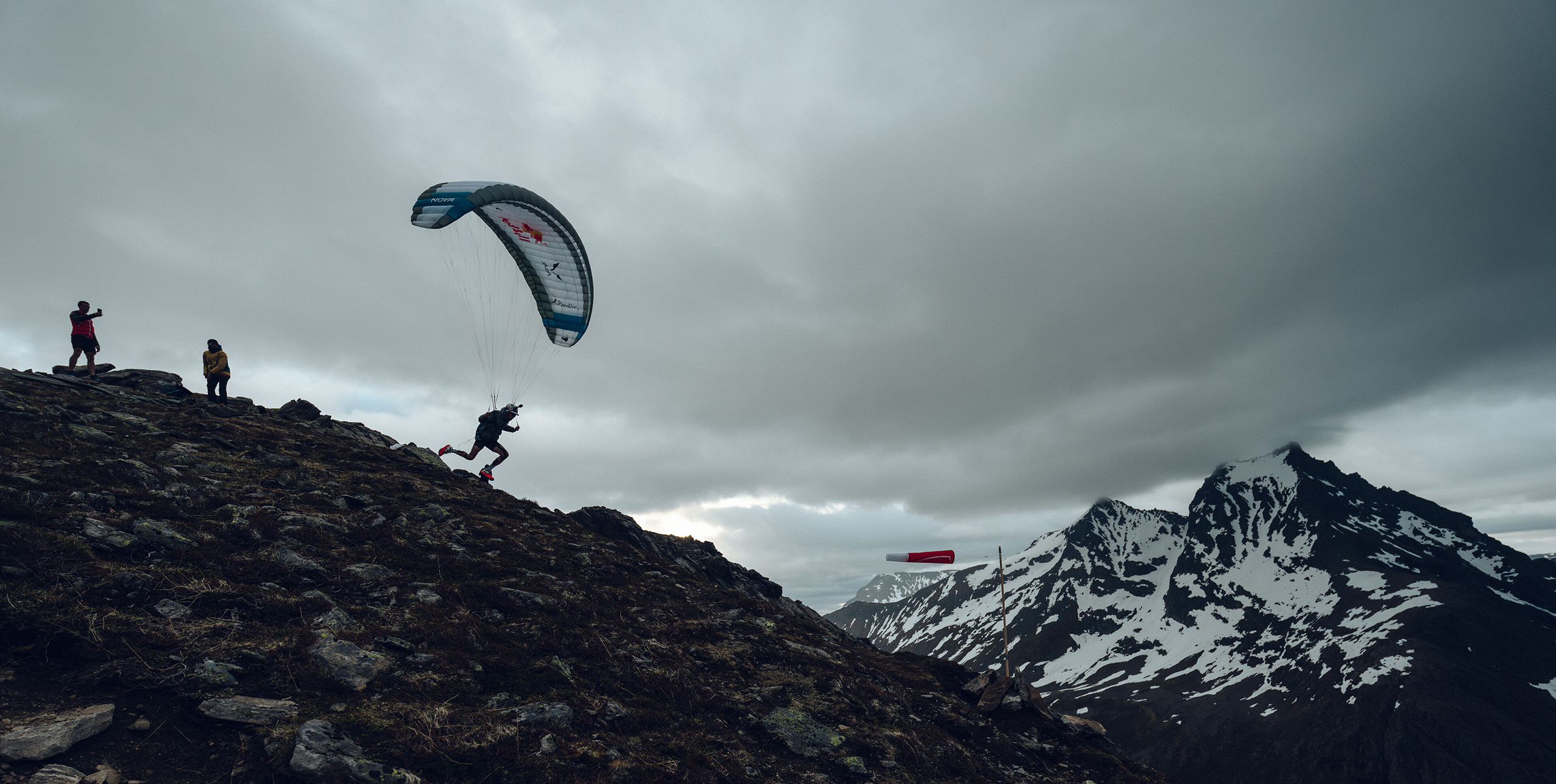
The next morning he wakes me up at 6.15am to have breakfast together. Ouch, I wish I’d slept longer! At least I’m on the road early to reach this famous pass. Once up there I go from Italian fog to Austrian sunshine. Yes! I’ve made it. It’s not an ideal place to take off because there’s a bit of foehn effect, with the wind coming from Italy. I’m downwind, on the turbulent side. I keep walking and find a launch opposite the pass where I can launch and get away from the turbulent zone. I soon find a climb that allows me to continue. Before long, the wind coming from Italy is replaced by the breeze coming up the valley.
There is so much to analyse in the air, which makes flying intense and sometimes a little stressful. It’s far from being a contemplative activity. You need all your senses on alert to observe the movement of clouds, birds, leaves and your glider, and deduce what’s going on in the air. Often the glider is shaking, shaking, shaking, until finally, bingo, you’re rising fast, at over 5m/s, towards the heavens.
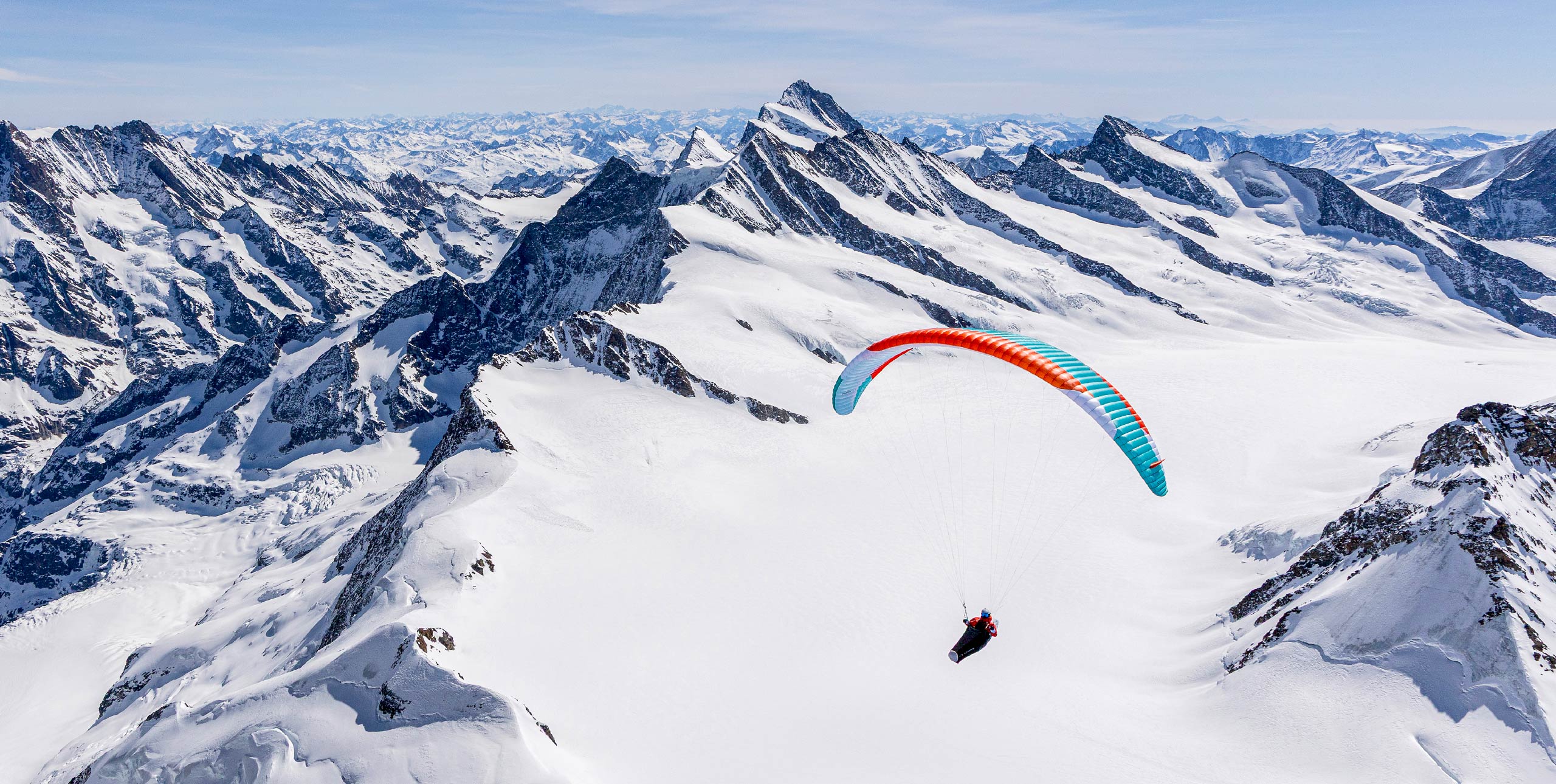
Sometimes the air sinks hard, and you must keep your cool and escape as quickly as possible. You must draw on your mental resources. It’s a real 3D chess game, except it becomes very real when you’ve played badly. In short, it’s exciting and gratifying when you find yourself catapulted into the clouds above the glaciers, when a few minutes earlier you were struggling at the level of the mountain pastures.
Diary Extract: Ascent of the Matterhorn
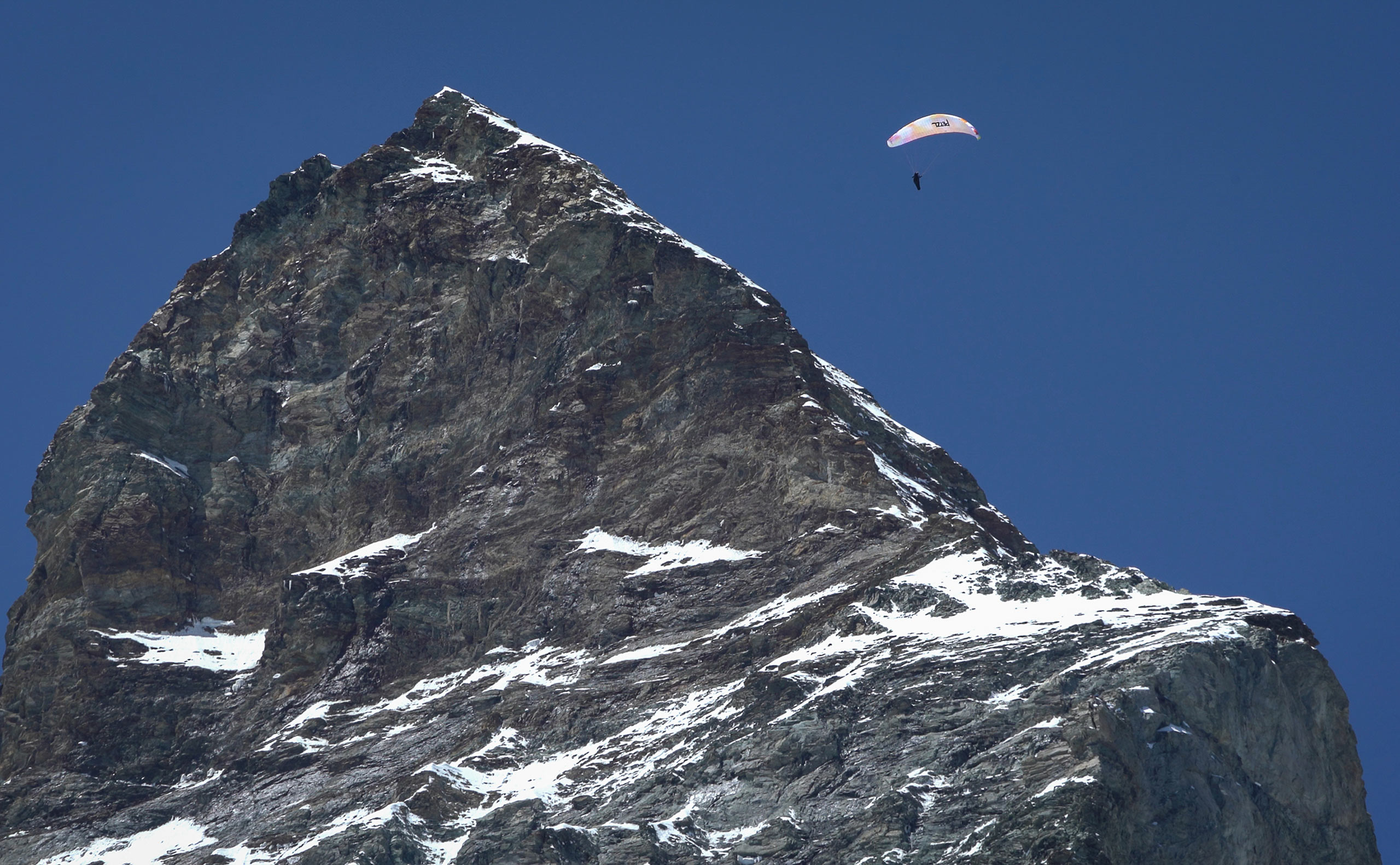
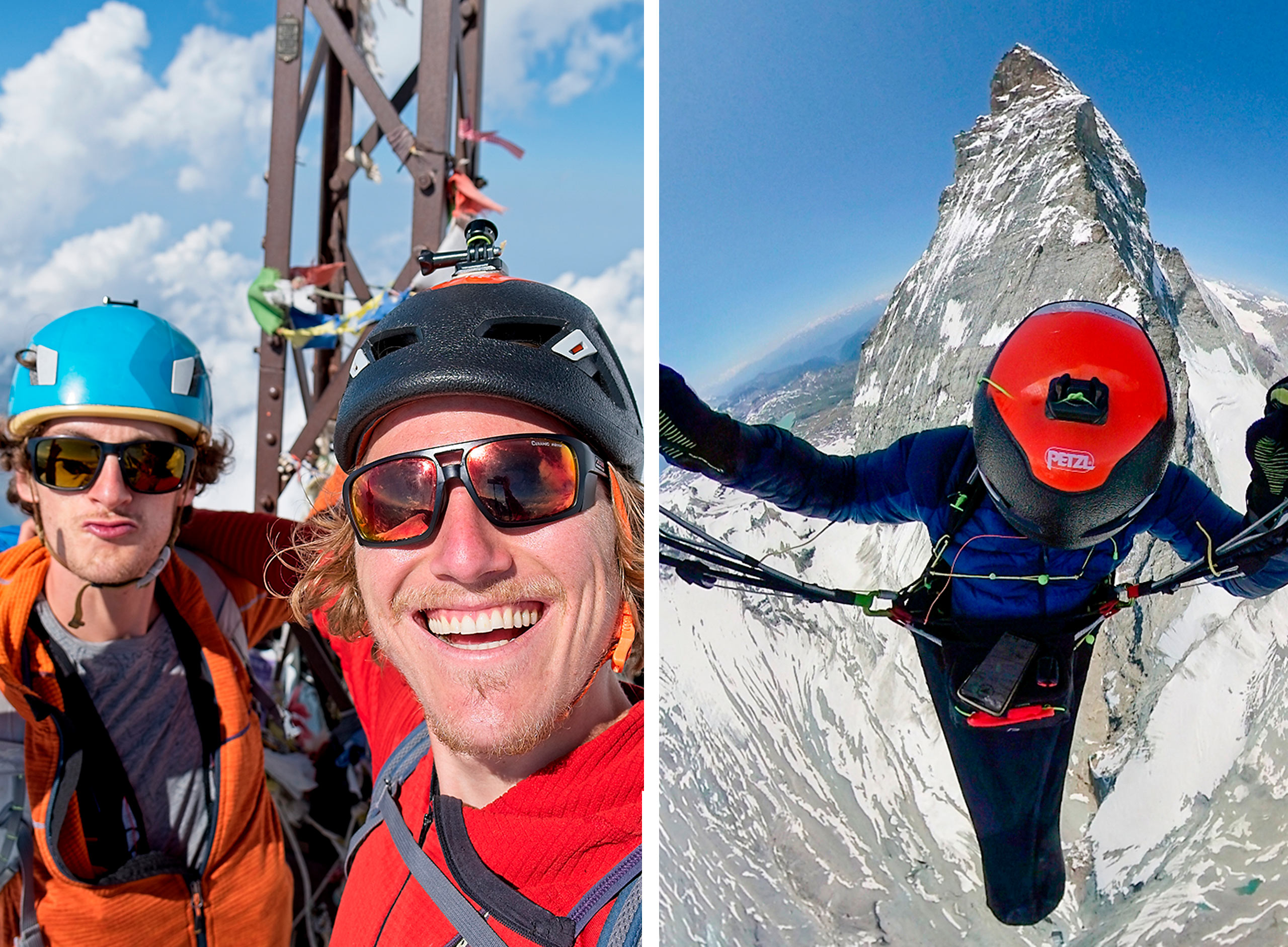
The alarm goes off. Here we go again. We set off in single file along the Hörnli Ridge. Alexis and Quentin recced the start the day before and we’re following the main route. Dam warned me that he’d had some back and leg problems recently and was a bit apprehensive about the pace, especially as he hadn’t done any Alpine climbing for a while. I kept an eye on him.
At one point I ask him how he’s feeling. “I’m not feeling very well. I don’t think it’s a good idea for me to go on.” I was kind of expecting that, and I totally respect his choice. I’m especially disappointed that I won’t be going to the summit with Dam. We’ve done so many summits together, it would have been nice to do this one. He turns back while there’s still an easy ridge back to the refuge.
The three of us continue on the ridge. The other two have less mountaineering experience, especially Quentin for whom it’s his first mountaineering route! At first, I thought I’d go solo to the summit, as it’s not a very technical route, and let them do their rope-up in pairs. We ended up roping up as a threesome, which was much better. We reach the Solvay bivouac, perched at 4,000m, where we leave some of our equipment.
It’s already warm and the snow is starting to soften. I’m a bit worried about the descent, but I think we’ve got enough time to get to the summit. We get there around 10.30am. We’re all alone, which is great. What a first experience for Quentin! We start our descent straightaway. It’s a long descent in soft snow. It’s chamois terrain and you need to be used to climbing with crampons in different types of snow to be quick. We take our time to do things right. We finally arrive at the hut at 5:30pm. Another great day, thanks guys!
I take off again the next day from the refuge and manage to climb the flanks of the Matterhorn alongside a bird of prey. A magical moment. I say hello to some mountaineers before setting off for the rest of the traverse.
Diary Extract: The end in sight
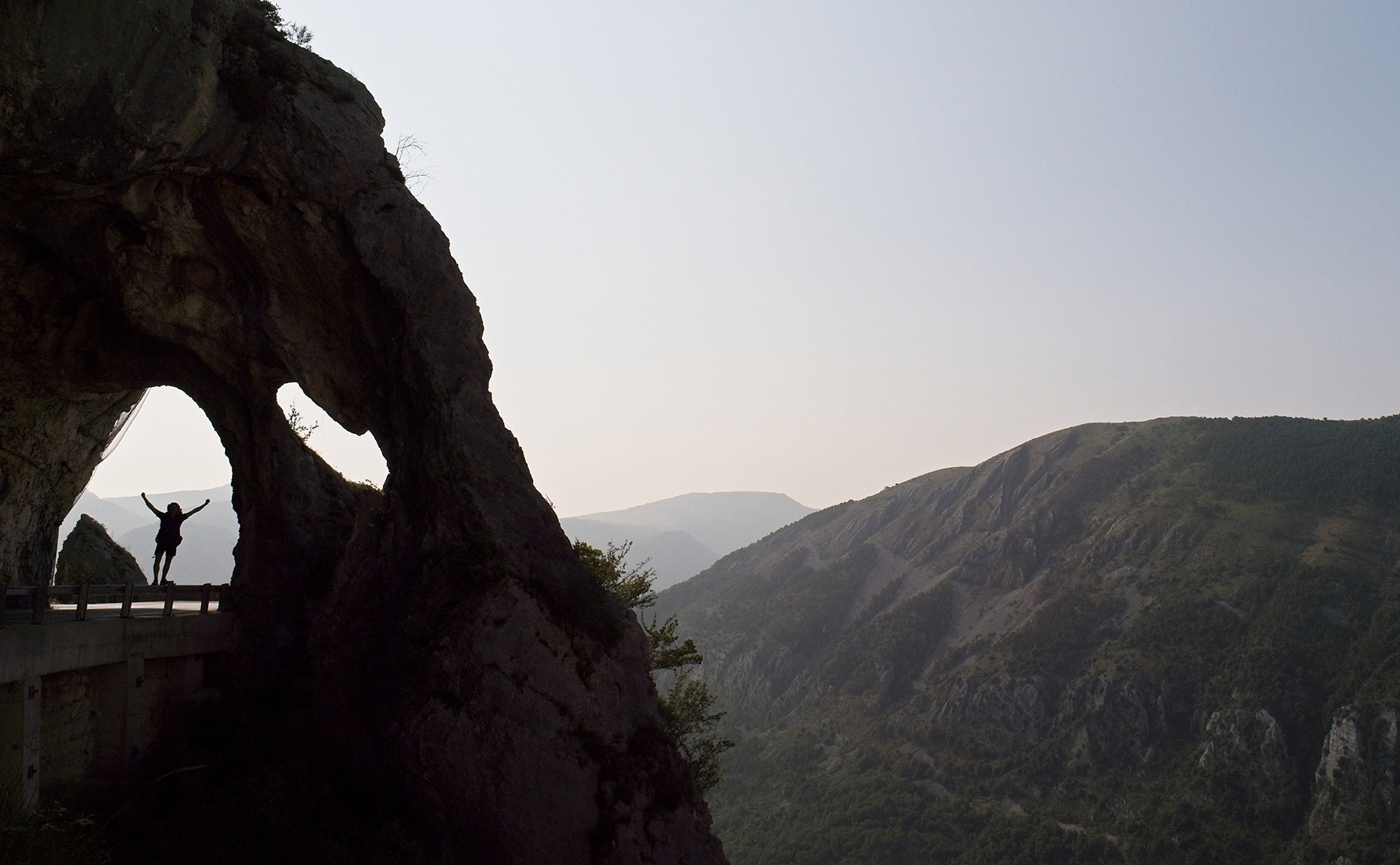
24 JULY: I have 100km left to the coast, and I’ll cover it on foot. I pack away my paraglider for good, tend to my wound, and start walking towards Annot. The next day, it’s Saint Auban and Col de Bleine, and then another day of over 40km to reach the sea. Long days of walking in the Pre-Alps of Azur, punctuated by pleasant encounters in picturesque villages. It’s incredible how the landscape has changed since Mont Blanc. Fifteen kilometres from the goal, at the top of the last mountain, I finally see the sea. “Yiiiiiiihaaaaaaaaaaaaa! I’m coming!” As I descend, I enter another world, elegant houses and tourists in flip-flops heading to the beach.
I finally reach the sea. The beach is crowded. I weave my way through sunbathers. They can’t possibly imagine where I’ve come from, the adventures I’ve had, the people I’ve met, who welcomed me, the moments I’ve shared with friends. What a journey. I shed my gear and run toward the sea for a well-deserved plunge. The memories of the journey have accompanied me through these last 100km. They have been, by far, the most intense 53 days of my life.
At the beginning, it was a somewhat crazy idea that I wasn’t really sure I could accomplish. But in the end, unbelievably true, I conquered these six peaks and got to know the Alps like never before. Even in well-known places, I took almost entirely new paths, both on foot and in the air. Now, I can mentally trace a route through the Alps, from Slovenia to Nice. These distant names have become tangible places associated with strong memories.
It wasn’t easy every day with the accumulated fatigue and rarely favourable flying conditions, but what an experience for a first bivouac flight! The only issue is that I return with even more dreams of new mountains to climb and places where I thought, “I’ll have to come back here.”
Logbook
Total distance: 1,350km
Flying: 800km in 32 flights
Walking: 550km
Vol-biv: 28 days
Rest days: 13
Climbing days: 12
Total time: 53 days
Climbing routes
Triglav (2,864m): normal route (winter conditions) with Tonio
Cima Piccola di Lavaredo (2,857m): Gelbe Mauer (ED-, 300m, 7a+), turned back after the eighth pitch (end of difficulties) with Eline and Tonio
Piz Bernina (4,084m): Biancograt (AD) with Agnès and Albert
Matterhorn (4,478m): Hörnli Ridge (AD) with Quentin and Alexis
Grand Capucin (3,838m): Bonatti-Ghigo direct route (ED, 350m, 7a+) with Lolotte
Monte Viso (3,841): Berhault Traverse in a day (D, 3,000m positive elevation gain), 13h30 from Viso refuge to summit, with Sam
Watch and read
The film of Guillaume’s Alpine crossing won the Grand Jury Prize at the Coupe Icare film festival last year and has scooped several other awards on the adventure film festival circuit since. It’s available to watch online via video on demand. Guillaume also produced a one-off, limited edition perfect bound “notebook” about his adventure. Copies of La Paralpine, Une Traversée des Alpes en Parapente et Alpinisme are available to order directly from him. Find out more about both through his website.
This article was first published in Cross Country 258