Winter Eigertour 101
“Skinny lines and sharp edges – I didn’t want to think of the consequences.” Tarquin Cooper joins the pros in Switzerland to learn the art of winter ski-and-fly
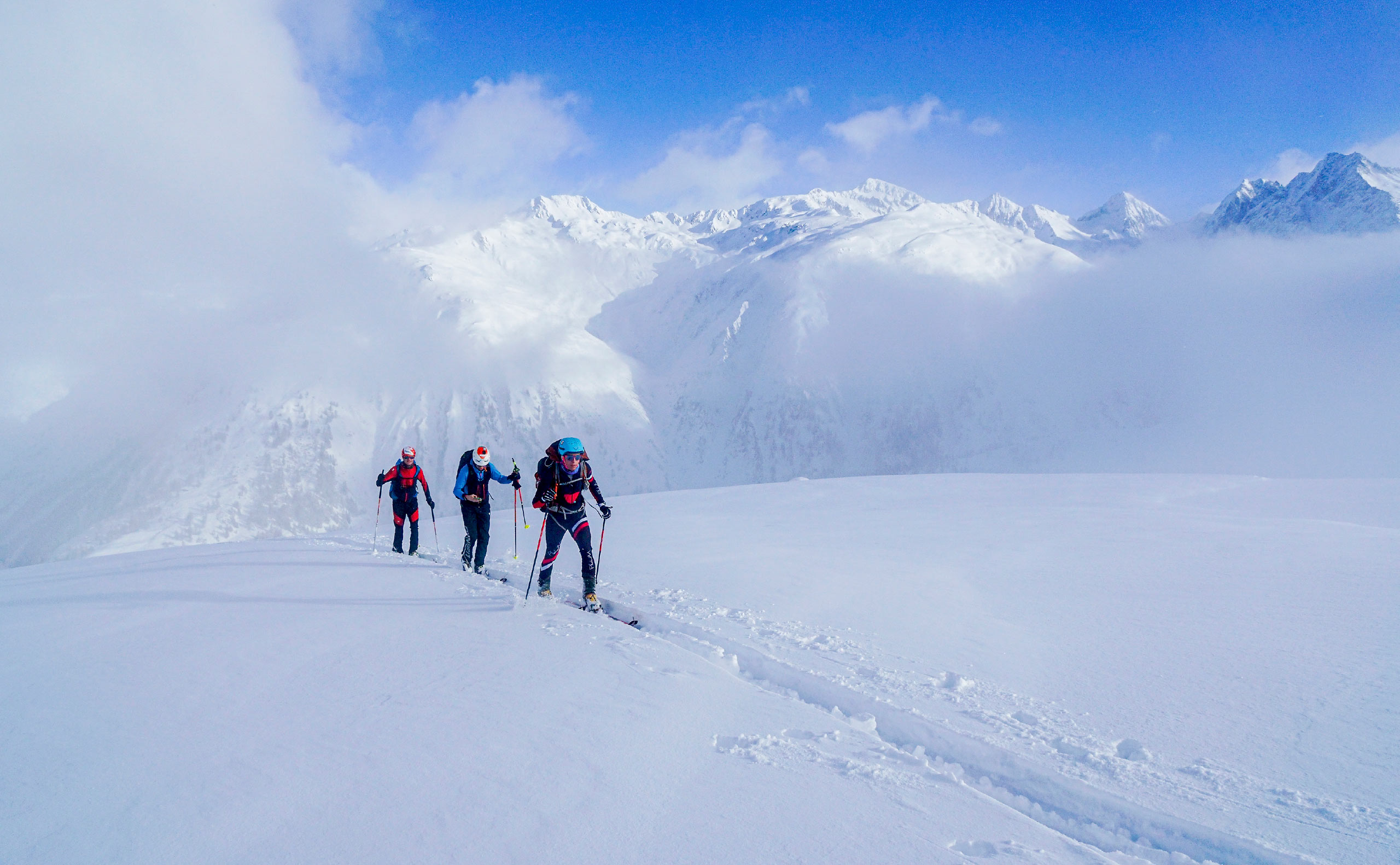
3 March, 2025, by Tarquin Cooper | Photos: Tobias DimmlerThere is always a feeling of excitement when heading into the mountains – the early morning rush, the last-minute gear dilemmas (headband or buff?) and then stepping outside to be greeted by a cold blast of fresh alpine air. Not even the falling flakes of snow and gusts of spindrift from the rooftops could dampen my enthusiasm, for I was about to combine two loves – ski touring and flying.
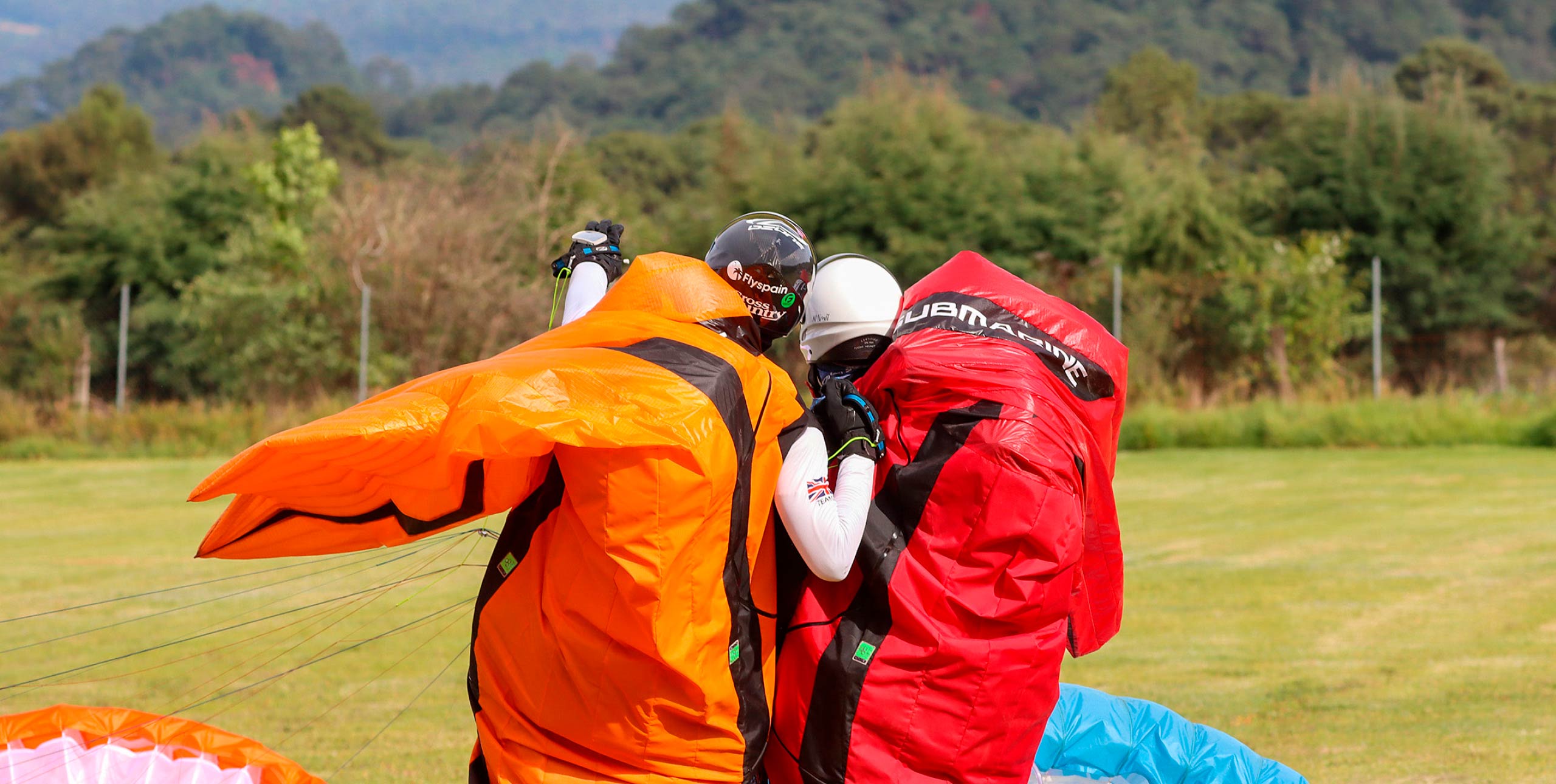
I’d signed up for the Winter Eigertour Academy, which takes place alongside the Winter Eigertour race. I’d watched the reels, it was time to learn the art of the ‘combo’ for myself. There were four of us in our group, two French-speaking para-alpinists into climb-and-fly, and another Swiss alpine sports athlete. We shouldered our wings and headed to the open fields in the valley for the first lesson, on kiting.
Reto Marolf, a tandem pilot and instructor from Grindelwald, led the group into the lee of a farm building. The gusts were strong and I wondered if I’d launch in this back home. Probably not. The para-alpinists confessed they’d never kited. As a UK pilot, used to slope-landing halfway down a hill, I’m pretty familiar with the art of kiting my way back up to save the legs. I’m also OK on a pair of skis. I was confident I could nail this.
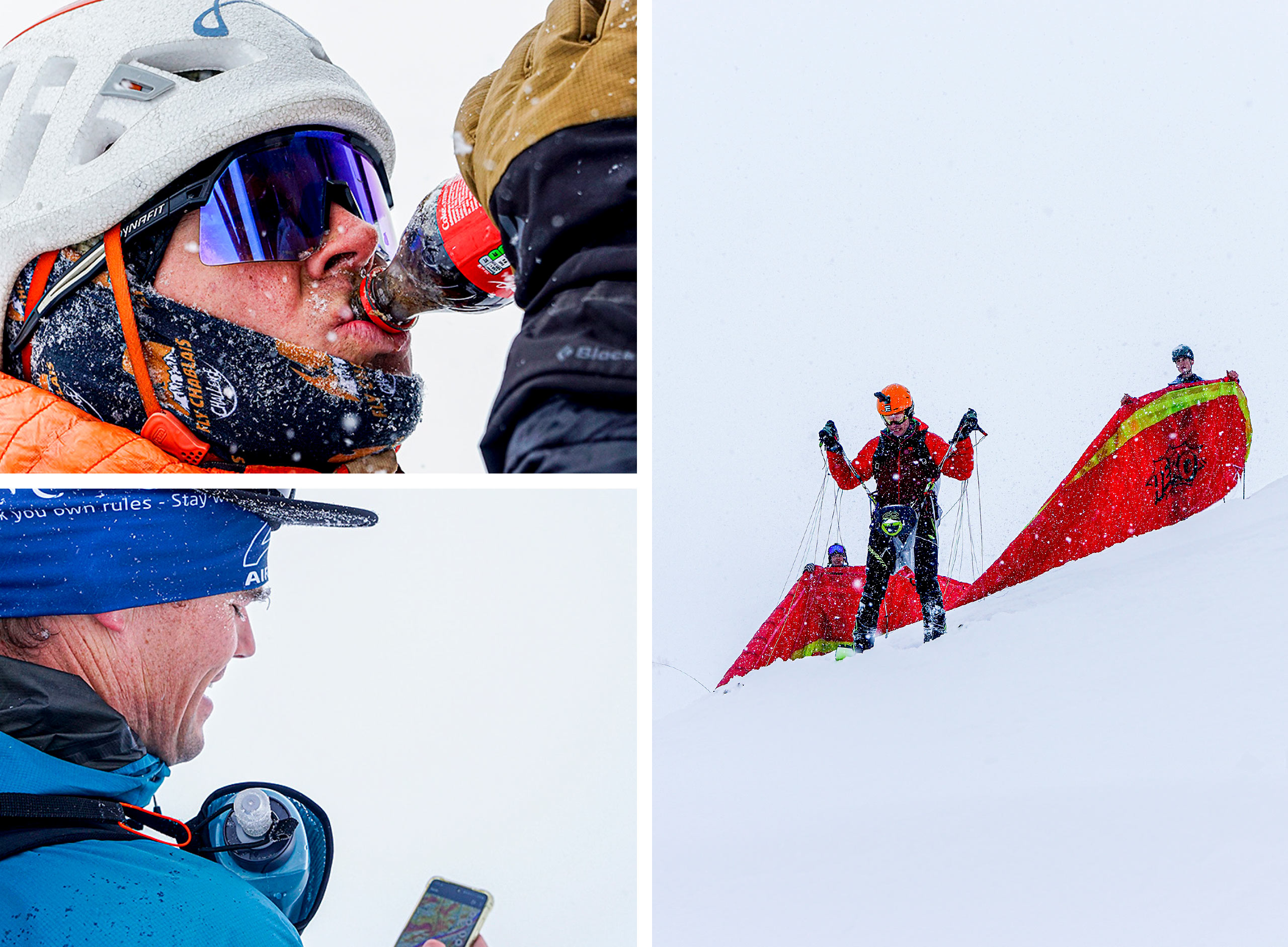
“When the wing is down, you really need to lean back in the opposite direction,” Reto advised.
I pulled my wing out, unzipped my harness and squared away my speedbar foot leash – I wouldn’t be needing that. I then tried to close the zip around my poles but it wouldn’t go. I found a solution and stuck the ends through the water bladder hole at the top. It meant two sharpened points just a few inches from the base of my neck – in hindsight, maybe not ideal.
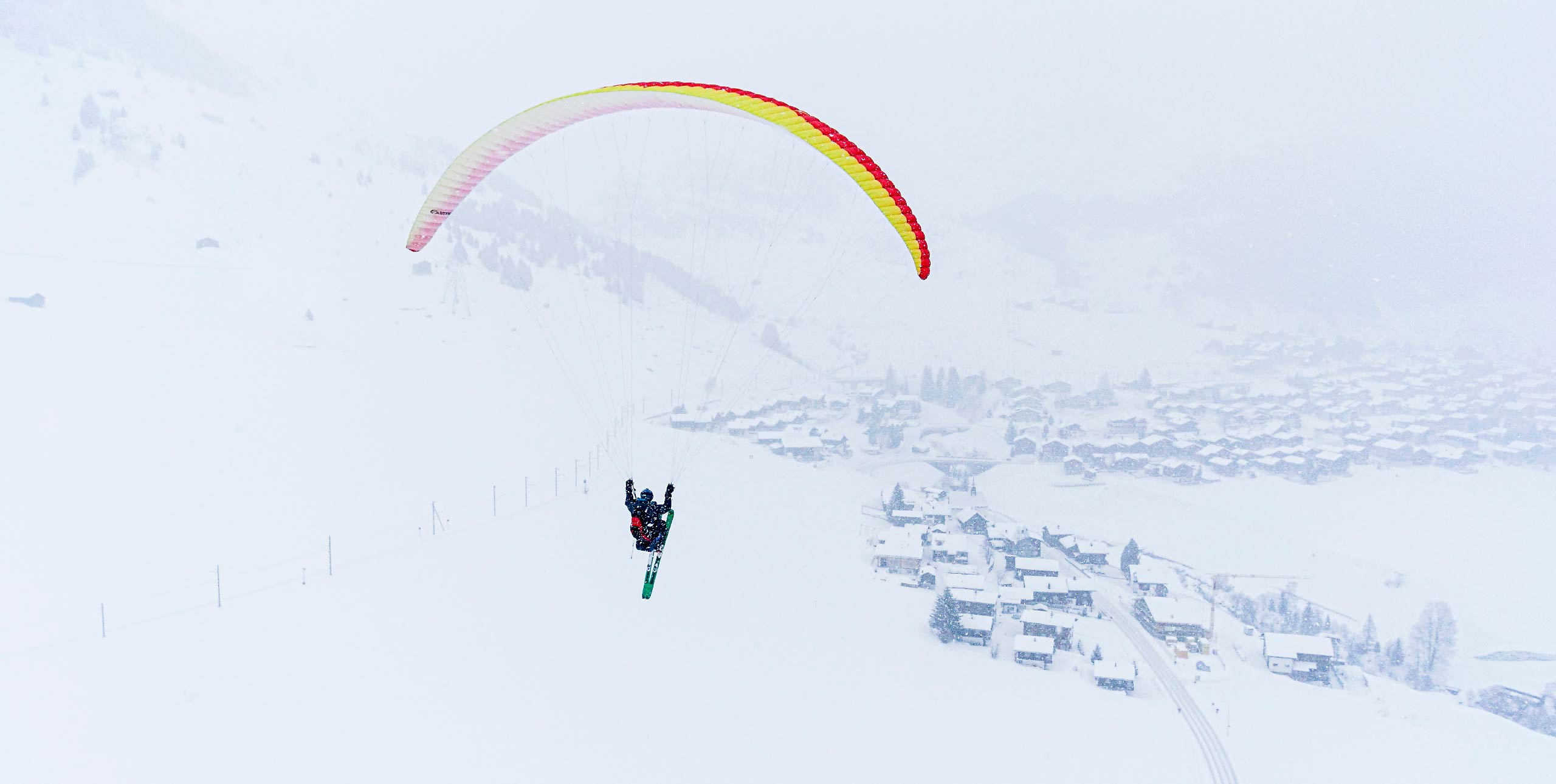
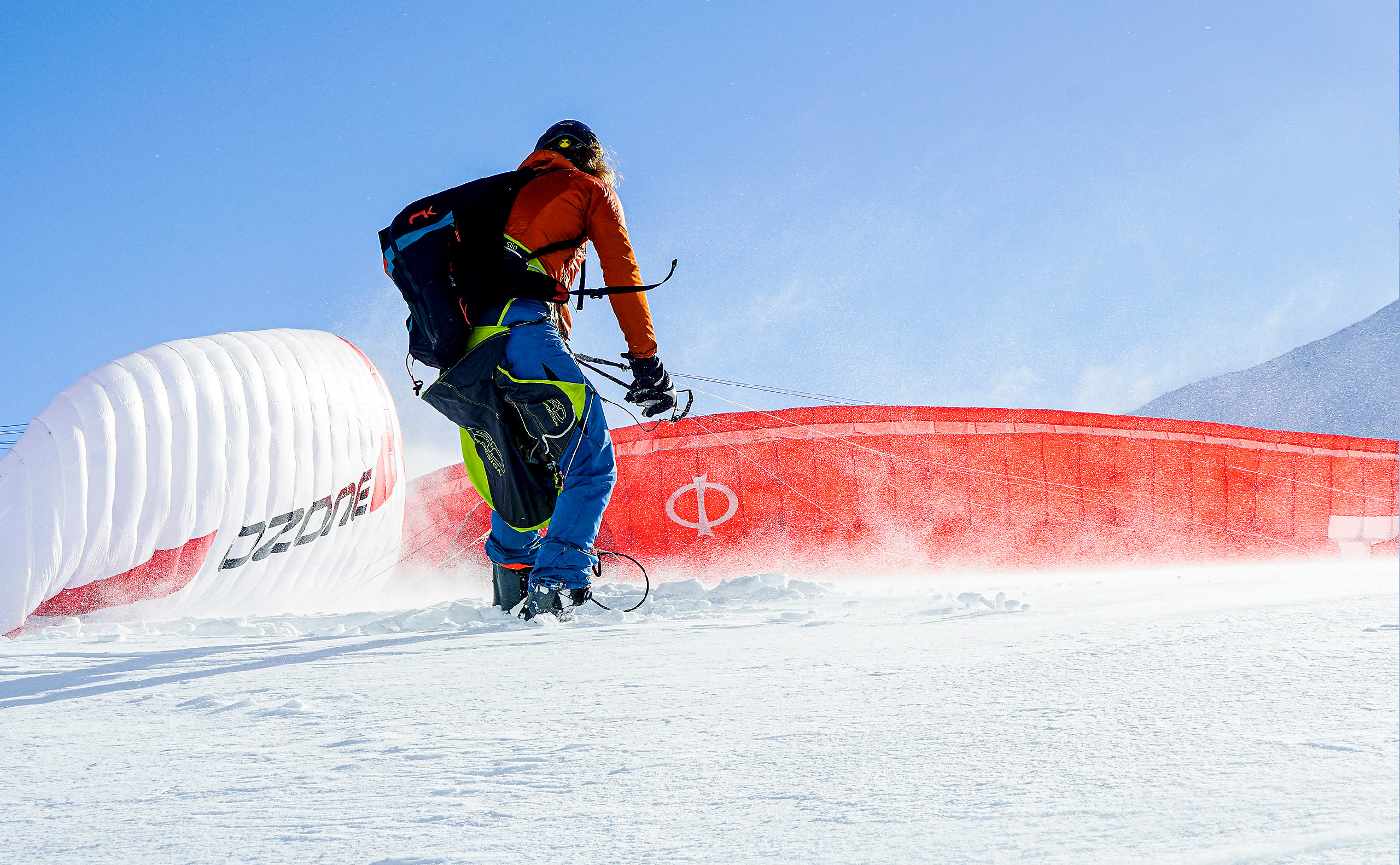
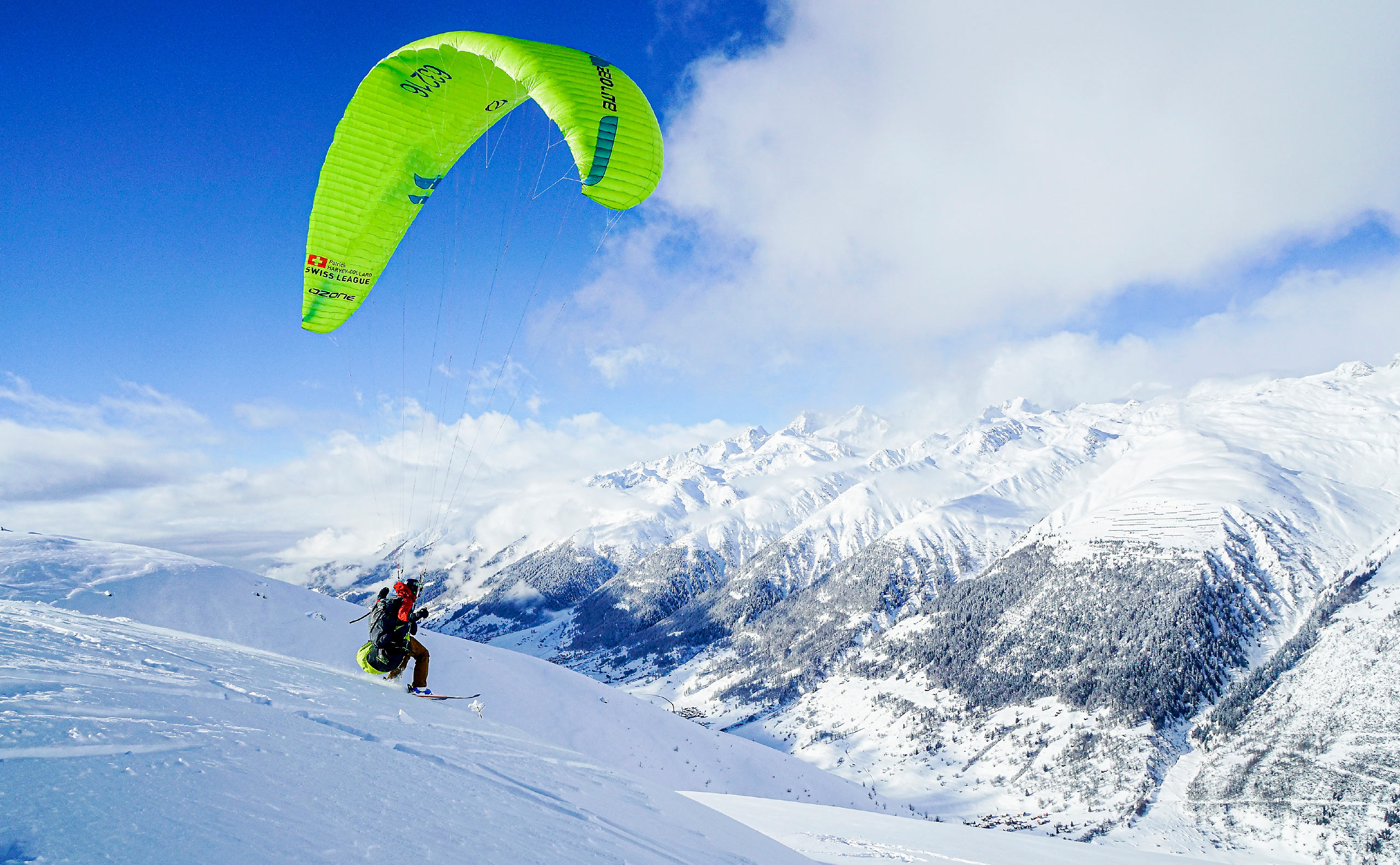
Then I set up for reverse launch and brought my wing up. The first realisation that this was going to be very different came quickly. The power was such I shot forward, skiing over my lines as the wing deflated. Skinny lines and ski edges – I didn’t want to think of the consequences.
It took a few attempts to wrestle the monster under control – the gusts were strong. But then gently, I eased one tip down, weightshifted to the other side and pointed my skis in the right direction. Suddenly I was flying along and it was a lot of fun – until I wrapped my wingtip around the top of a four-metre wooden marker pole. The fun then stopped quite dramatically.
Building skills
“It amplifies the game,” says the pilot Michael Witschi, when explaining the idea of combining flying with ski mountaineering. A Swiss pilot who competed in the 2015 Red Bull X-Alps, he founded the summer Eigertour in 2018 and the winter Eigertour in 2022. “It’s how to train in winter if you’re into hike-and-fly.”
The idea behind the Winter Eigertour Academy is to broaden the appeal of the sport beyond a small elite and encourage more pilots to give it a go, offering lessons on both ski touring and ski flying. “The people that can do a winter race with ski mountaineering and paragliding is very small. I want to help to build the skills so the crowd can get bigger – that’s the idea.”
The required skills are not just about how to launch and land with skis – but how to race too. “The fastest thing you can do when you arrive on launch is already have your harness on. Sometimes we never remove the harness, we take off with open skis, with the rear binding undone, so we kind of run to take off! But if the wind is strong it’s not easy!”
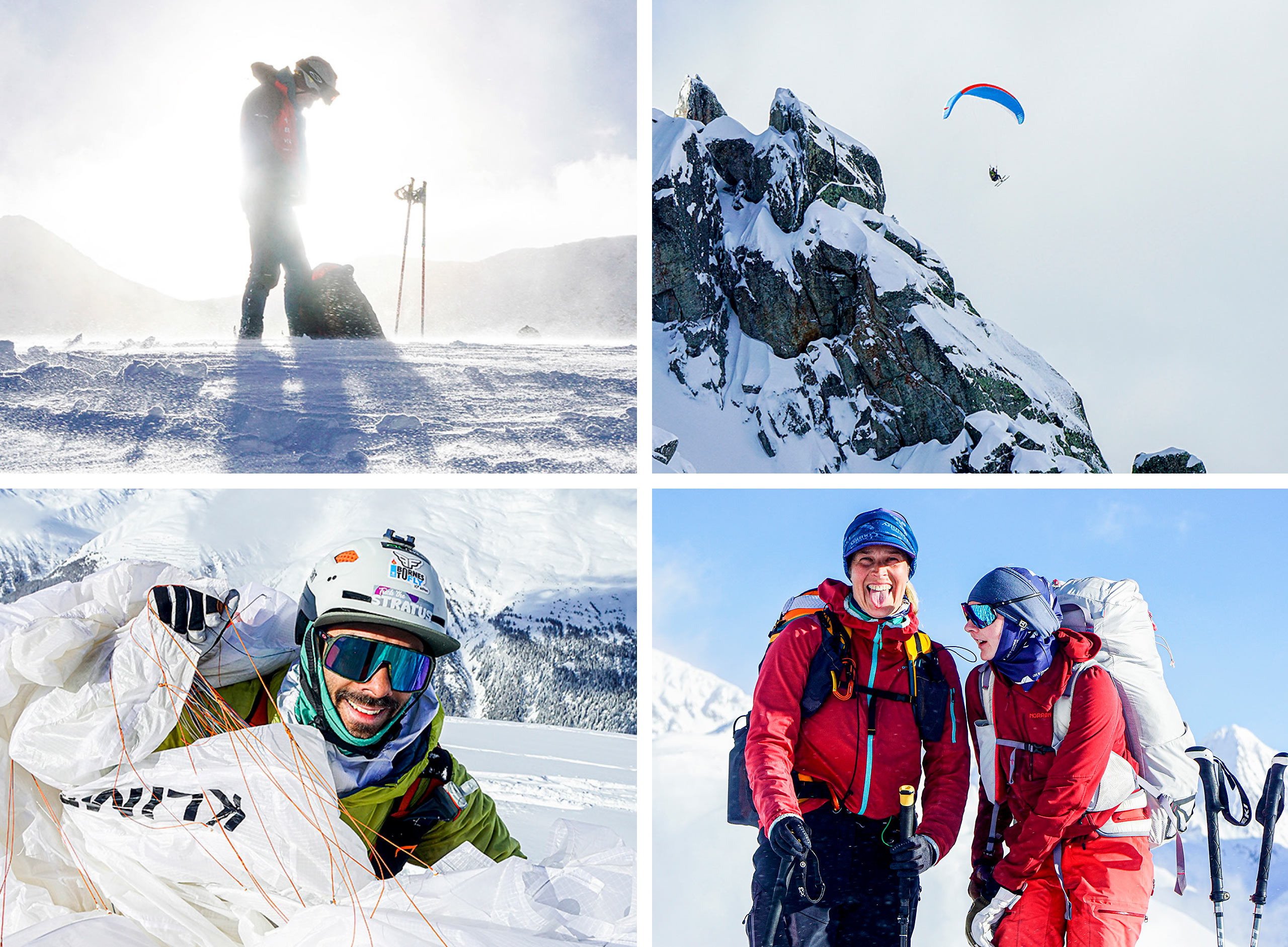
Later, back at the lodge, I watch as athletes share footage of such launches and come to the same conclusion. In fact, it looks like your worst nightmare, trying to run downhill with your skis flapping about with skins still on? It also seems to negate the advantages of having skis in the first place – which I thought was to give you an effortless launch. But this is the race mentality – anything to be faster at the next transition. Michu explains: “After landing you’re immediately set up to start the hike back up.”
Winter thermals are rare but can occasionally be found. In that case it’s best to remove your skis and stow them across your lap. “But you need hard snow to be able to take off,” warns Michu. It all sounds more complicated than I first appreciated.
Grimsel Snake
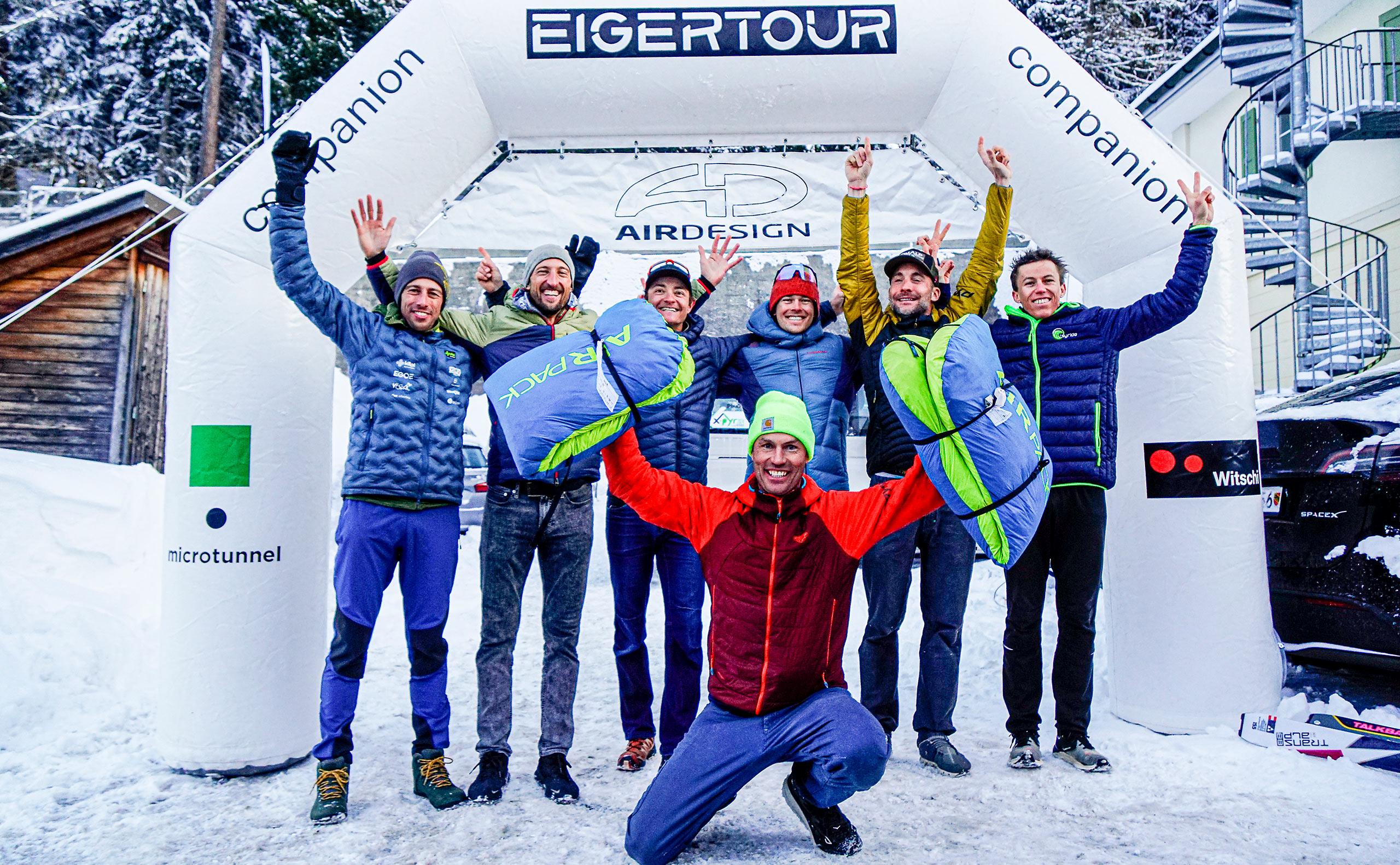
In the race itself, athletes discovered the conditions challenging too. “It was snowing a lot, and really cold,” recalled the Geneva-based British pilot Ollie Paul, who raced with Patrick Harvey-Collard. “Through a blizzard going over the Oberalp Pass I thought I was going to lose my hands. When we arrived at the last turnpoint we were only a glide away from goal.
“It was snowing so hard I could barely see anything, and my wing was filling with snow as I was preparing. We could not actually see the valley, but we knew it was there so we went for it. The alternative was not appealing. It turns out you can fly in the snow.”
In contrast to previous years the race returned each night to the same accommodation – a bunkhouse in Hospental, a small alpine village a few kilometres from Andermatt. Similar stories and eyebrow-raising antics could be heard in every dorm and around the dinner tables while sodden wings hung from every available space.
The following day was no better. The notorious ‘Grimsel Snake’ föhn made an appearance, hammering athletes with north winds of 50km/h. Of course, they still flew and the leader group, consisting of Swiss pair Nicola Heiniger and Basile Marclay made some epic moves before flying downwind to goal – a straight run down the Rhône valley from Oberwald to Mühlbach near Fiesch. A little after two hours they posted a photo of themselves enjoying coffee and cake after a fast downwind flight.
Ollie and Patrick were among the athletes to decide it was too strong, but then watched in frustration as Nicola Eschbach and Nicolas Bourqui flew over their heads, hitting goal in the air. “It was another hard lesson learned,” he told me. “At least the skiing down was some of the best I have ever had in the Alps.”
Epic descent
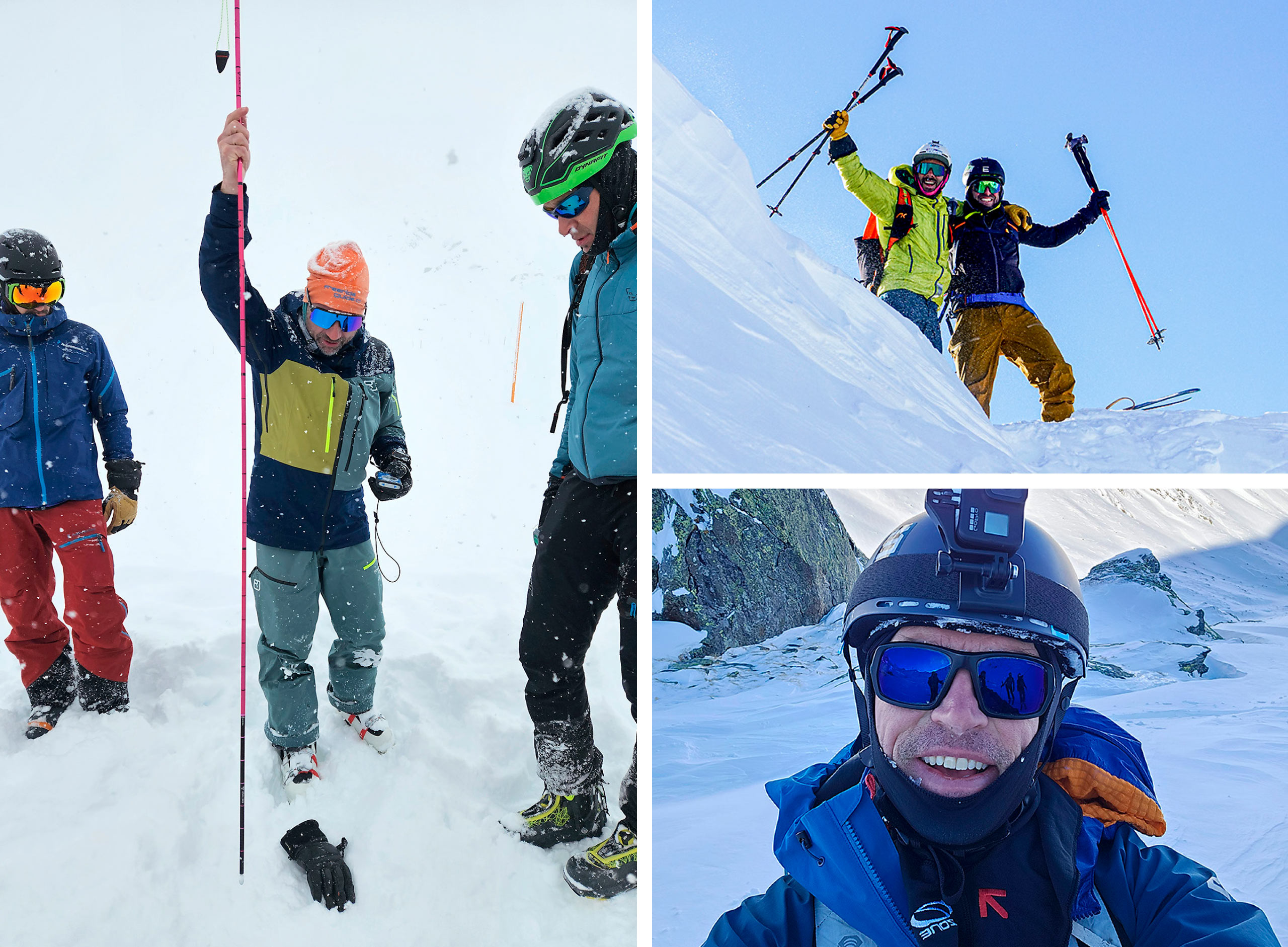
As for the academy, we headed to the Oberalp Pass, home to the world’s highest lighthouse – an artistic curiosity signalling the source of the Rhine. The plan was to attempt a task that would have involved flying off the back into another valley, then climbing another peak. Although we found some shelter from the winds, the visibility was close to zero, the avalanche risk 3.
There was no decision. We climbed 500m, then turned around and skied back down to the pass, grateful for the strange presence of the lighthouse guiding us in. I suffered for my gear choices having opted for my normal full-size wing and a pair of super skinny lightweight ‘skimo’ race skis. They were great for the ascent but on the descent, with a heavy pack, I struggled to stay upright.
As pilots, we are eternal optimists. “Tomorrow, hopefully it will be better,” we said. Alas it wasn’t. A north föhn rolled in. Flying was scrapped for the race and the third task became a straight-up skimo race with kiting. We ditched our wings, took the cable car to the top of the Gemsstock (2,961m), and enjoyed an epic descent off the back. Someway down we paused to check the route and admire the view. I looked up and spotted two bearded vultures soaring in the wind. We watched as they circled above us as if to mock our attempts at flight, then disappeared with the wind.
I left Hospental disappointed at not having flown – but all was not entirely lost. I’d planned a night in Zurich with local pilot and former Red Bull X-Alps athlete Tom Payne. “Do you fancy a full-moon flight?” he asked.
And so, later that night I found myself with a group of local pilots standing on a hillside looking down on Lake Zurich. I brought my wing up and launched into the night sky. The moonlit peaks where I’d been that morning, shimmered in the distance.
SKI-AND-FLY TOURING: HOW CAN I DO THAT?
How well do I have to be able to ski? Being a good skier is an advantage but not mandatory. You should be confident enough to get down steep terrain in all conditions and under control. The uphill part requires very little technical skill except for one important detail – the kick-turn, which is used on steep terrain. This is definitely something worth googling and practising.
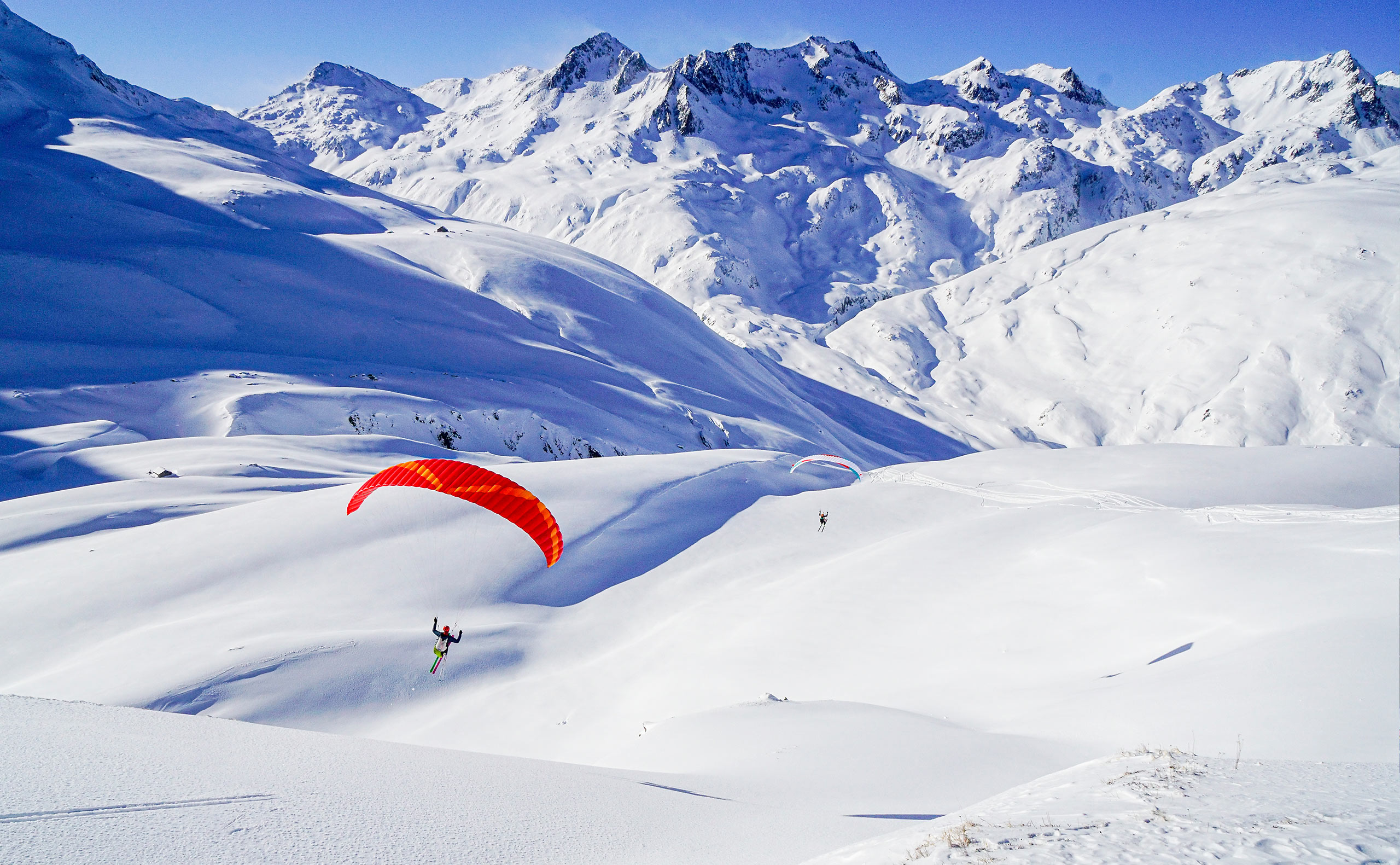
This looks like a gear-lover’s paradise. What do I need? There is no perfect set up and you will have to make compromises. Generally you want the lightest “ski-mo” race skis for ease of ascent, but they will make the descents more challenging, especially if you encounter deep snow. In the air the advice is generally to go for a full fat wing for the glide and the soaring potential. But if you know it’s an outright hike-and-fly sprint, then a small wing will make you faster. Use with an open string, or very light harness. Don’t forget the adaptations to carry skis. You’ll want a couple of 20cm lengths of bungee. Clip one end into each karabiner, loop around your skis and clip back on. Keep it simple.
Can I use my standard flying kit? Trying to get into your cocoon with skis on could be challenging, so definitely go with an open harness. Ski-fly racing is a lightweight fetishist’s game. That said, if you’re not racing and using lifts to launch, then your big wing and a solid harness will give you added comfort, security and airtime.
Where can I do it? Pick a mountain. Skiing and paragliding are popular across the Alps. Many ski resorts such as Les Arcs and Les Trois Vallées have established flying and tandem operations. The Aiguille du Midi is a popular ski-fly launch for the Chamonix crowd. France is also home to a vol-et-ski series where lift infrastructure is used and the game is more about precision flying (and the hot chocolate aftwerwards). Think gentle giant slalom on mid-B wings. Find details on the ffvl.fr website.
What about avalanches? Oh yes, they need to be treated with respect. Wherever there’s snow, there’s the potential for it to slide. Get the relevant app for the country. Learn the basics of avalanche assessment. The European avalanche scale has five levels: 5 very high, 4 high, 3 considerable, 2 moderate, 1 low. Treat anything 3 and above as suspect. Get local advice. Avoid slopes over 35º and places where you can get trapped. Learn how to use a transceiver to locate a burial victim within 15 minutes.
Anything else? Launching and landing in skis adds a new element to the game. On launch, just make sure you bring your wing up evenly as stepping to the side is quite difficult with skis on.
This article was first published in Cross Country 256