On tour in Colombia’s Cauca Valley
Marcus King joins Seb Ospina and crew for a paragliding safari around some of Colombia’s greatest flying sites
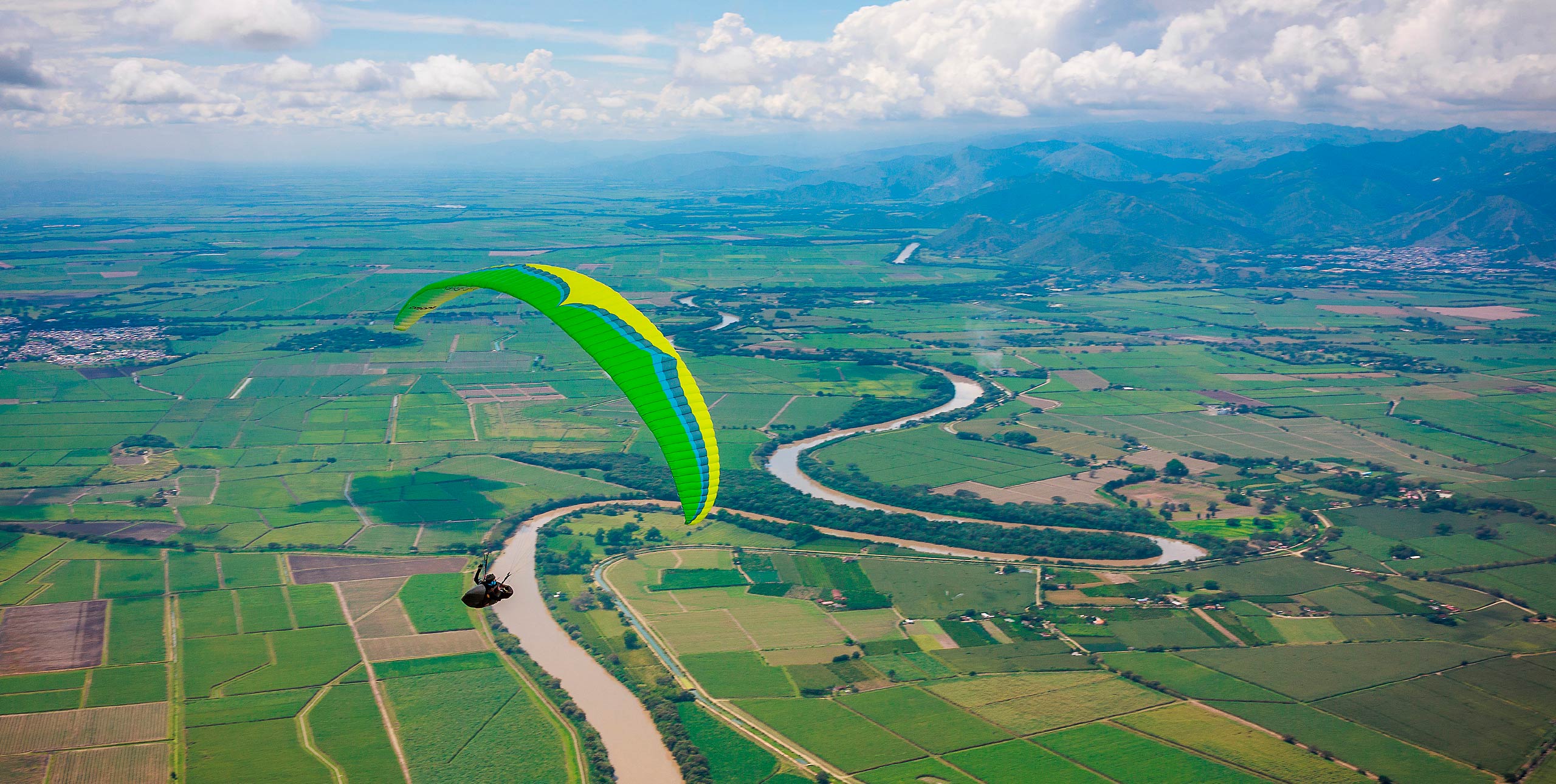
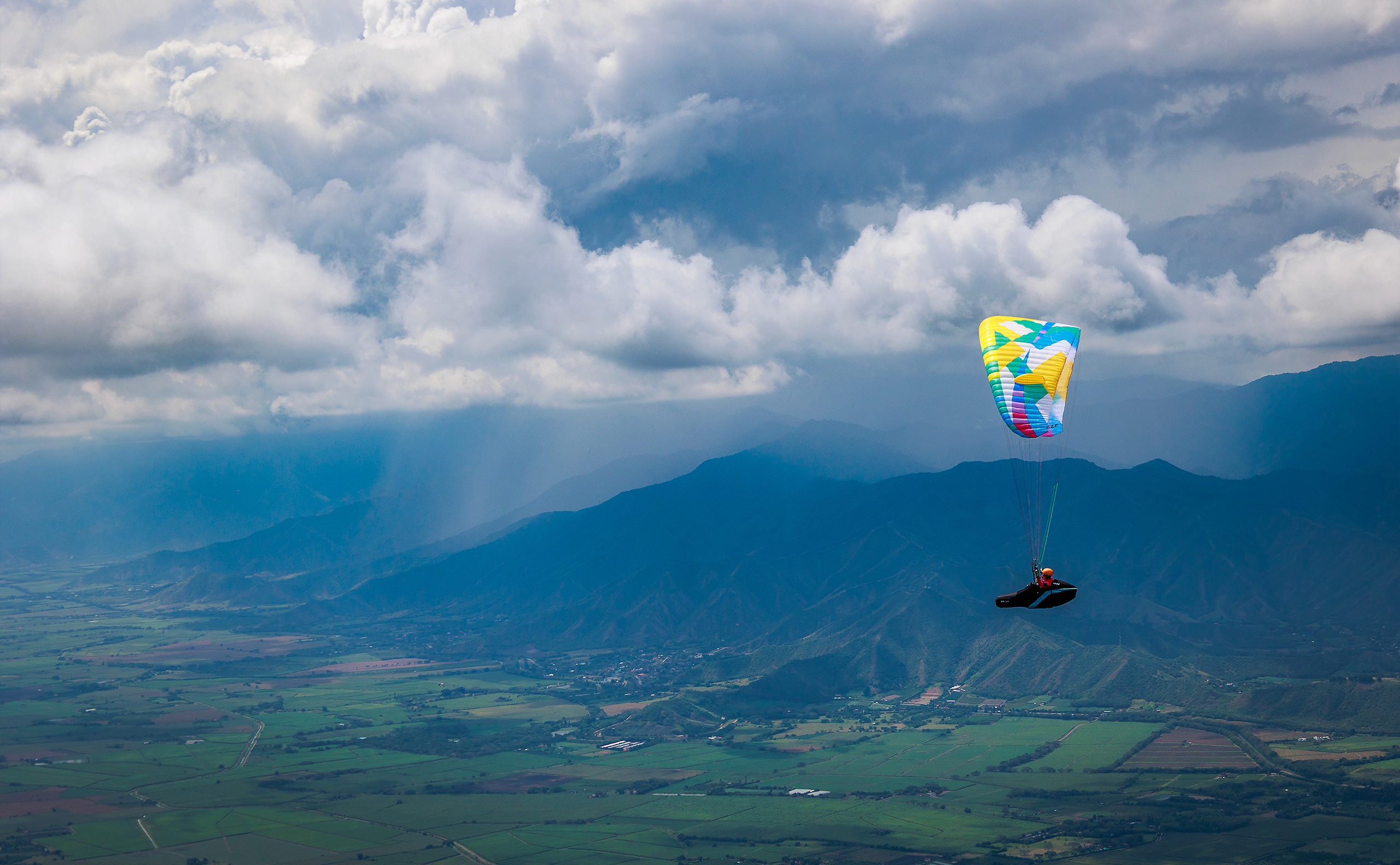
9 March, 2026, by Marcus KingI found myself on my own in the Cauca Valley: time to put into practice some of the things I had learned over the last week or so. Having pushed on a bit on my own I had become separated from the rest of the group. Some had landed out already and, from the chat on our radio channel, I knew our guide Seb was helping others further north. The Sports-Class Racing Series was also on so I’d been using them as thermal markers, but they had moved south and I wanted to head back north before the building clouds turned to rain. It was time to look for the clouds and, hopefully, birds climbing.
I spotted a good cloud slightly off my course line. It seemed to be forming on the south end of some low hills, where the north wind would be coming back together creating convergence. I set off on bar. As I approached I spotted a couple of gliders climbing low, then some of the local black vultures climbing a little further on. From experience the vultures usually know best so I joined them and was rewarded with a good climb back to base.
I heard Seb tell those nearby they needed at least 1,800m to cross the valley, but I was quite a bit further south with a long diagonal route to get back. The clouds beyond already looked quite big and I was keen to head back. Leaving the safety of the highway I headed out across the river to an area with more difficult retrieve but with brown fields en route.
On glide I spotted the finca where we were staying close to the town of La Unión. I monitored whether it was rising or falling as I closed in; would I need a top-up? Tucked in I was pretty sure I’d make it when the line got liftier and I relaxed. Soon I was worried whether it would be hard to get down under the clouds that were getting closer. I spotted Matthias and Domi from my group on finals – I hadn’t realised they were still in the air.
The clouds dissipated as I arrived and I was happy to practise some more flatland thermalling as more vultures marked a nearby climb. Seb joined me, followed by Angel, the last of our group. There was rain on the hills and the Pacifo was starting to make itself felt. It was time to get down to the pool and rescue some of those chilled beers waiting next to it.
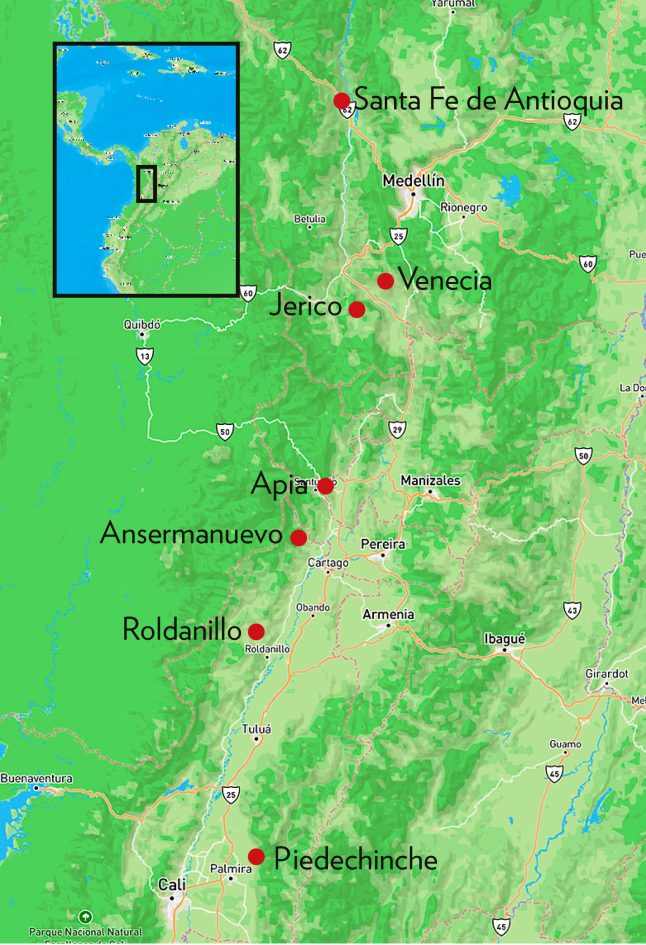
Map: © Mapbox, © OpenStreetMap
The Cauca Valley
Charlie, Brian, Alex and I had headed to Bogotá, Colombia after watching the New Year’s fireworks on the Côte d’Azur. We had a day to allow us to get over any jet lag and enjoy some sightseeing.
With recommendations from Ed and Ruth Jessop from the SRS, and Alex clutching her cherished Routier guide, we headed out first to the funicular to Monserrat for views across the city. We then meandered through the old quarter and visited the city’s famous gold museum before heading for dinner. Bogotá is a vibrant capital city and you should make time in your trip to visit.
The next day we took a short internal flight southwest to the city of Cali, at the southern end of the Cauca Valley, where we were met by our guide for the tour, Seb Ospina.
“Do you want to head to fly?” he asked.
“Of course!”
Seb is a Colombian-born Brit who works as a professional tandem pilot in Switzerland for half the year before heading to Colombia to guide tours. With his easy manner, excellent piloting skills – he is currently ranked number three in the world, just behind current world champion Baptiste Lambert and former world champion Honorin Hamard – and with a foot in both Europe and Colombia, he made the perfect guide for our 10-day tour.
After a bit of roadside re-packing we were quickly whisked to one of the take-offs at Piedechinche, a mere 45 minutes from Cali airport. Some of the clouds already looked pretty big but Seb assured us it was fine and any rain would be clearly visible and avoidable. Off we headed to take slow climbs above launch.
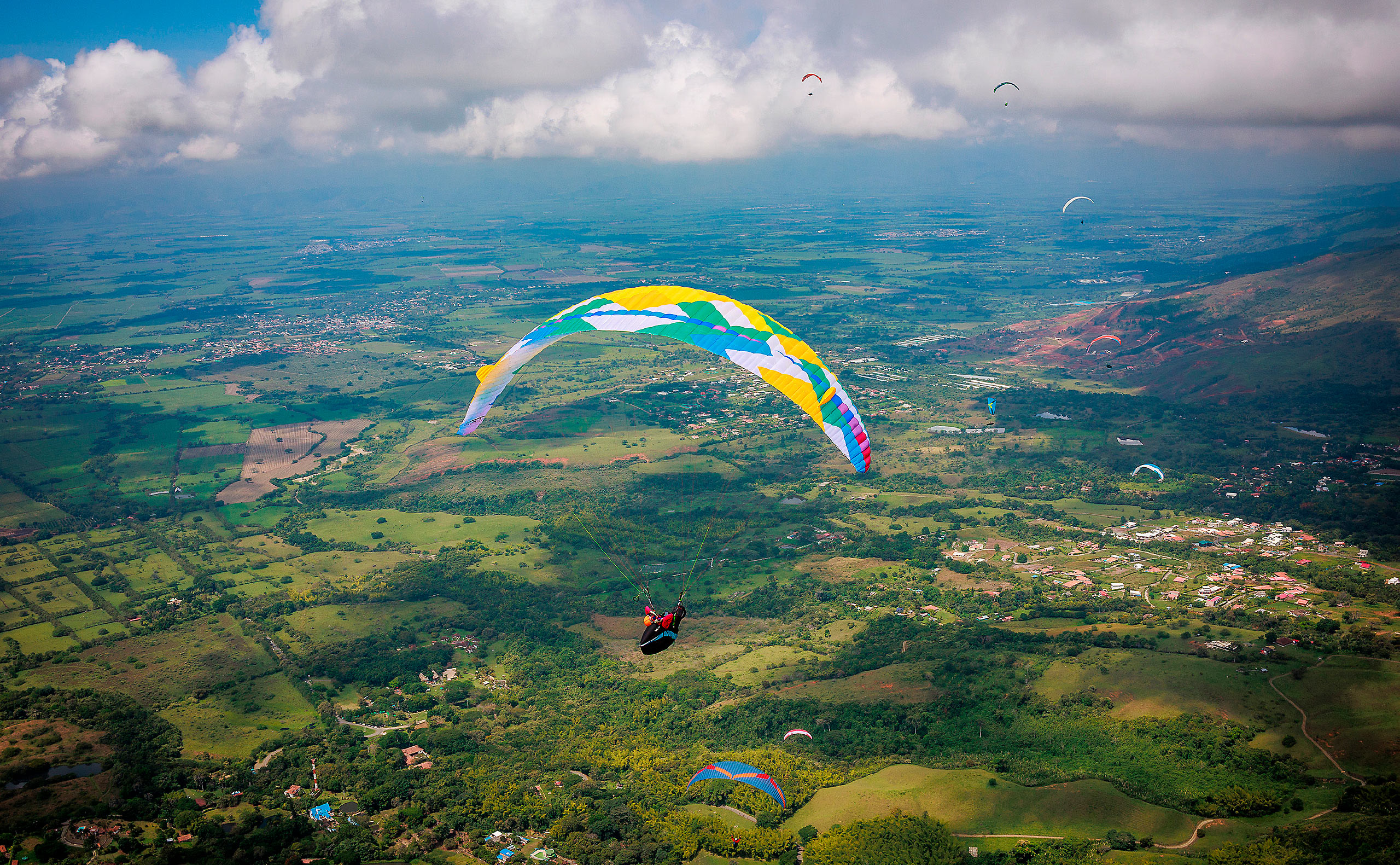
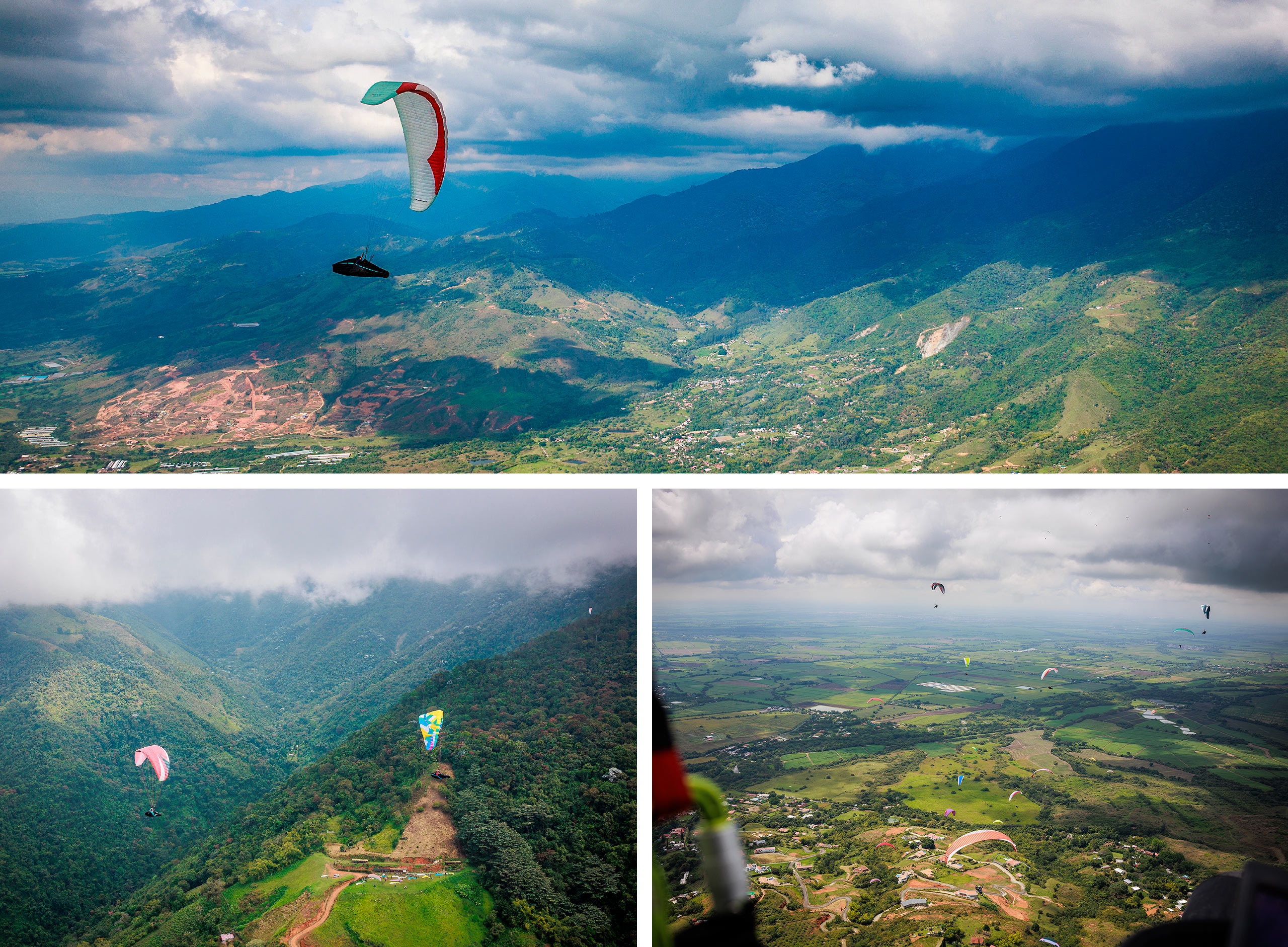
Being more comfortable in mountains I moved back to the ridge behind and climbed to nearly 2,700m, which turned out to be the highest point of the trip, before pushing forwards to explore the flats out front. It soon became clear that the local black vultures, known as chulos (Coragyps atratus), were the best indicators of lift and always in the strongest parts of the climb. With spots of rain starting to fall we headed to the landing and a nearby restaurant for food, drink and lots of catching up with flying friends who had all migrated to Colombia for winter flying.
Towards Roldanillo
Over the next days we explored the area around Piedechinche, with Seb setting tasks for us around the valley and the weather. With his help we made the most of the windows before the afternoon storms shut things down. We also learnt to fly together as a group, using the power of the gaggle to tiptoe our way through the weaker areas.
It was a lesson that I proved I still needed to learn when we set off from Piedechinche with the goal of Roldanillo, some 100km north. At the start conditions out in the flats were good and I pushed on with Domi, an Austrian pilot who was part of our group. Seb had turned back to stick with the main team.
Having reached base above a small town I thought I could wait for the others who I thought were just a thermal behind. I happily let Domi push on. Big mistake. The others were actually more in the hills, so by the time they arrived near me I was scrabbling around for a thermal that I never really found. Soon I was searching for a cleared field to land in. As Brian said afterwards though, “If you get to goal every day you miss out on the Colombian experience.”
I walked to the gravel road where a man on a motorbike stopped. We negotiated a price back to town and I hopped on. In town I didn’t have the right note so I offered more, but he insisted on getting me my change. Charlie, who landed 20km or so further on, had a similar story. The farmer she landed by offered to help her pack up, walked her to the main road then insisted on waiting with her until she was safely scooped up by our retrieve driver in his “magic bus”. Every pilot in the Cauca Valley has a similar story – the welcome and hospitality extended to visiting pilots is genuine.
The next few days were spent in Roldanillo, “where the magic happens” as Seb said while we stood on launch ready to go. Roldanillo is known for its great flying conditions and is the epicentre of flying in the Cauca Valley, but it has the complication of being affected by the daily sea breeze, known as the Pacifico, which rolls in every afternoon; the Pacific Ocean is 130km due west, the other side of the mountains.
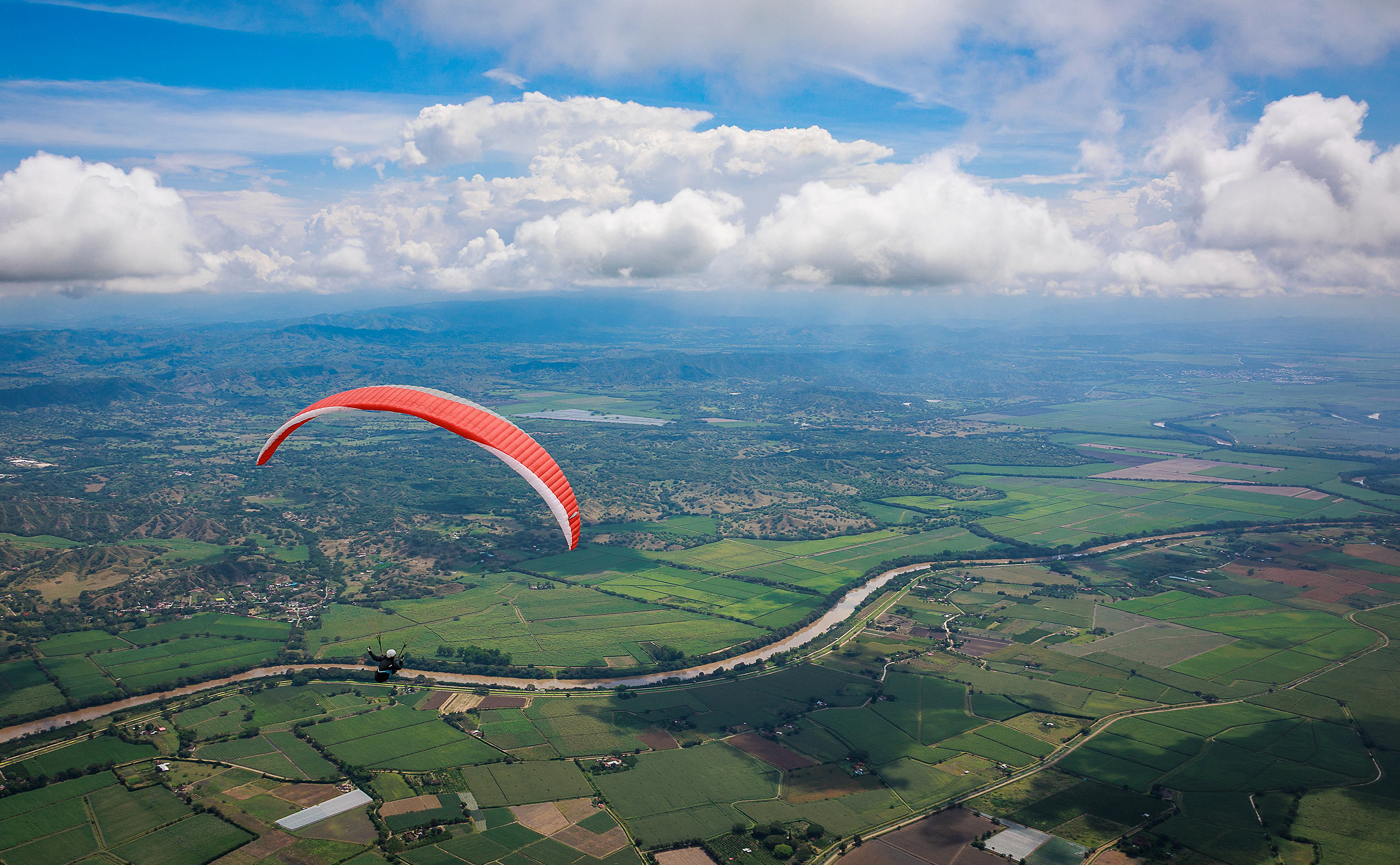
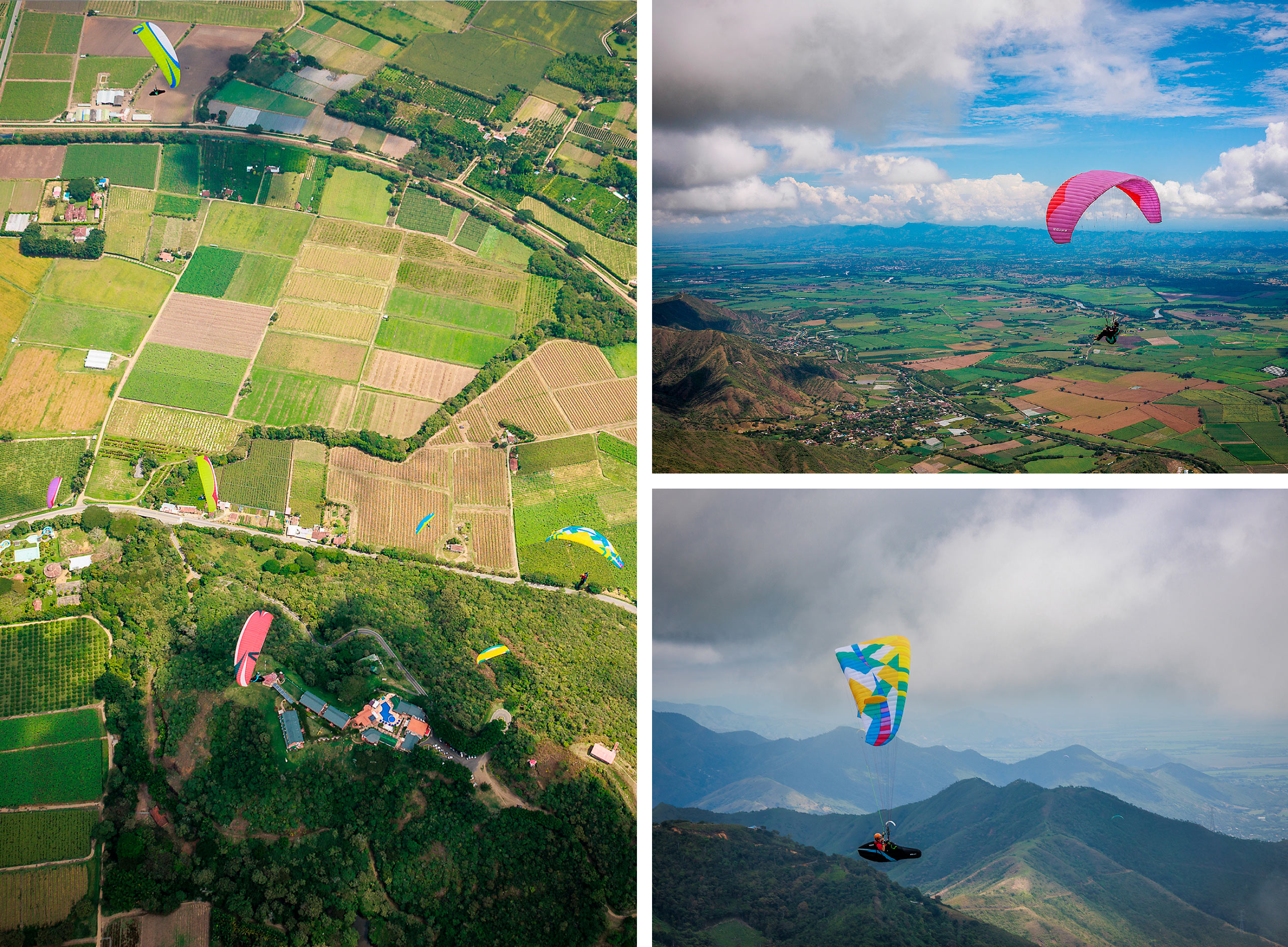
Our usual plan was to do an out-and-return on the ridge before heading across the flats to the other side to run the low hills before returning. Seb and his co-guide Julien Carreño were kept busy chasing us round the sky.
Our base for Roldanillo was an “ex-narco finca” – that is, a farmhouse that once belonged to one of the local drug lords. The Colombian government has seized literally thousands of properties from drug cartels over the last four decades, and they are often sold on and repurposed as holiday lets. It makes for some unique places to stay: our bedroom alone in Roldanillo was the size of many European apartments. Every day in Roldanillo after criss-crossing the valley our “ex-narco finca” was our eventual goal.
The SRS – Sports-Class Racing Series – was in town and the launch was busy with competition pilots. We shared hugs with friends from around the globe. The busy skies made keeping eyes on the team a bit harder, but somehow we managed to track each other as we flew around the valley.
Evenings were spent either in Roldanillo itself, a vibrant market town, or at our finca with local specialities cooked for us. The chill times are some of the best times to reflect and learn as we chatted over dinner or in the pool. In how many sports do you get to float in the pool with one of the world’s best pilots, chatting about the sport and life? There was lots of learning to be had, from Seb, the other guides, and of course each other.
Travelling north
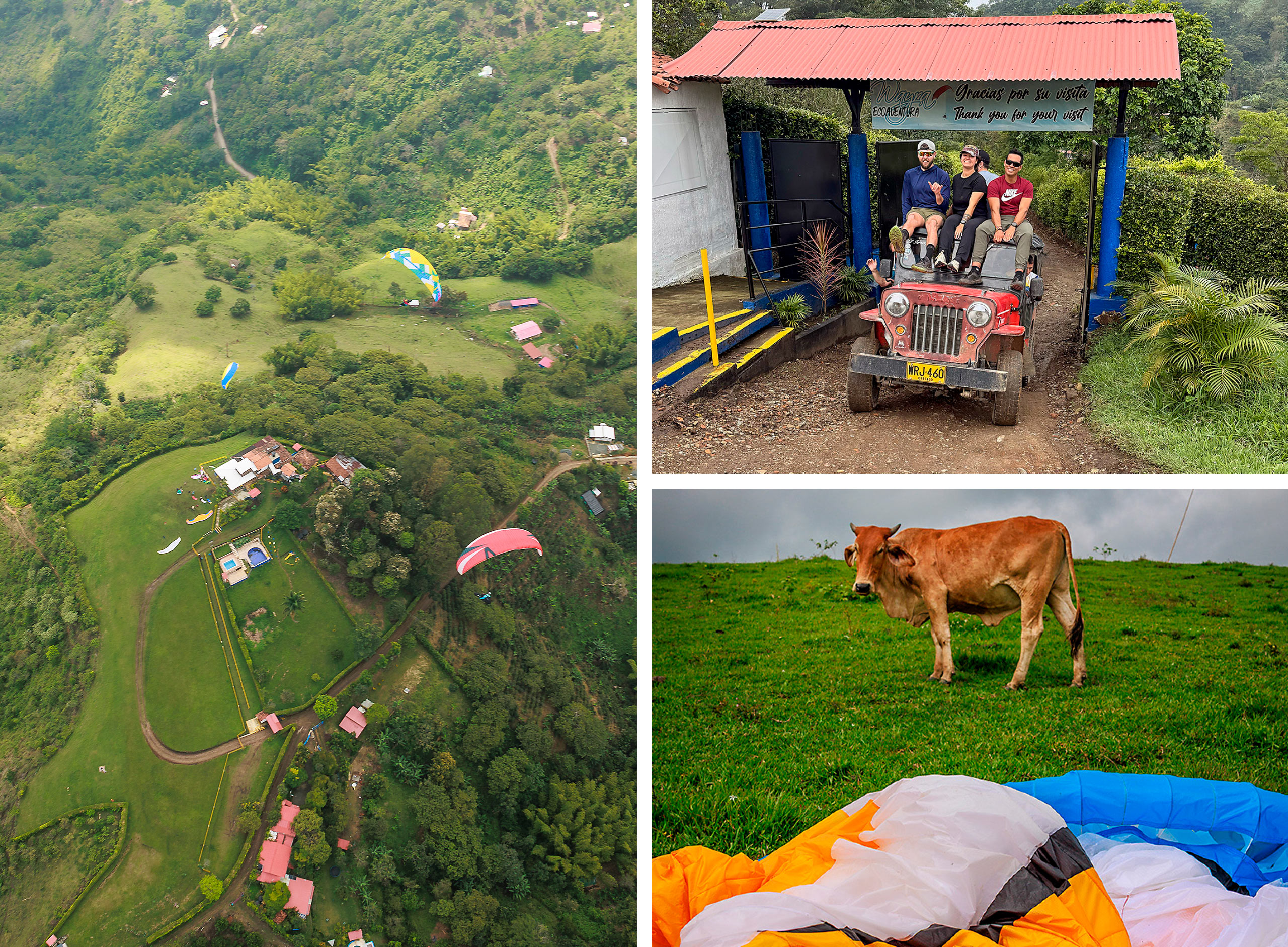
From Roldanillo our tour took us further north in the Cauca Valley. A wet day stifled our plan to fly the 45km from Rolda to Ansermanuevo, so after a relaxing day off we took the jeeps to Ansermanuevo’s beautifully manicured launch. There we found a restaurant – perfect for parawaiting while the moisture burnt off.
Our group’s growing addiction to the card game Uno was sated while we waited and soon enough the clouds had dispersed enough to launch. As it turned out we were too quick! Those of us first off were soon chatting to cows in the bottom landing field, but the magic bus quickly scooped us up and soon we were back on take-off to try again.
The next day conditions improved and we escaped into the flatlands heading north. The scenery was stunning as we hugged the hills to avoid airspace in the valley. River valleys weaved around the hills and out to the flats. In the distance we could make out the city of Pereira, home to half a million people.
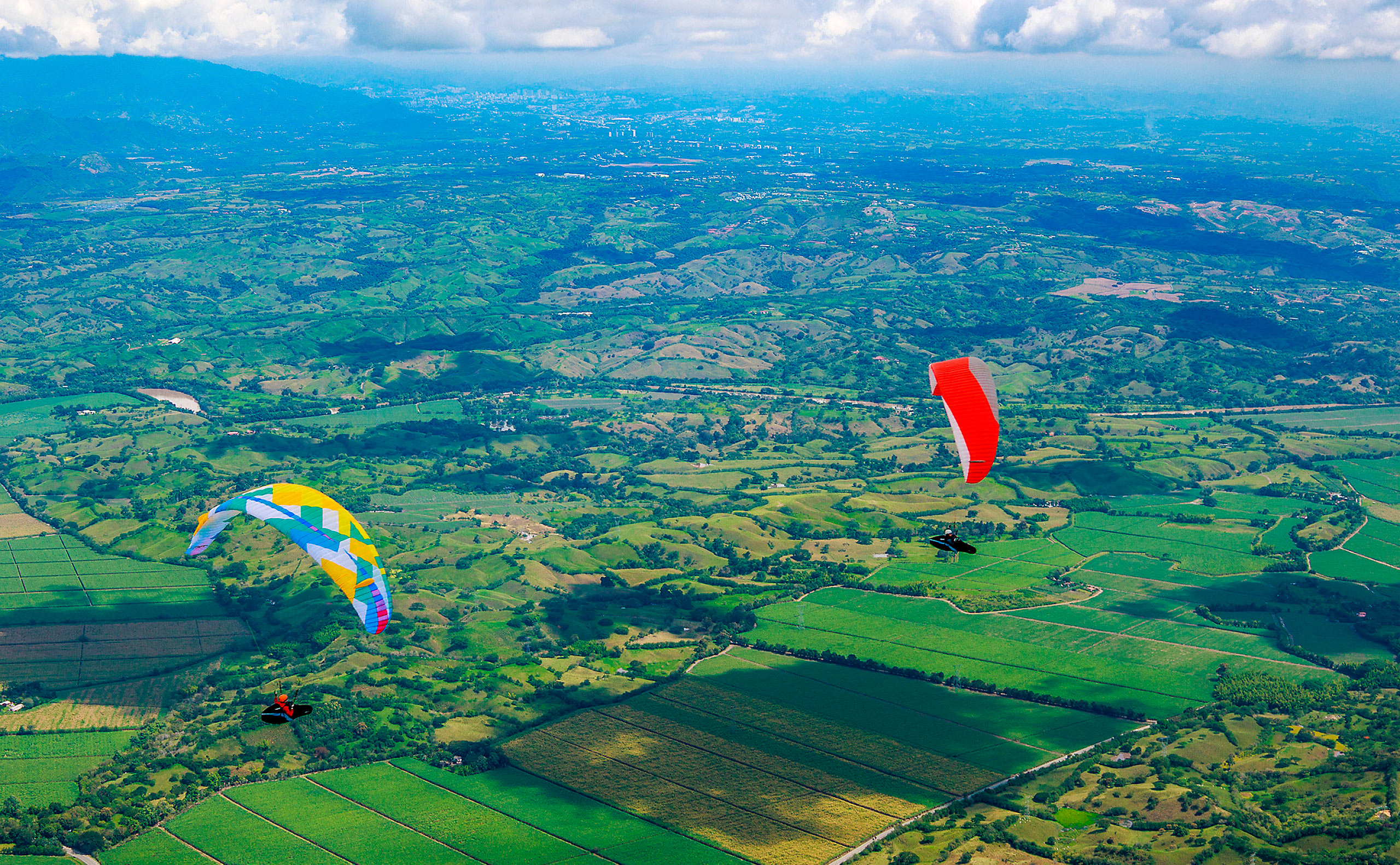
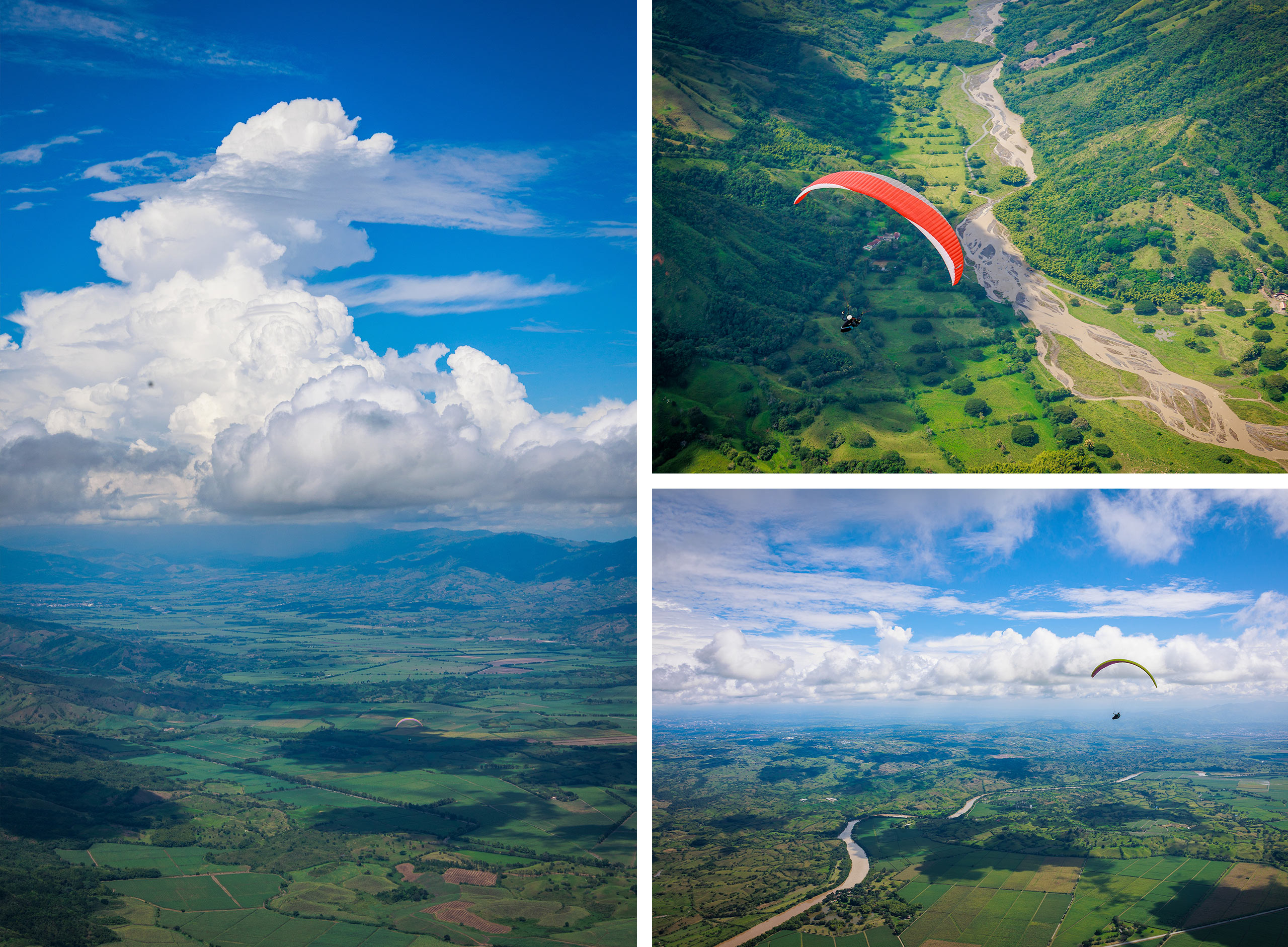
As we headed north a large cloud formed ahead. The rain from it was obvious and we took the wise the decision to turn back south. Seb was scratching in the foothills but I was high in the flats with Alex, a pilot from the States. The others below were also starting to struggle as the cloud’s shadow spread out. We headed to the low hills where I found a slow climb but soon the shade was everywhere and there was rain both in front and behind. Airspace meant we would have to head through some low hills with limited landings, so I turned back to land on one of the tracks in the sugarcane fields.
The adventure, though, was not over. One of our team had landed in a side valley, their wing dropping over a small tree. Those of us in the magic bus waded through mud to get to our fellow pilot. The tree had massive thorns on its trunk so there was no chance of climbing it. Nelson, our driver, pulled out two machetes… Ten minutes later the wing was safely recovered and the tree trimmed back a bit.
Coffee country
The tour then took us to Colombia’s famous coffee country around Apia. Driving into Apia town it felt like there were no landings, but Seb assured us that the flying was on the other side of the ridge where the valley was more open.
Our aim was to fly on towards Jericó, at the top of the Cauca Valley, but low base made crossing the ridge on the opposite side of the valley the crux. Only Alex on his two-line Gin Bonanza and Seb made it, sliding over with only 100m to spare. As conditions shaded out Alex top-landed, hoping to wait for the sun to reappear. However, the wind switched and wrapped him in his wing, leaving him with the possibility of a long walk out. Thankfully a lull allowed him to escape back to the valley.
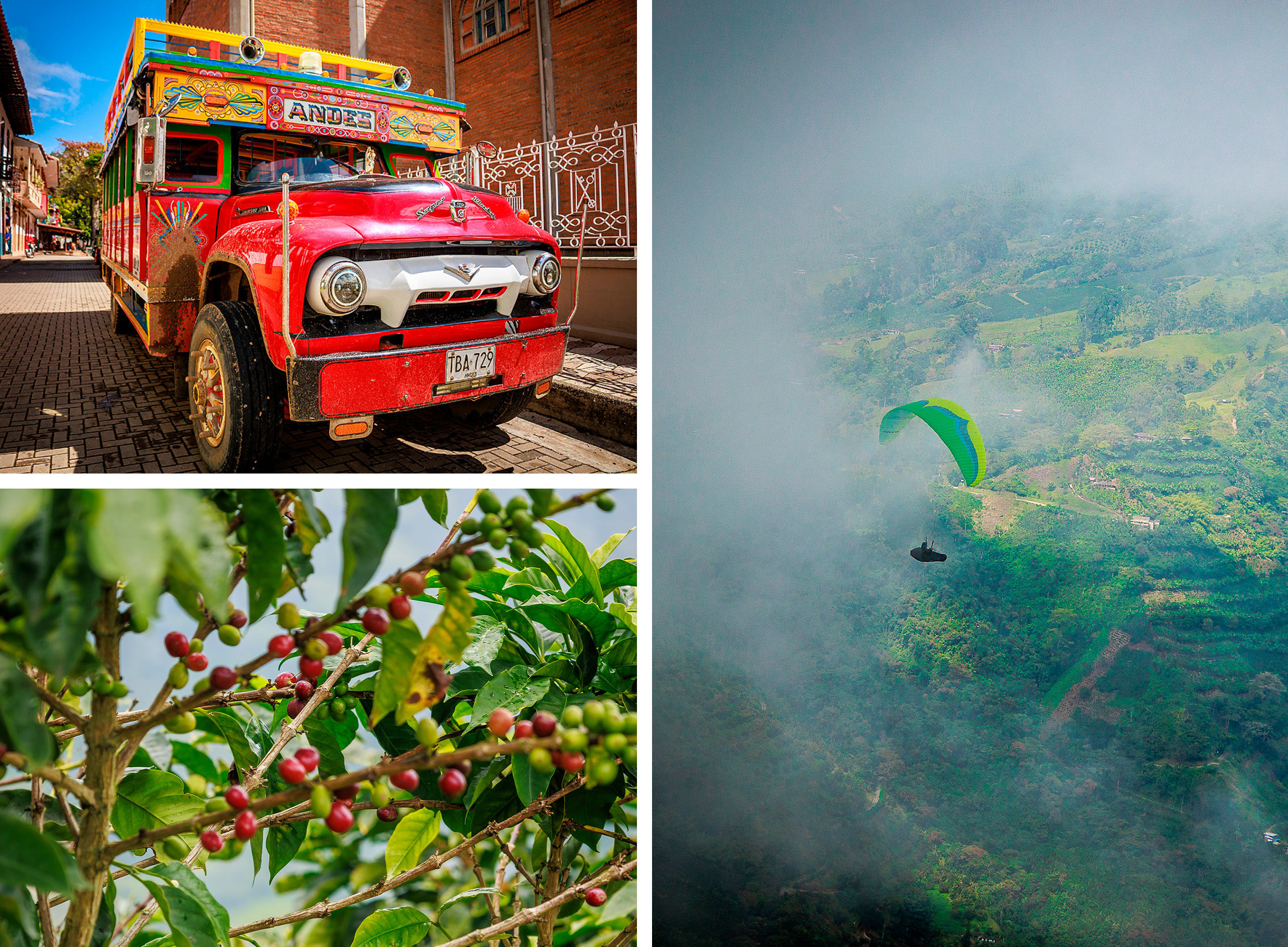
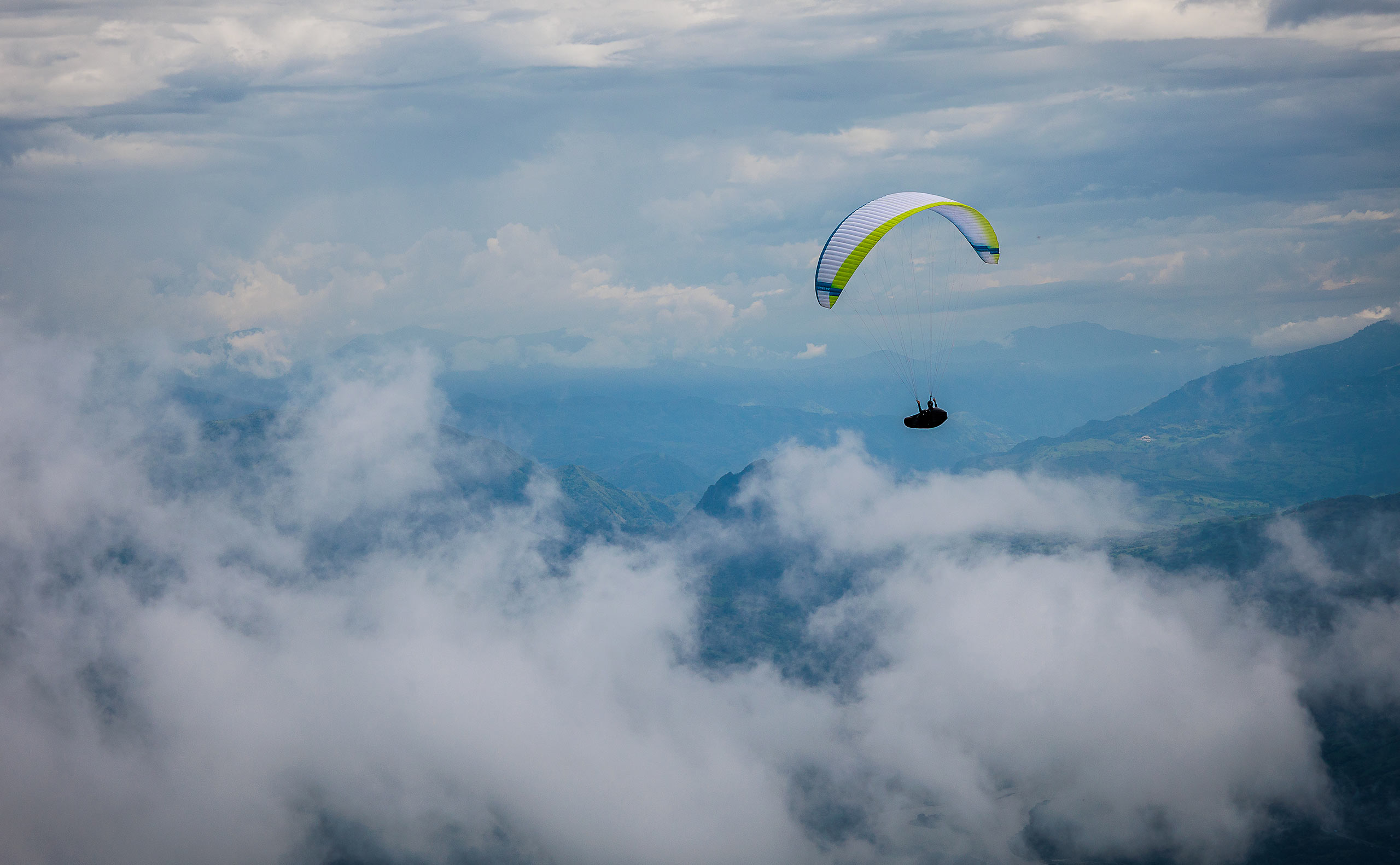
We were now in more mountainous country with tighter valleys and fewer landings. Jericó is a stunning mountaintop town with colourful buildings and vehicles and great coffee. Sadly though, rain denied us the chance of flying.
The next day, however, we were rewarded with a lovely flight from Venecia on the opposite side of the valley. Those of us first off found ourselves scratching around to stay airborne above the lower hills with views of the many weekend homes of Medellín’s wealthy. As conditions improved we were able to climb back up before crossing the valley to land by the main road, on track towards our final destination of Santa Fe de Antioquia.
Our final night was spent in the streets of this lively town, once the regional capital before Medellín. Now it’s a popular weekend getaway for the inhabitants of the nearby mega city. The streets were full of market stalls and hustle and bustle and we enjoyed a final group meal before heading to a streetside salsa bar for more beers, and to say our goodbyes to our newfound flying friends.
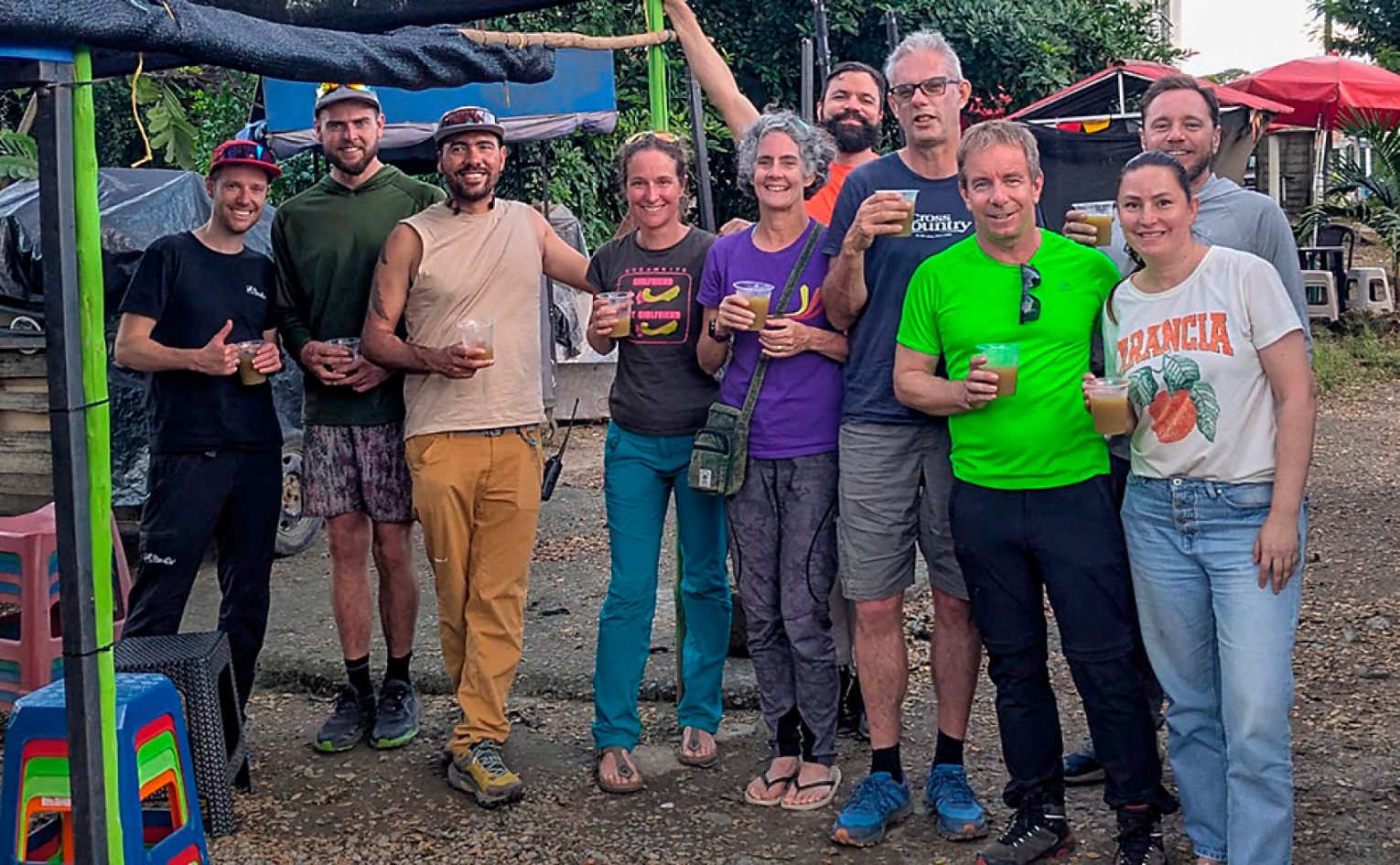
Seb Ospina runs guided tours to Colombia through Seb Adventures, sebadventures.com
The crew’s experiences
‘I FOUND INSPIRATION FROM SO MANY PEOPLE’
I met our guide Julian Carreño in 2024. He was the only pilot in Santa Barbara, California who would consider taking my dad on a 40km XC tandem flight! I flew alongside them on my Swift Six, sharing every thermal and making conversation during the flight. The day was unusual for Santa Barbara’s commonly dry, weak, and ratty lift. On this day, there were cumulus clouds forming along the route, pointing out every climb like clockwork – 3 m/s and dreamy smooth. In one thermal Julian yelled to me, “This is what it is like in Colombia every day!”
I opted to arrive early and met the group in Piedechinche after a few days of solo flying. On my second day I remember feeling uncertain about my motivations for paragliding, and the trip as a whole. I think a bit of loneliness hit me, and I began to think, “Why am I thousands of miles from home, taking time off work, putting myself in danger, and spending tons of money on flying this fancy piece of fabric through the sky?” This trip offered me a lot of time to reflect on these feelings and build confidence as a pilot.
I built a better understanding that low saves, climbing in scary strong thermals to cloudbase, fighting against the wind, communicating and sticking with your group, and ultimately landing with humility and grace whether after an epic flight, or an epic fail, are all parts of flying. I found new confidence that allowed me to feel like I was able to achieve rewarding flights, no matter the distance, or prestige, or number of likes on Instagram.
I found inspiration from many people on this trip. Seeing their different paths reminded me that paragliding isn’t just a hobby, but a lifelong gateway to community and adventure. I left Colombia with no question why I fly, and inspiration to continue learning all that I can.
Alex McKee (USA)
‘I UNLOCKED SO MANY NEW SKILLS’
I arrived with a total of 60 flights, all sledders, and I was nervous my inexperience would leave me on the ground or holding back the group. But on my first day our guide Julian flew right next to me in the smooth lift coming from the house thermal, and said, “turn now”.
I focused on keeping those turns going, while watching to avoid other pilots. I looked towards him and he said, “Congratulations, your first time touching the clouds!” I couldn’t believe it, seeing the launch from high above. It was like solving a problem you’d been struggling with for years. I finally reached cloudbase that day and I flew 13km.
In Roldanillo Seb offered me a tandem flight, an incredible opportunity. He had an acute awareness of our surroundings and was always looking for a new cloud to form, other gliders in the distance, birds climbing, and thermal triggers on the ground. Seb coached me on the basics of XC flying, as well as how to group fly. I observed how to deal with low saves, both working any lift that you can find while simultaneously making a plan for a potential landing.
The following day we flew the same site, but this time I felt a new confidence. I had already become more comfortable sharing a thermal with other pilots so I launched and followed two others to the first thermal. I took my first turns, corrected to find the core, and then finally soared.
On glide (I fly an EN-A) I remembered what Seb told me on the tandem: go fast through sink and slow in lift. I pushed out toward the valley, getting low at one point then spotting Alex finding a thermal out front. I gained height slowly and then climbed like a rocket. With a new confidence I crossed the river knowing I would need to push to La Victoria to find another thermal. I found lift on the edge of town, climbed, and then again moved on to the next thermal. I ended up landing after a personal best of 25km.
Looking back, I’ve got a lot to learn and am very excited to do so. I unlocked so many new skills and met so many great people. The trip will forever change how I paraglide and how I travel.
Darin Smith (USA)
‘I’M EXCITED ABOUT FLYING AGAIN’
When I was a kid, I wanted to be a jet fighter pilot, a dream mostly nurtured by a single movie and an early obsession with flight. Life led me down different paths, and eventually – more importantly – to paragliding.
I learned, gained independence, and started chasing numbers. So much so that in 2025 I lost my motivation to fly. Why go through all that trouble if my ambitious distance plans could get foiled by uncooperative weather… or worse, my lack of skill? I came out of the season feeling dejected and thinking of hanging up my paragliding gloves for good.
But in the back of my head, Colombia kept calling. But what if, in a worst-case scenario, I went there and realised flying was no longer for me? I called my buddy Tom Payne to ask for a recommendation: “It should be Seb!” I got in touch and upon sharing my doubts he offered to take me along on his tandem the days I didn’t feel like piloting. That settled it, I was in.
As soon as I got my first flights in, all my doubts were dispelled. I don’t know if it’s Seb’s relaxed approach to flying, the smooth conditions, or the atmosphere in Colombia, but all the pressure I usually put myself under disappeared. I rekindled the simple pleasure of flying.
Throughout the trip, I regained confidence – not in my skills, but in my ability to enjoy flying. I started going on glide not thinking “If I can’t find lift the day is wasted!” but with a more laid-back approach in which I was just content with the flight I had and not mourning the flight that never happened. Truth be told, I never had trouble finding lift when I needed it in Colombia
In the end, it was a great paragliding trip, the format of going to multiple paragliding spots between Cali and Santa Fe de Antioquia allowed for some good flights and spectacular sightseeing, whether on the ground or from the air! As for me, I’m simply happy to be excited about flying again back in Switzerland.
Matthias Lopez, Switzerland
‘WE GOT TO THE RIGHT LAUNCH AT THE RIGHT TIME’
My girlfriend and I did consider saving costs by renting a car and travelling at our own pace between sites. However, there were many evenings when it rained and take-off was in cloud. If we’d been on our own I don’t think we would have thought to go to take-off. Having local knowledge really helped to get us to the right launch at the right time and to maximise our flying.
I’d say that to get the most out of a trip like this though you should be comfortable going on a multi-thermal XC and flying with others. I primarily fly in the French Alps and follow ridges and convergence lines and can be a bit lazy in the strong thermals that boost us to cloudbase, but on this trip we had to come out into the flatlands, watch for birds and sometimes stay in thermals of 0.5m/s patiently until they grew into something more usable.
It was a slow flying week by local standards so we all had to learn to never give up. Seb also showed us a few times as he pushed ahead that Colombia is a low-save paradise. The retrieve service or as we called it, “the Magic Bus” was well organised and had cold beers, so when pushing out into the unknown countryside it was very re-assuring to know that we were being tracked and would be found within minutes.
Brian Steele (France)
This article was first published in Cross Country Issue 264