
New technology: The parakites are here
“Dive, swoop, climb, soar…” Launched in a blaze of high-octane glory in 2022 parakites have now definitely come of age – attracting new pilots from disciplines like skydiving and kiting as well as paraglider pilots who want to go high-wind soaring at the coast. Bastienne Wentzel dials in...
21 September, 2026, by Bastienne WentzelI’m on a beach in the Netherlands, a fresh wind blowing from the west and ready to try this new hype: the parakite. Someone hands me a bundle of white dyneema with a lot of pulleys and two familiar looking handles: the kite-risers connected to a brand new Flare Moustache 18.
Once I’ve sorted the bundle out I pull on what I think are the A-risers. The Moustache rises fairly quickly, I pull the brakes to stop it and the entire canopy collapses. Lesson learned: don’t brake a reflex profile overhead – it stabilises itself.
My second try is better and I spend some time groundhandling before kiting up the dune and flying away. I remember the instructions: keep your hands level with the labels for trim flight. Hands-up sends the wing into a sharp dive and hands-down creates massive lift catapulting me up. My brain is working overtime. Control is not just left and right now, but in three dimensions! Once I get the hang of it I’m having a blast. This is fun!


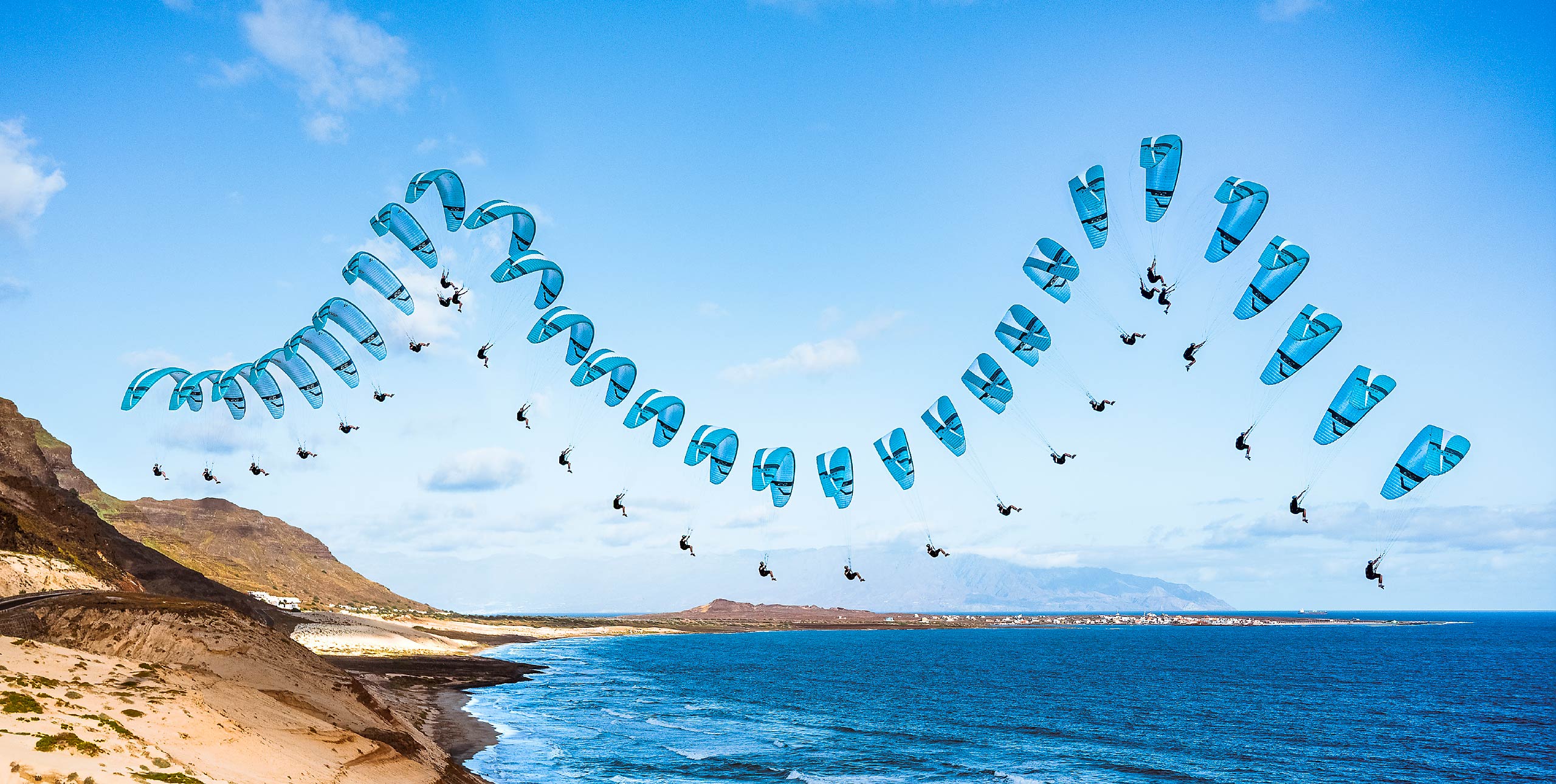
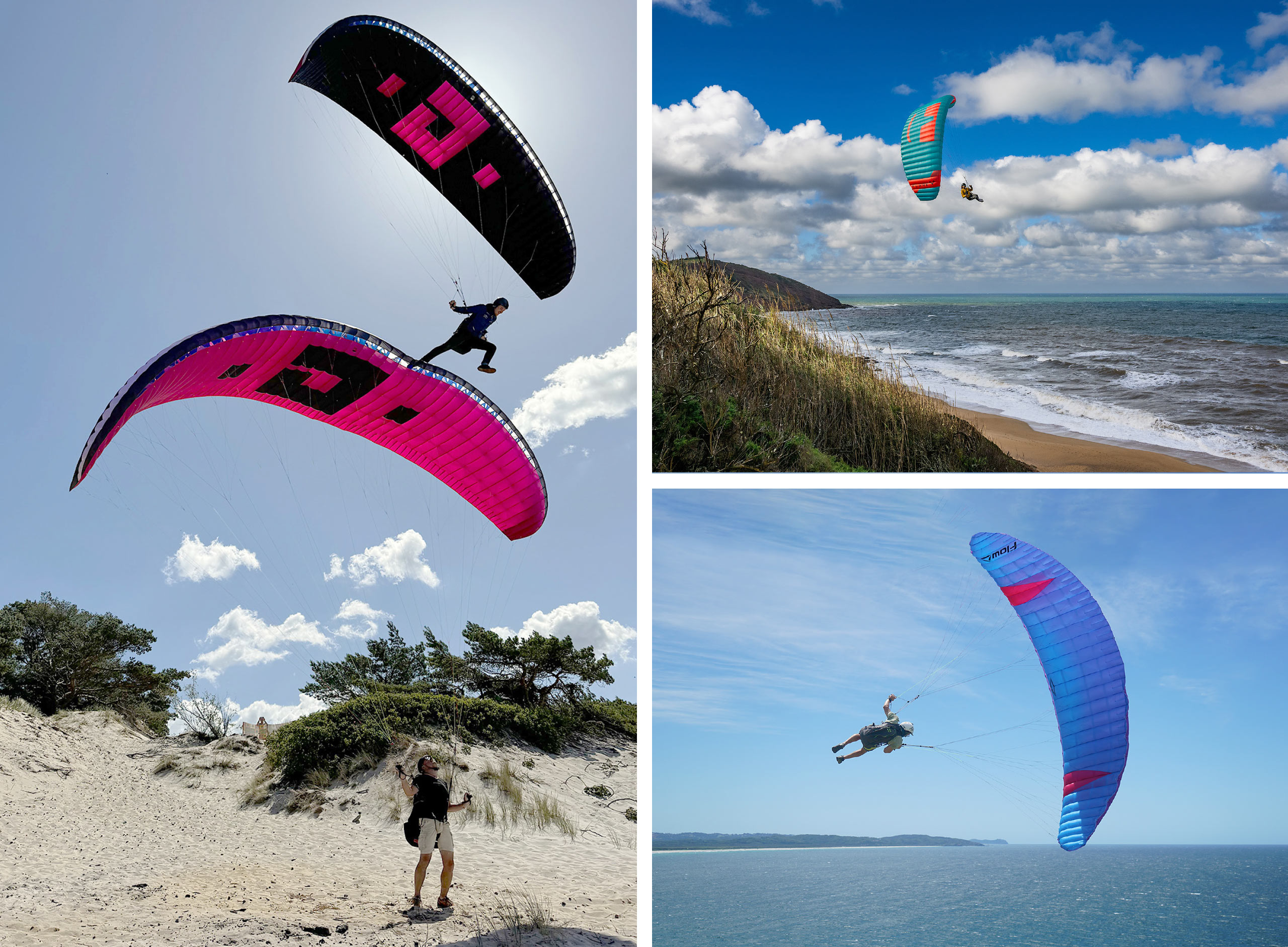
Top right: High-wind soaring on the dunes. Photo: Little Cloud
Bottom: Ali Andrews demonstrates why decent back protection is important while flying the coast in Wales. Photo: Henry George
That was in 2022, and the question then of whether parakites were just a hype or here to stay is now pretty much settled. With five types from three brands and counting with more to come in 2025, parakites are firmly established as a new type of wing. Just as we have XC gliders, speed wings and acro gliders for particular purposes, parakites really come into their own for high-wind soaring close to the ground.
“Soaring is incredibly engaging,” says Alistair Andrews from Crickhowell Paragliding in Wales, where they soar in a wide range of wind conditions.
A large paraglider made for XC flying is not ideal for high winds, he says: “In strong wind you just sit there high and pinned, enjoying the view. Scratching low to the ground is the most fun.
“With a parakite, you can now get the same experience in a wide range of wind conditions. It has the same buzz as speed flying, but you can fly for hours.”
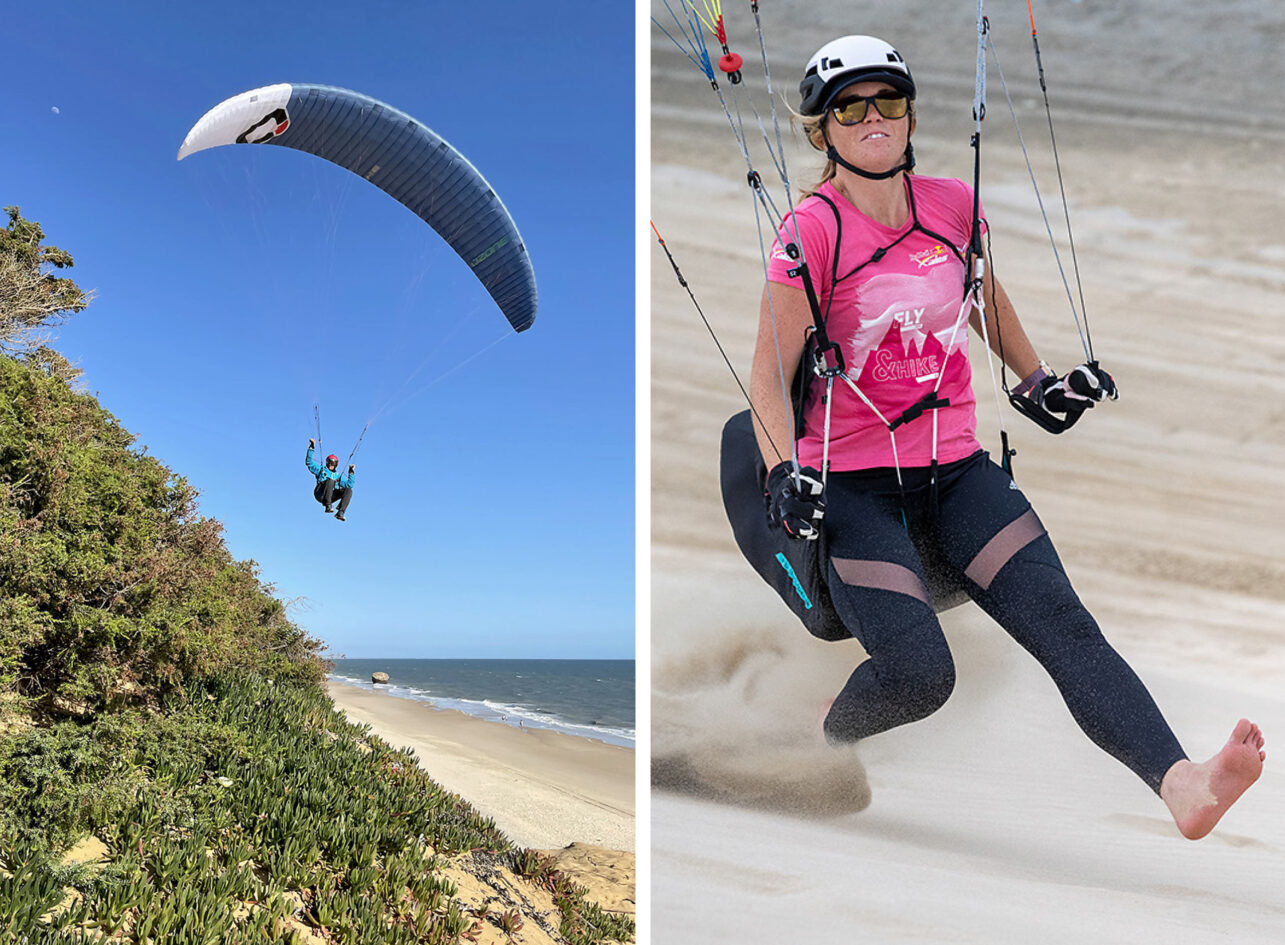
Right: The Flare Moustache showing the control-lines set-up. Photo: Adi Geisegger
Parakites are for everyone
Parakites are specifically good for easier handling and loads of fun in higher winds. The reason is that the kite-risers give the pilot very precise and fluent control over the angle of attack of the canopy. The reflex profile allows more acceleration. Flying a parakite means controlling speed, direction, lift, pitch and dive all with your hands.
Alistair teaches specific courses on parakites for everyone: from new pilots to those with hundreds of hours’ experience on a paraglider. “We teach kitesurfers too, but they need to get their [paragliding] pilot licence first. The day they have that we switch to a parakite. I would happily put new students without any flying experience on a parakite too, but that is not allowed in the UK as [parakites] don’t have an EN-A or B certification.”
The main skill required to learn to fly a parakite is to get very good at groundhandling, he says. “You need to be able to kite the glider. Then we do some low hops. Some put their hands up too much, they fly too fast and don’t get in the air. Or there are a lot of hand movements which cause dolphining. You have to be precise with your hand position to maintain the lift and get around the turn safely.”
Tom Bordeau, founder and designer of Little Cloud who this year released the parakite La Mouette, also feels parakites are for any pilot who likes soaring in strong winds. “Everybody can fly them with a little training. The hand position is the main thing, you have to control the back to balance the speed and the lift. If you are good at groundhandling it will be straightforward.”
Choosing a parakite
The size of parakite you choose depends on your flying style and the conditions. Weight range is just one of the criteria. Larger sizes are easier to fly and have more performance for weak conditions, smaller sizes can be flown closer to the ground and usually have a larger acceleration range and more speed. In general, a lower aspect ratio is easier for groundhandling.
A parakite can be flown about two square metres larger than a miniwing in the same conditions. That means you have a wider margin for weak and strong winds.
With several types available now, differences in design of the canopy and risers are becoming apparent, such as the strength of the reflex profile. A strong reflex profile is more damped and gives less feedback about the air, but is more stable at low angles of attack.
Another design choice is the riser set-up, such as the number of pulleys and ratios between the C and B control. This determines control pressure and the amount of dive authority. It also determines control travel, which can be twice as much as on a fixed trim paraglider.
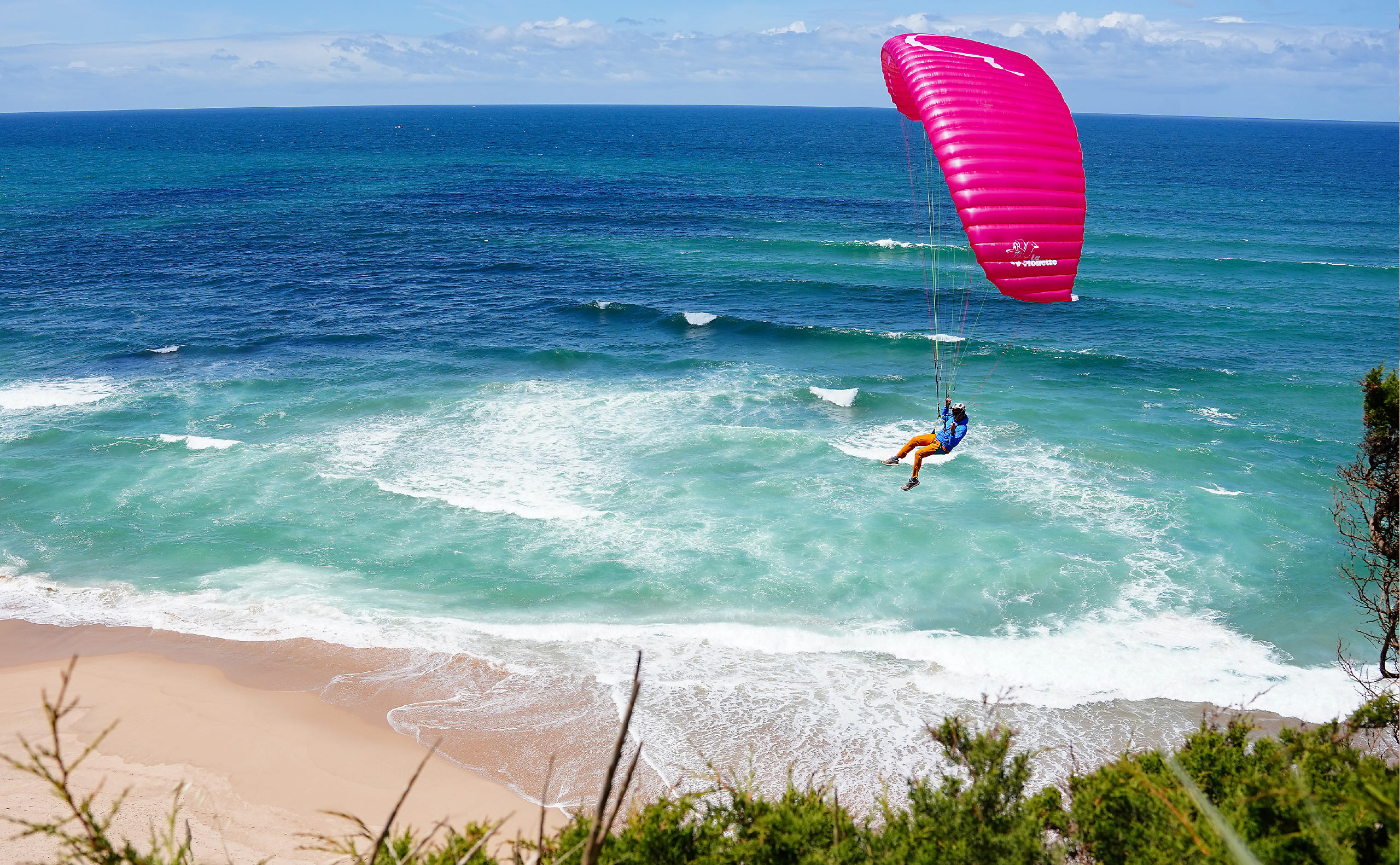
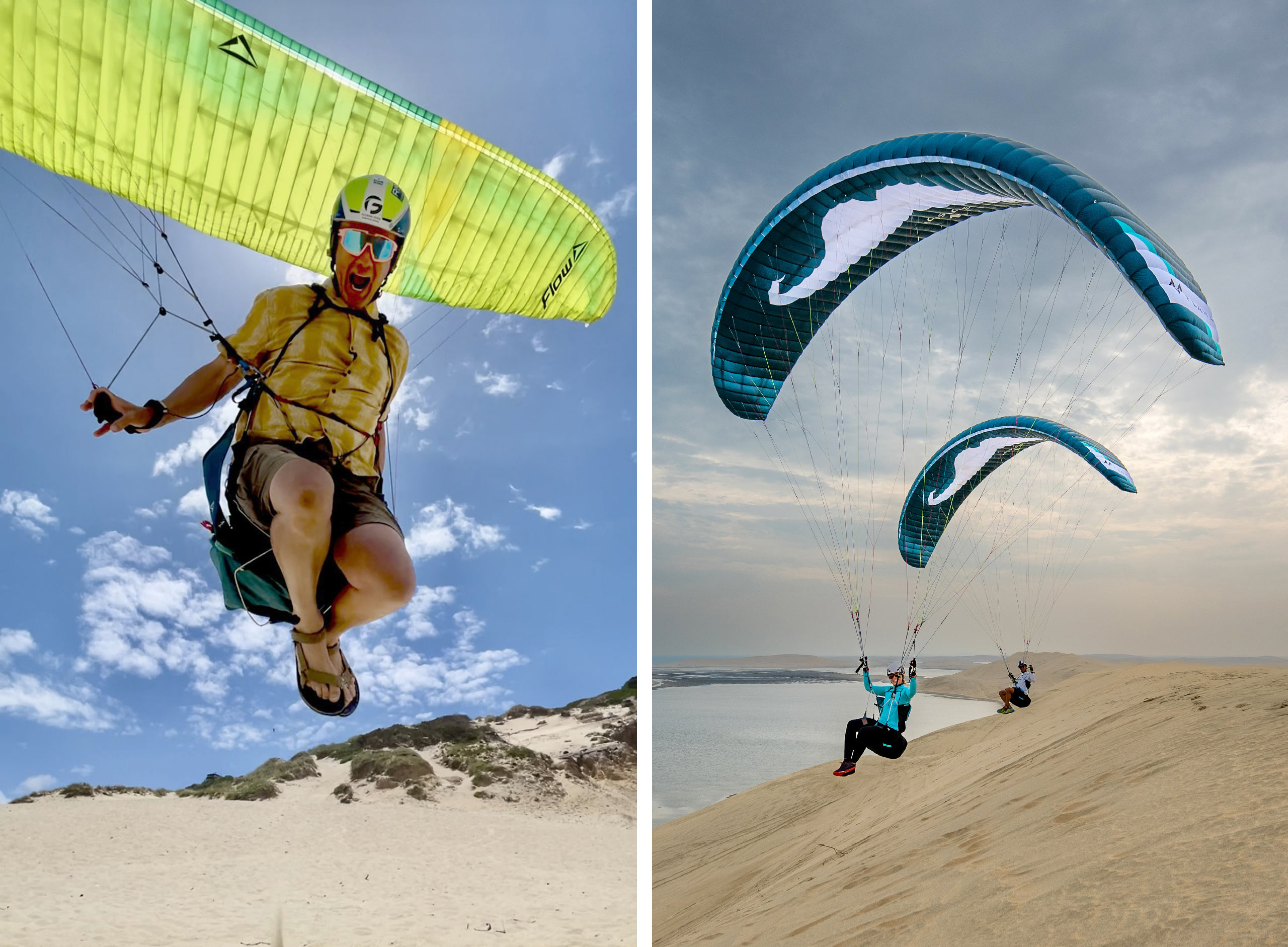
Bottom left: Flow Mullet, note the split-leg harness. Photo: Fred Gustafsson
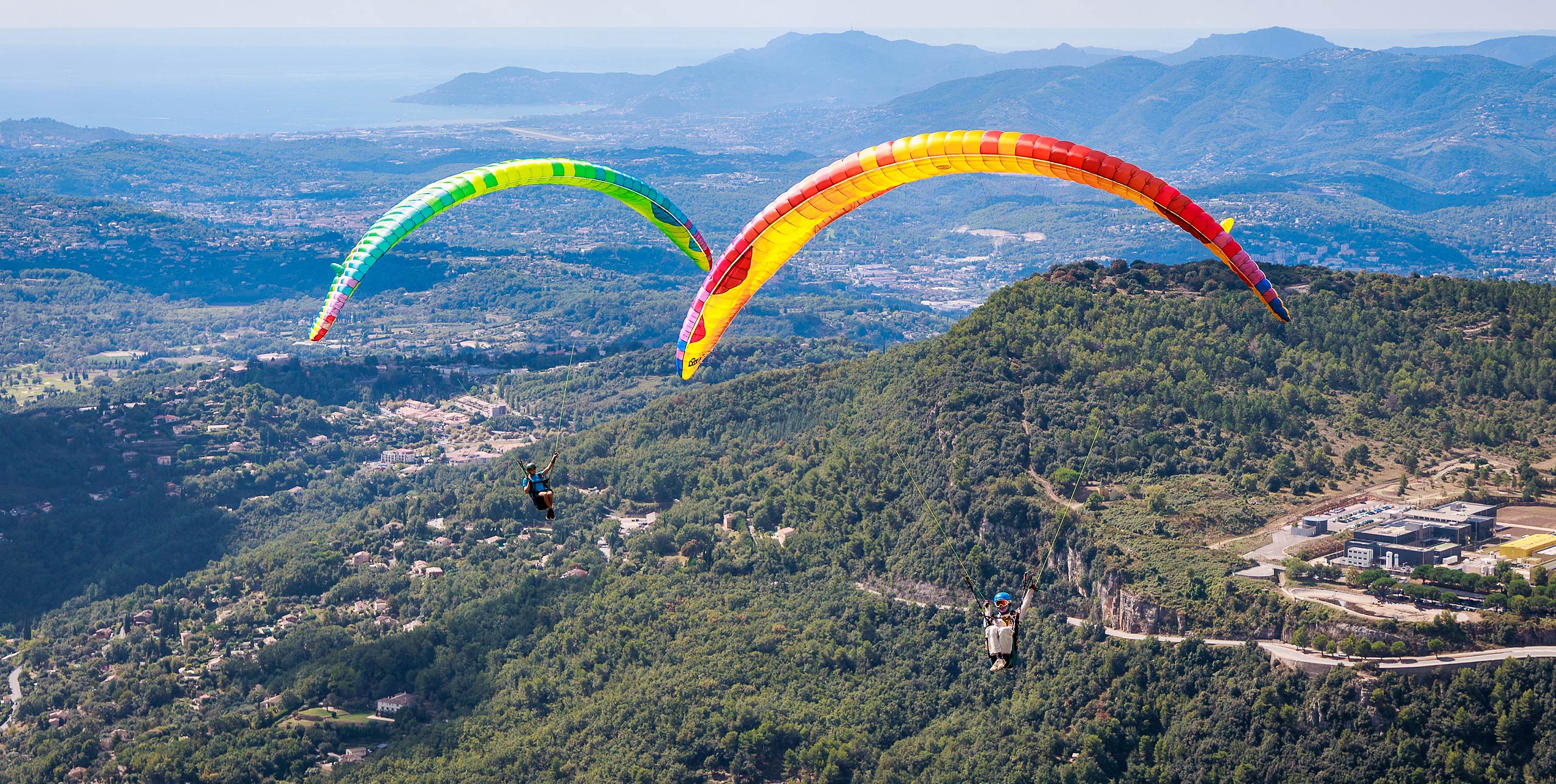
Bottom right: Flare Moustaches in Qatar. “The hand position is the main thing, you have to control the back to balance the speed and the lift. If you are good at groundhandling it will be straightforward.” Photo: Adi Geisegger
Next level active flying
The acceleration on a parakite is not achieved with a speed bar or trimmers, but with the controls on the risers. When you pull the controls this affects the brake lines but at the same time with about a 3:1 ratio the C- and B-lines. It’s similar to how rear-riser steering works on two-liners and 2/3-line hybrids but the pressure is much lighter.
On a parakite, hands up is fully accelerated. This also means you can’t just let go of the controls to adjust the harness or grab a snack or camera. Going ‘hands-up’ in case of a collapse would be disastrous. Parakiting is active flying on an entirely new level.
It can even be tiring for your arms to keep the control pressure on at all times. Max Morriën, Dutch soaring expert, advises: “Fly a bit higher above the dune where there is more wind. You can then fly at more speed which means less pulling on the controls all the time.”
Most parakites come with a stopper on the control line. Moving the stopper 10 to 15 cm away from the control handle effectively limits the maximum acceleration which can also be a good safety feature if you are just starting to fly parakites. The stopper can also be used for pilots with short arms: it lowers the hands-up position so you can still reach the controls when you let go accidentally.
Deceptive ease
Although flying parakites is not particularly difficult to learn, Little Cloud’s Tom Bordeau has been a bit worried about the high-adrenaline marketing around it. “I was sceptical at first. You fly fast in strong wind and close to the ground. This is the most risky situation. But watching pilots progress much faster in groundhandling in strong winds made me realise the potential of these wings.”
The main danger is the deceptive ease with which parakites fly in strong winds. The stability of the reflex profile means it feels really solid in the air even when accelerated. But as Little Cloud say, the physics are still the same: any ram-air canopy will collapse at some point and these collapses can be more violent. Tom therefore advises pilots to fly actively – “It will not collapse if you listen to your glider” – and not to push the limits of the extra wind speed. He advises flying in 30-35km/h winds at maximum, unless you are very experienced in these conditions.
Crickhowell Paragliding’s Ali Andrews adds that flying in very strong winds is no fun anyway, with any glider. “At the coast the swell and waves create turbulence which can be horrendous, certainly in winds over 40-50km/h. Also, you still have to manage the canopy on the ground. Even the smallest speed wing produces a lot of power. And you get sandblasted. Why would you want to do that?”
The same holds for thermalling, he says: “Of course it is possible to thermal with a parakite, but that is not what it is for.” Tom adds that it is not easy to core thermals on a parakite because it is quite difficult to turn tight.
Different disciplines
Paramotoring might be a different story. Javier Tejeiro López from Spain flew a Moustache in the World Paramotor Slalom Championship last February and came 12th. “For proximity flying on a paramotor a parakite could definitely be sensible, as [those pilots] are used to reflex profiles and fly on speedbar a lot,” thinks Alistair. “In the future we could see a development where they could fly hands-off with the controls stowed. Paramotor pilots fly hands off a lot.”
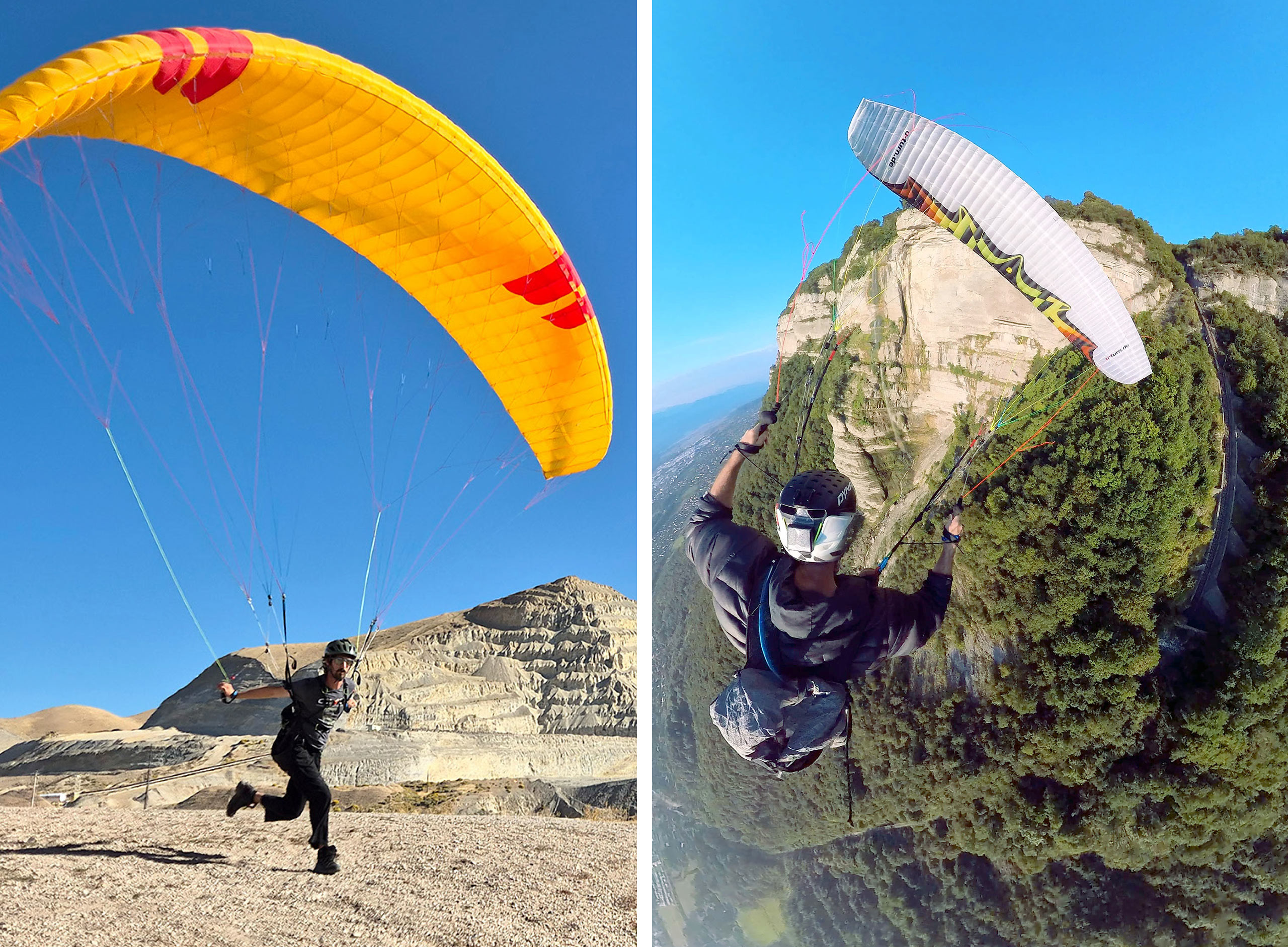
At the other end of the spectrum, since parakites have high speed, dynamic proximity flying in common with speed gliding, it makes sense that there are crossovers in that field as well. The Flare Line (2023) is a parakite speed glider, available from 8 to 15m2, with 33 cells and a moderate aspect ratio of 4.0. Additionally, Flow just introduced the Mohawk speed rider parakite, based on the Mullet X but more compact and faster. At September’s Coupe Icare in France Flow’s Felipe Rezende revealed for 2025 they are planning a lightweight version of the Mullet X called the Whippet (“I have a whippet at home in Australia and my friend has been telling me for ages ‘You need to call one of your gliders the Whippet!’”) and a high aspect ratio parakite called the Albatroxx. The Albatroxx will be 14.5m2 and has been designed specially “for the Dutch dunes”.
The future of parakites
It’s unlikely that parakites will get a type of classification such as the EN norm for paragliders soon: the required manoeuvres can’t be flown with kite-risers. Tom Bordeau believes that targeting the right group of pilots and proper training is more important than classification. He thinks there will be some regulation on another level. “This type of flying also attracts people who are not flyers and don’t know about rules and priority. Or they are not used to wind and turbulence. There may be places where they will not be welcome because of their behaviour, similar to what happened in speed riding. I’m preoccupied by how the authorities will handle this.”
In any case, parakites are here to stay. “There is a lot of growth and development,” says Alistair. “It’s still experimental, we’re in test-pilot mode.”
There will also be more to choose from in the near future. The Dudek Touch is “finished and ready to go into production”, U-Turn had a prototype parakite on their stand at the Coupe Icare and are working on the design now, and Ozone is developing one too, The Sauce. Expect to see them all at a coastal site near you soon.
SIX PRO TIPS
Parakite instructor Ali Andrews on how to do it
- Groundhandle until you are 100% comfortable
- Make sure that the risers, lines and controls are totally untangled before you inflate. A wrapped control handle, twisted risers or a knot can cause big problems
- Appreciate the difference in control travel: it is double what you are used to
- Choose a proper, preferably split-leg harness: a seat plate causes too much roll authority for the smaller sizes. Also, you need a harness that scoops you up easily. Helping yourself into the harness with your hands is not easy with a parakite. And always fly with back protection as you are close to the ground
- Practise your landings. Flaring hard doesn’t work because you only create a lot of lift so you need to let it glide. Your first top-landing should be in easy terrain too
- When you get into it, find some parakiting buddies to fly with and buy a different size parakite each, so you have a range of appropriate sizes depending on the wind speed.
WHAT IS A REFLEX PROFILE?
A reflex profile is an aerofoil which automatically balances its angle of attack (AoA). When the AoA reduces, pointing the nose more downward, a combination of shifted lift-forces and other aerodynamic effects cause the aerofoil to rotate upward again. When an aerofoil is said to be very ‘stable’ this effect is large. Accelerating (by means of trimmers, speed bar or the controls on kite risers) means decreasing the AoA. Therefore, a strong reflex profile which is very stable can be accelerated more.
A strong reflex profile also has a few downsides. It dampens the movements of the air in the same way it equilibrates the low AoA. Therefore the pilot lacks feedback on turbulence in the air and disturbances in the wing. A reflex profile is also less efficient, meaning it has less glide. And finally, when a reflex wing does collapse it is more violent, among other things because the aerofoil is more pressurised at that point, the AoA is more extreme and the speed is likely to be higher.
Designers work with all of that to create different wings. For example, La Mouette from Little Cloud has a progressive reflex profile because, as Tom Bordeau explains: “At high AoA you don’t need a lot of reflex. Our profile changes when you accelerate to increase the strength of the reflex effect at lower AoA. Therefore La Mouette is more efficient and gives the pilot information about the air.”
This article was first published in Cross Country 253